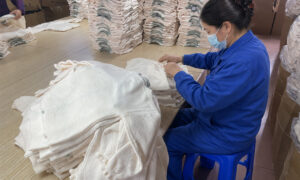
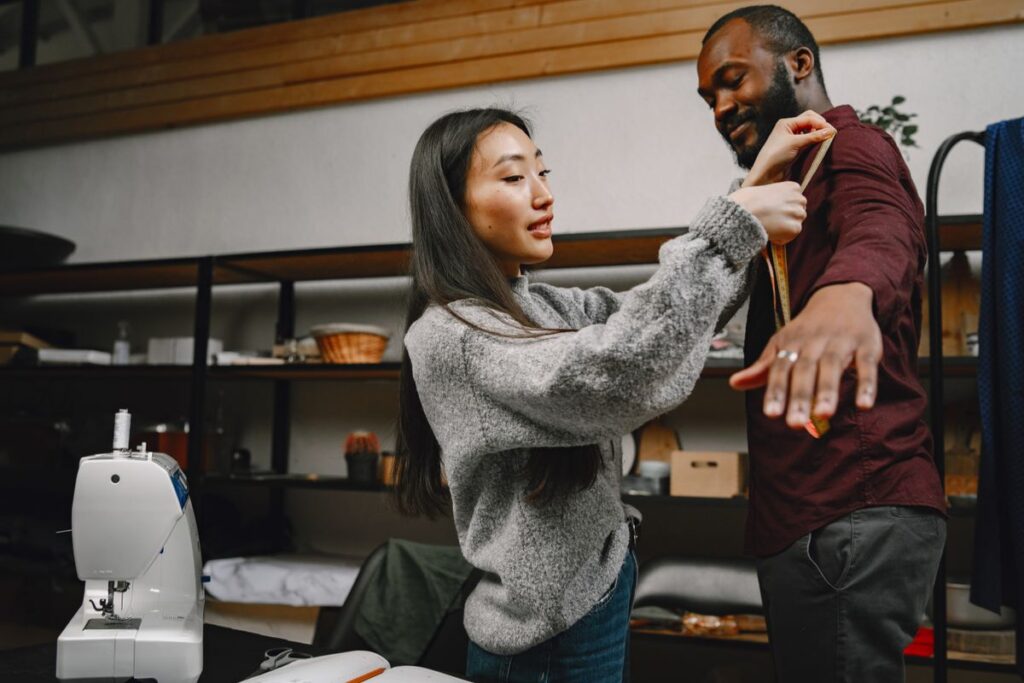
Ordering one sweater for yourself and placing a production order for a brand begin with the same idea: you need to show the maker what the finished garment should be. After that, the two routes diverge. A one-off maker can work through personal measurements and a reference photo; a bulk factory needs an approved specification that can be repeated across colours, sizes and thousands of pieces.
Drawing on more than two decades of knitwear production experience, QITE explains both routes from the buyer’s side—and the decisions that most often cause rework. QITE’s own service is for production programmes, not a promise to make a single sweater for US$200. For straightforward bulk styles, our usual starting point is 500 pieces, subject to review of the design and materials.
Route 1: ordering a single custom sweater
Before approaching an individual maker or a one-off knitwear studio, prepare five things: the intended yarn or fibre, the style and fit, your garment measurements, an image or artwork reference, and the approximate knit weight or gauge. You do not need to know every technical term. A clear photo of a sweater you like, plus notes on what must change, is often a better starting point than a vague request for “the same style.”
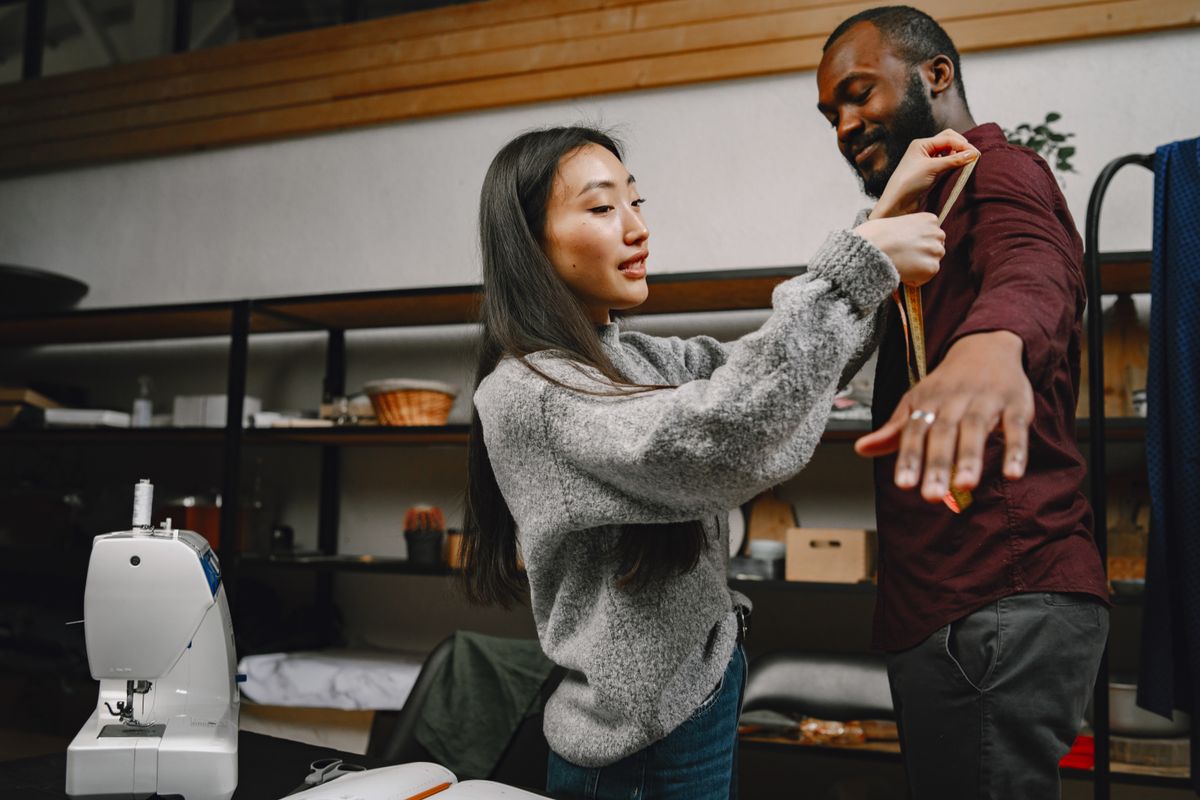
Ask the maker to turn your brief into a sketch, pattern or knit specification before production begins. Check the neckline, sleeve shape, chest width, body length, motif placement and intended hand feel at this stage. A drawing is an approval tool, not proof that a finished knitted sample will fit: yarn and stitch structure still affect the result.
Christmas sweaters, photo-inspired designs, matching family sweaters and pet knits are all possible one-off ideas. Acrylic and cotton can be practical starting points, but neither is automatically the best choice. The maker should recommend yarn after seeing the design, intended season, care expectations and gauge.
In QITE’s experience, a simple one-off commission may be discussed around US$200 and 7–10 days after the design is settled. Treat those figures as an illustrative personal-order discussion, not a market rate or a QITE quotation. Complex artwork, special yarn, shipping and revisions can change both. Ask for a written scope and price before paying.
Route 2: placing a bulk sweater order
A buyer or sourcing team should begin with a tech pack: drawings, measurements by size, tolerances, yarn composition and count, gauge, stitch or decoration details, colour references, labels, packing requirements and target delivery date. QITE reviews the details with the customer before making the first sample. An unresolved question should be recorded as an open item rather than silently decided on the factory floor.
The practical sequence is brief and construction review → yarn sourcing → first sample → buyer comments and approval → pre-production approval using the agreed materials → bulk knitting and finishing → inspection → packing and shipment. A pre-production sample is a control point; it is not a second round of bulk production. Changes after approval can affect cost, yarn availability and the shipment date.
For a straightforward style, QITE’s normal sample-development target is about seven days, including yarn procurement, pattern/programming work and making the sample, once the brief and materials are workable. Bulk timing needs a separate schedule and depends on yarn, gauge, quantity and production capacity. Our sweater lead-time guide explains the stages in more detail.
Four checks that prevent expensive surprises
1. Approve the yarn, not just its name
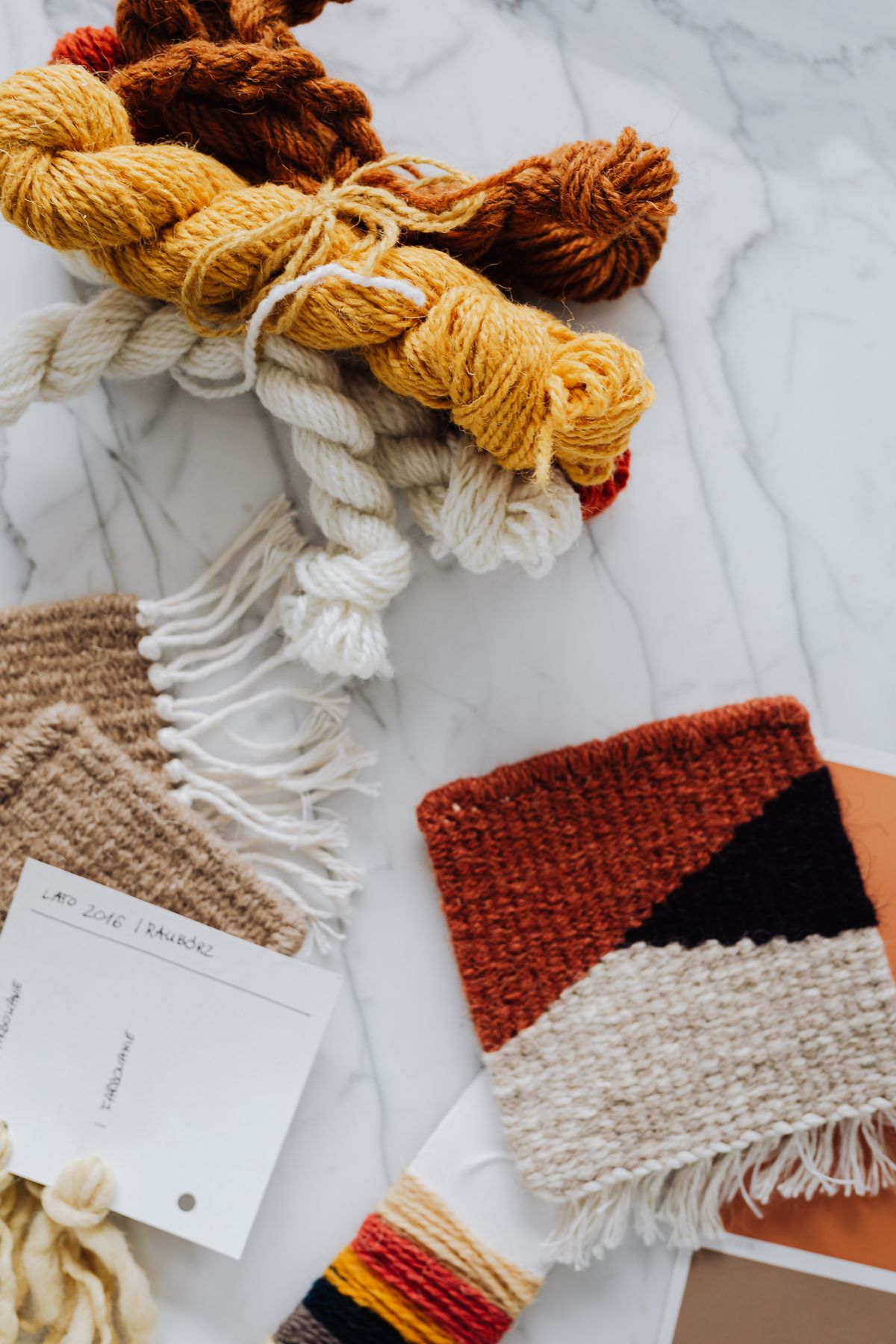
“Cotton blend” or a supplier’s yarn code is not enough to guarantee the same result. Lot-to-lot shade, yarn weight, shrinkage and the finished hand feel can vary. Compare the physical sample against your approved yarn and colour standard, and record what is acceptable before bulk yarn is committed. If a substitute is proposed, approve the substitute in writing and check its effect on measurements and care.
2. Check each size after finishing
Do not approve a full size range from a single sample. Inspect finished-garment measurements for the agreed sizes, especially chest, length, shoulder, sleeve and hem. Some suppliers may propose knitting neighbouring sizes from one base programme and using finishing to reach different dimensions. That is a proposal to evaluate—not a standard method to accept without evidence. Require separate finished measurements, tolerances and wash/relaxation checks for each size. Our sweater tech-pack checklist shows what to hand over.
3. Specify the needle-detection requirement
If your retailer or product risk assessment requires needle detection, put the test method, sensitivity, rejection procedure and records in the purchase specification before packing starts. Do not assume that every brand requires the same test for every garment. A needle detector is designed to find ferrous needle fragments; it is not a universal detector for every metal or every trim. Equipment maker HASHIMA’s needle-detection guide explains the distinction.
4. Plan backwards from the selling date
A winter or Christmas range loses value if it arrives after its selling window. Work backwards from the in-store or online launch date, allowing time for sample revisions, yarn booking, bulk production, inspection, shipping and customs. Reserve the production slot only after agreeing what must be approved and by when. A requested ship date without an approval calendar is not a workable lead-time plan.
What to send with your first enquiry
For a one-off maker, send a reference image, your measurements, preferred yarn/feel, artwork rights, budget and required date. For a bulk factory, add a tech pack, size breakdown, colour quantities, target market, testing and packing requirements, and a realistic launch calendar. If a detail is undecided, say so: that is much easier to resolve before sampling than after knitting.
Brands can review QITE’s custom sweater manufacturing service and our homepage for the broader knitwear capability. To discuss a production programme, contact QITE with the tech pack or reference sample. We will confirm feasibility, the applicable MOQ, sample scope and schedule before quoting.