A knitted polo can look convincing in a flat photograph and feel wrong as soon as the top button is opened. The collar may spread too far, one side of the placket may turn outward, or the neck opening may sit higher than the buyer expected.
Those problems are difficult to resolve with a comment such as “make it more premium.” They need a clear description of the intended collar, opening and fit.
When selecting a men’s polo sweater manufacturer, start with the product you want to wear, not only the reference photograph. For a brand developing men’s custom knitwear, the collar and placket deserve the same attention as yarn and chest measurements.
Establish what kind of knitted polo you are buying
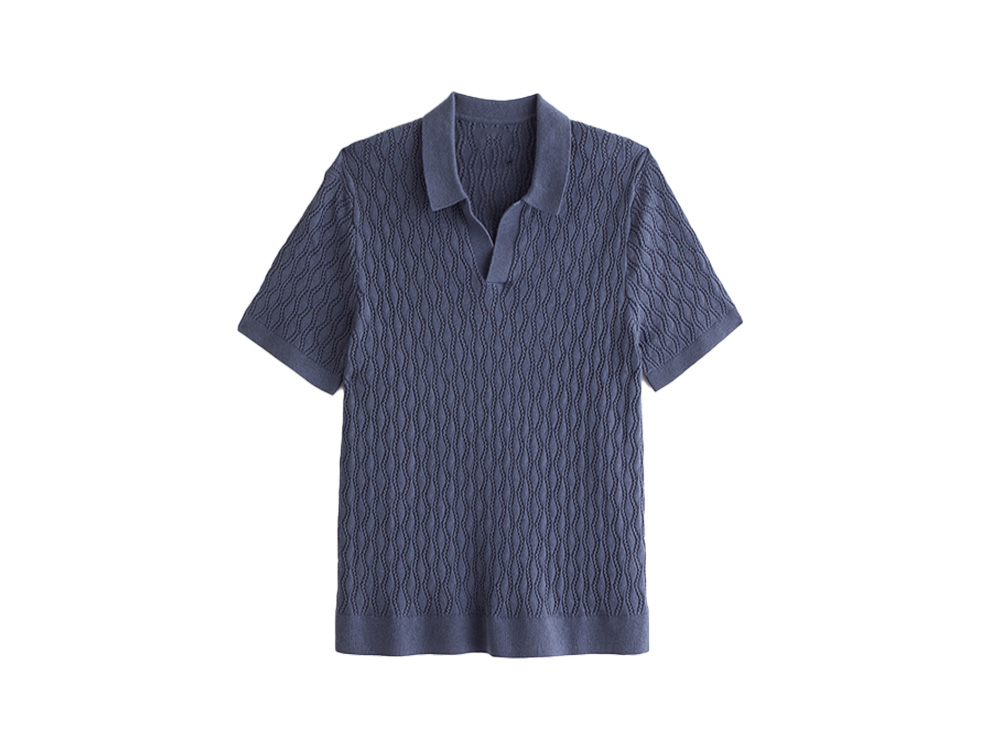
“Polo” describes a familiar collar-and-opening arrangement, but it does not specify one construction. A flat-knitted polo sweater and a cut-and-sew polo shirt can share that appearance while requiring different materials, equipment and development work.
Tell the supplier whether the reference is a sweater-style knit, a fabric polo shirt or a combination you want them to assess. Include a clear surface photograph and an inside view if available. If you are unsure, ask the supplier to explain its proposed construction before comparing prices.
STOLL’s published polo developments include a fully fashioned cotton style with a piqué structure and knitted collar details. That example is useful because it shows why “piqué” alone does not identify the entire manufacturing route. It is a construction reference, not evidence that every factory offers the same machine or program. STOLL: From Concept to Store
For the enquiry, describe the intended result: for example, a short-sleeve sweater-style polo with a soft collar, controlled body length and a straight hem. A photograph can support that description; it should not be asked to supply every missing specification.
Approve the collar in the position the customer will wear it
Decide whether the product should look best fully buttoned, with the top button open or with the whole opening relaxed. Assess the sample in all relevant positions.
Record the collar width, point length, attachment position and edge construction. Distinguish the finished collar edge from the seam or linking line used as a measuring reference.
During the fit review, look at the collar from the side as well as the front. Check whether the points sit evenly and whether the back neck appears comfortable. Take photographs on the same wearer or form so revisions can be compared fairly.
A useful correction might read:
The neck opening and body fit are approved. With the top button open, the right collar point turns outward more than the left. Please review the collar and attachment balance while keeping the approved opening measurements.
This is an illustrative sample comment. It preserves what already works and identifies the condition in which the problem appears.
Specify the placket beyond the number of buttons
Three buttons can be arranged in several ways. Opening length, placket width, button spacing and the bottom finish all affect the appearance of the polo.
Use a detail drawing to identify the intended overlap and the inside finish. Ask the supplier to show how the lower end of the opening will be constructed. That detail can be hard to judge in a small product photograph.
| Detail | What to put in the brief | What to review on the sample |
|---|---|---|
| Opening length | Defined start and endpoint in the base size | Whether it gives the intended look open and closed |
| Placket width | Finished width and overlap direction | Left/right balance and bulk |
| Buttons | Size, colour, finish, quantity and reference | Operation, appearance and attachment |
| Buttonholes | Location and construction direction | Alignment and suitability for the selected buttons |
| Lower end | Detail sketch or approved reference | Twisting, pulling and inside finishing |
The opening should be assessed as part of the garment. A trim sample can establish the button’s appearance, but it cannot show how the complete placket hangs on the body.
Match the yarn to the collar, body and intended use
The body may look soft and fluid while the buyer expects the collar to retain a more defined outline. Explain both requirements before approving the yarn.
Ask the factory to propose yarn, gauge and stitch structure together. Woolmark’s knitwear training material treats yarn choice, knitting and finishing as connected development decisions. Its gauge examples also depend on machine type and yarn count; they are not a universal recipe for every polo. Woolmark: Introduction to Knitwear
For a lighter seasonal polo, review the actual swatch for coverage, surface and handle. For a warmer long-sleeve version, check whether the collar and opening still work with the selected body weight. Neither fibre composition nor a gauge number should replace approval of the finished sample.
Keep the approved yarn and finish reference with the custom sweater development specification. If a temporary yarn is used for the first sample, record which decisions remain open rather than treating every part of that sample as final.
Review sleeve and body proportions as one silhouette
For a short-sleeve polo, sleeve length and sleeve opening change the appearance of the upper body. A dropped shoulder also changes where the visible sleeve begins.
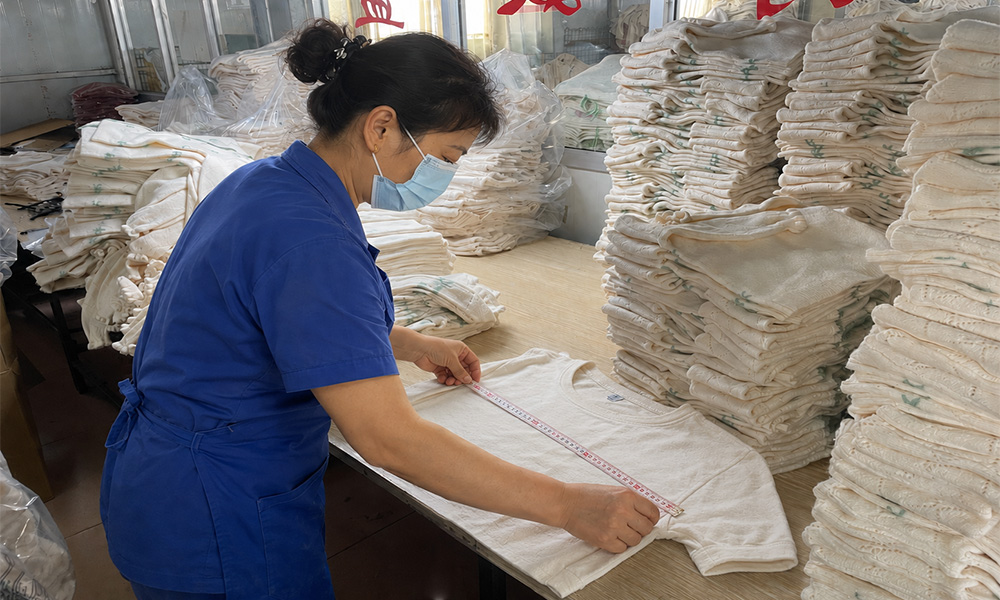
Confirm chest width, body length, shoulder width, armhole, sleeve length, sleeve opening and hem. Identify the measuring method for each point, including whether rib openings are measured relaxed.
If the polo is intended to sit neatly over trousers, evaluate that proportion on the wearer. If it is intended for layering, use a representative base layer. Do not rely on a size label to communicate either fit.
For larger size ranges, use the approved base fit to establish grading rather than adding the same amount to every point. The men’s sweater fit and size-grading guide explains that next step in more detail.
Keep branding clear of unresolved construction
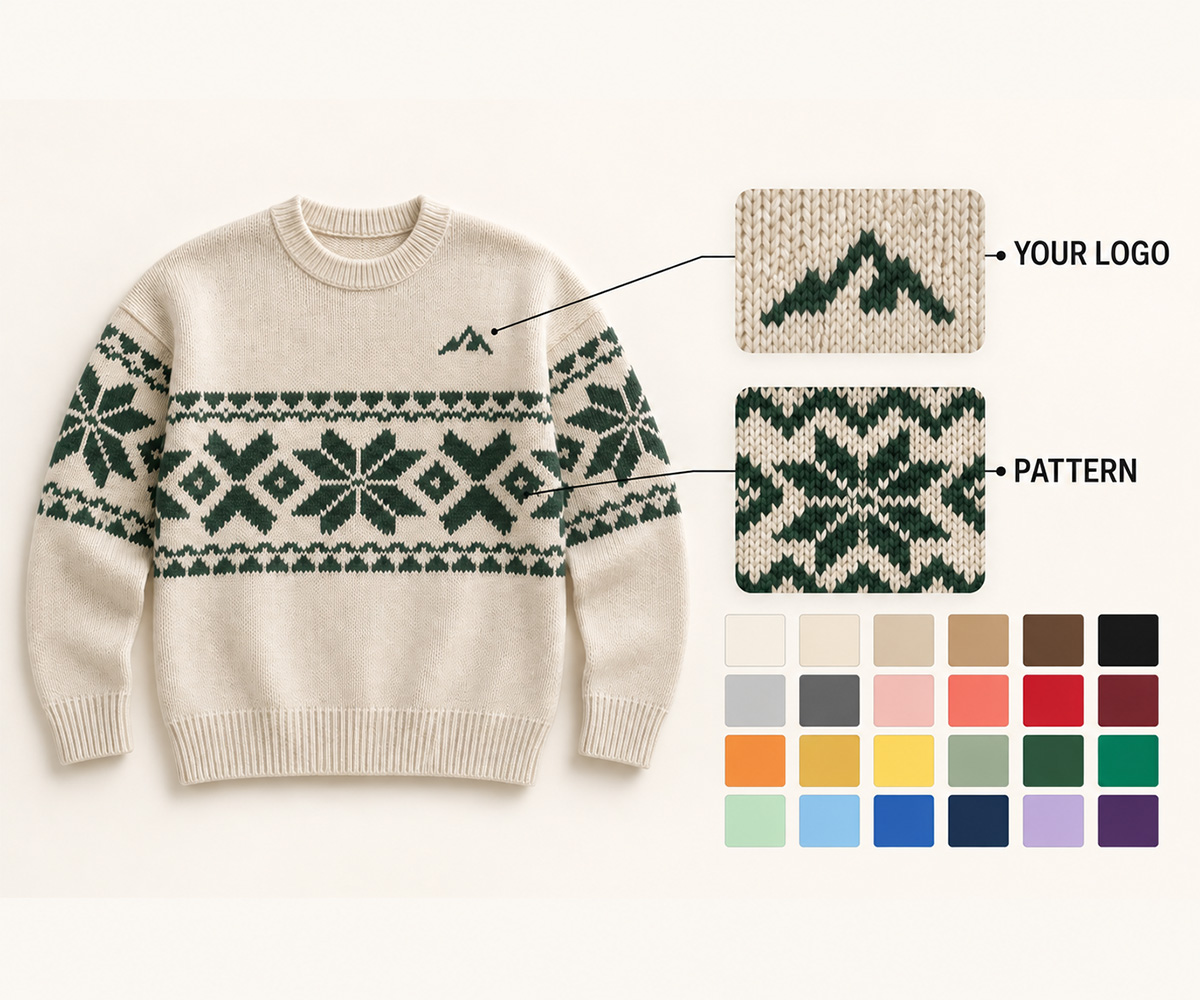
A chest logo can look off-centre when a placket is still being revised. Confirm the opening and body balance before giving final placement approval.
Specify logo dimensions and distances from defined garment points. For embroidery, inspect the actual result on the proposed knit. For a knitted motif, assess its scale, colour and inside finish. Ask whether placement or artwork size needs a separate review at the ends of the size range.
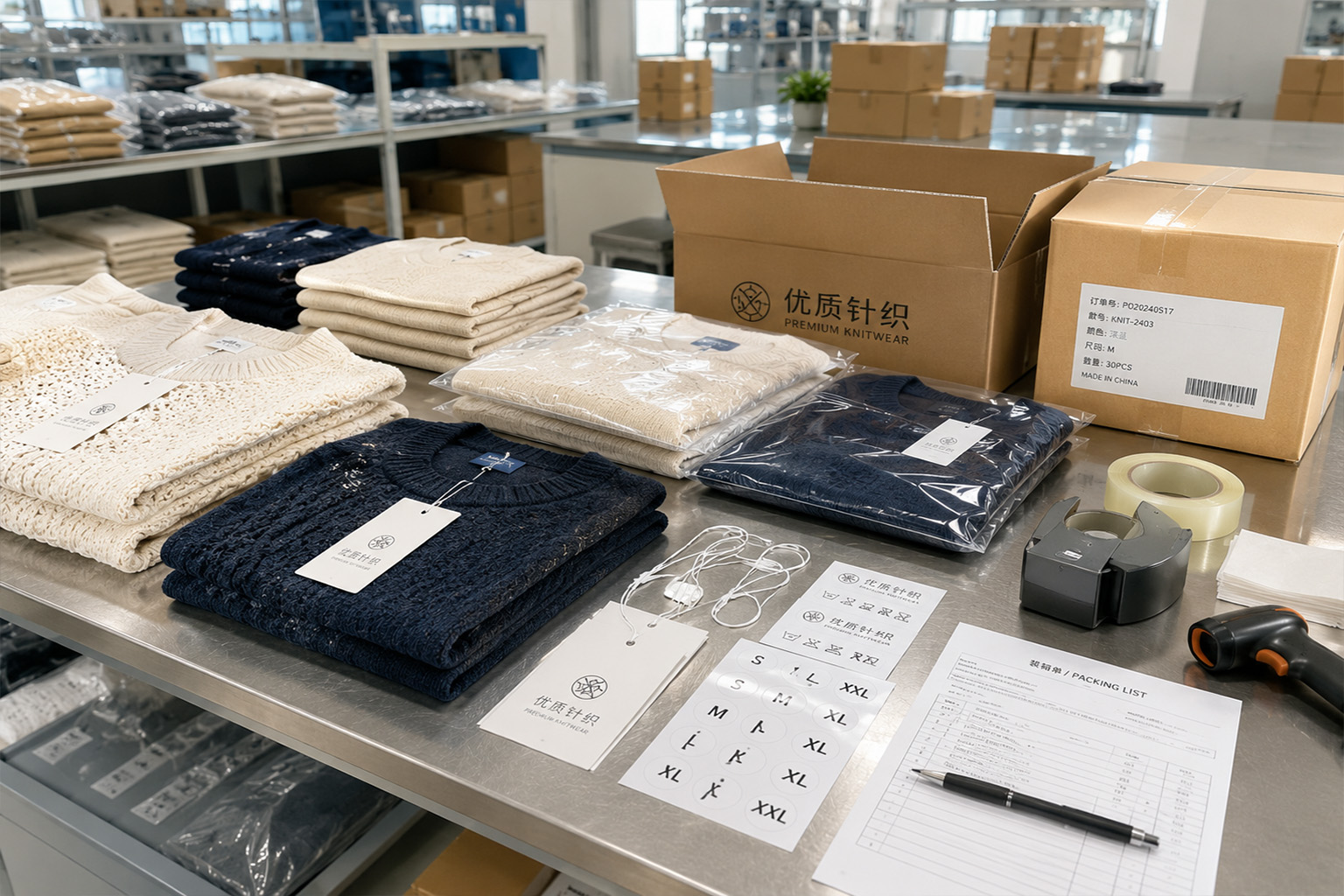
Private-label files should cover the brand label, size identification, care copy, hangtag and packing requirements. Keep those files with the current OEM and private-label development brief, including the version of any branded button artwork.

Make sample approval specific enough to use in production
Review the complete polo before releasing bulk work: collar in the agreed positions, placket balance, button operation, body fit, sleeve proportions, artwork, labels and finishing.
Repeat the agreed measurement and appearance checks after the specified care procedure. Record what changed, rather than relying only on an overall “wash pass” comment. The test conditions and acceptance criteria need to be agreed for the project.
Use a dated approval record that identifies the sample, yarn, measurements and remaining conditions. QITE’s men’s sampling guide covers the broader approval sequence, while its knitwear quality-control process explains the checks carried into production.
Before comparing quotations, confirm that the prices cover the same yarn, construction, buttons, branding and packing. Ask which details remain provisional and which changes would require a revised quote.
Discussing a men’s polo sweater with QITE
QITE GARMENTS combines its own knitwear production capability with coordinated production resources. Knitted polos are part of its broader sweater and knitwear development work. The proposed yarn, construction, quantity and production arrangement are reviewed for the individual project.
Send QITE your polo sweater brief with front, back and detail references, a size chart, yarn direction, collar and placket requirements, artwork, quantities by colour and the delivery window. If the collar or construction is undecided, identify it as a development question so the proposal addresses it explicitly.