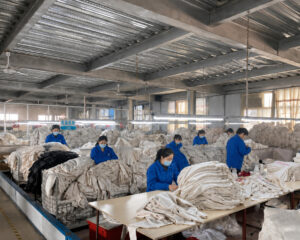
When buyers contact a sweater manufacturer, one of the first questions is often: “How much does custom sweater manufacture cost?” The answer depends on many factors, including yarn composition, gauge, design complexity, order quantity, color requirements, labels, packaging, and production lead time.
For fashion brands, wholesalers, importers, and private label buyers, understanding sweater manufacture cost helps prepare better inquiries and receive more accurate quotations. A reliable knitwear manufacturer should explain what affects pricing instead of giving only a simple number.
Qingdao Qite Garments Co., Ltd. supports global buyers with OEM and ODM sweater manufacturing, custom knitwear development, private label sweater production, and bulk sweater orders.
Why Sweater Manufacture Cost Is Not Fixed
Unlike simple stock products, custom sweaters are made based on buyer requirements. Each style may use different yarns, gauges, patterns, colors, labels, packaging, and workmanship.
This means two sweaters that look similar in photos may have very different production costs. A lightweight cardigan, a chunky winter pullover, and a jacquard Christmas sweater all require different production planning.
Before giving an accurate quotation, a sweater manufacturer usually needs to review the product image, tech pack, yarn requirement, size range, color plan, estimated quantity, and delivery schedule.
1. Yarn Composition
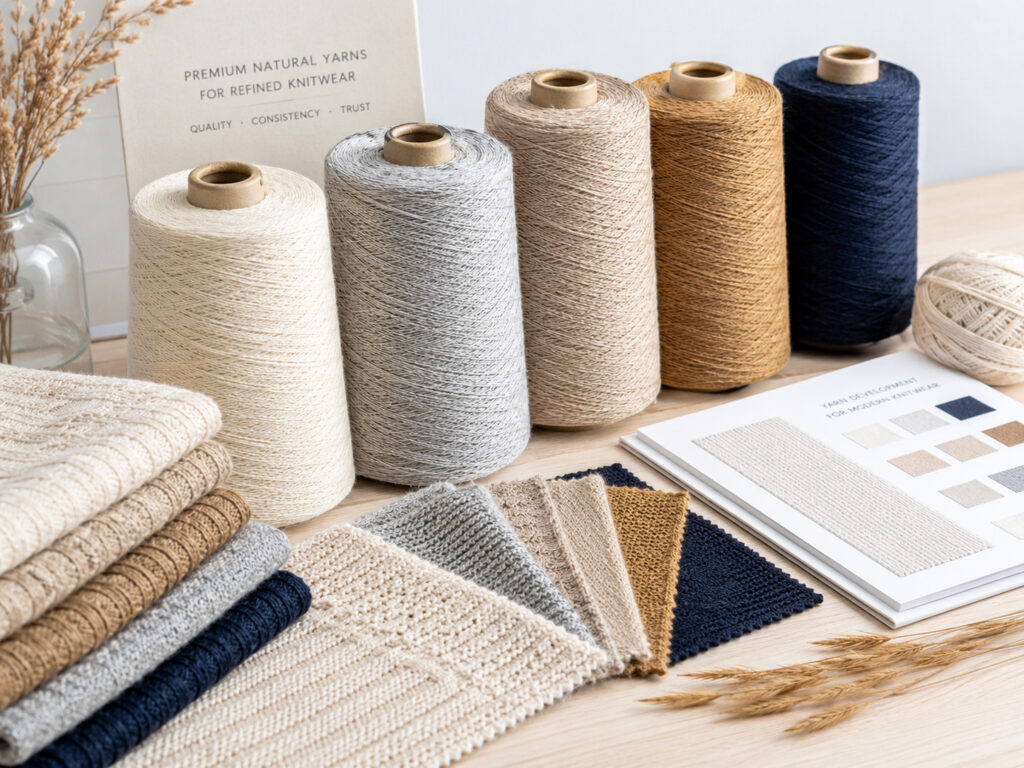
Yarn is one of the biggest factors affecting sweater manufacturing cost. Different yarn compositions have different price levels, hand feel, warmth, durability, and washing performance.
Common sweater yarn options may include acrylic, cotton blends, wool blends, viscose blends, polyester blends, nylon blends, and other mixed compositions.
Acrylic is often used for cost-effective sweater production. Cotton blends can provide a natural hand feel. Wool blends may increase warmth and value. Viscose blends can improve softness and drape. The final choice depends on your target market, retail price, season, and product positioning.
For private label buyers, choosing the right yarn is not only about cost. It also affects how customers feel when they touch and wear the sweater.
2. Gauge and Sweater Thickness
Gauge is another important cost factor in sweater manufacture. Lower gauge numbers are usually used for thicker and heavier sweaters, while higher gauge numbers are suitable for finer and lighter knitwear.
For example, a chunky 3GG winter sweater usually consumes more yarn and may have a different production cost compared with a lightweight 12GG cardigan.
Sweater thickness affects yarn usage, knitting time, garment weight, and shipping weight. This is why gauge confirmation is important before sampling and bulk production.
3. Design Complexity
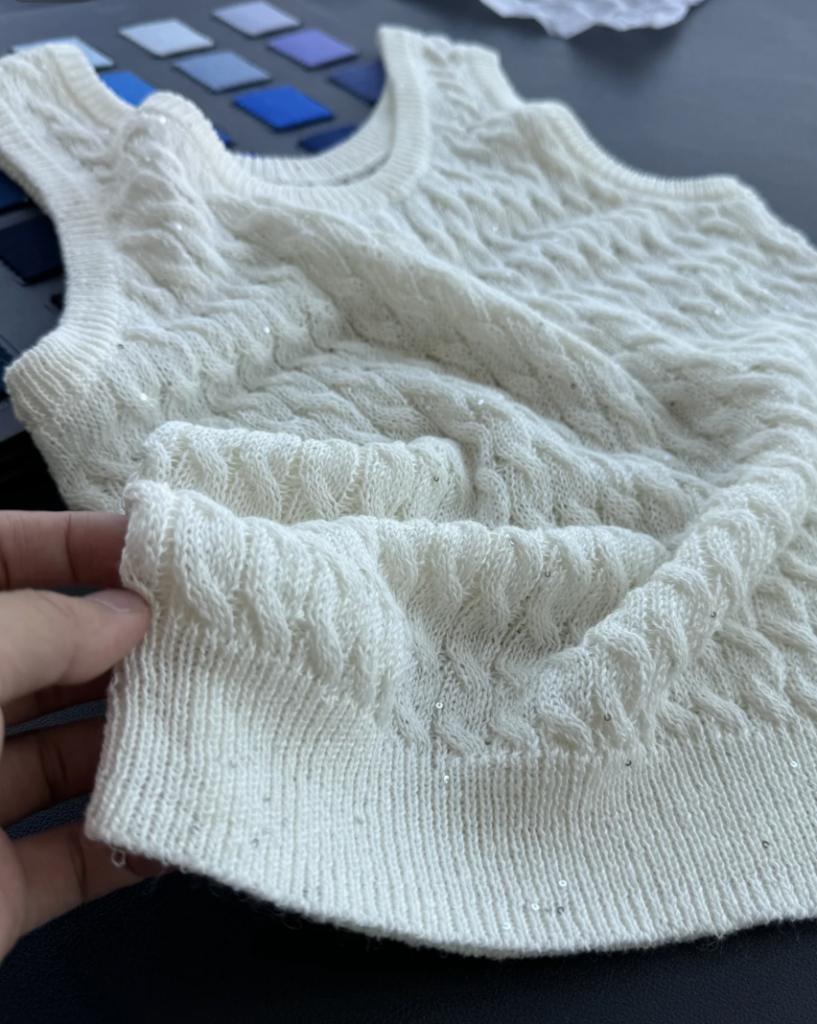
Design complexity can also affect the cost of custom sweater manufacturing. A simple plain knit sweater is usually easier to produce than a sweater with jacquard, intarsia, cable knit, pointelle, embroidery, or special texture details.
Complex patterns may require more machine programming, longer sampling time, more production control, and additional inspection.
For example, a Christmas sweater with multiple colors and jacquard artwork usually requires more technical setup than a basic solid color pullover.
When buyers send clear artwork, reference images, or tech packs, the factory can evaluate design complexity more accurately.
4. Order Quantity and MOQ
Order quantity has a direct impact on sweater production cost. Larger bulk sweater orders usually allow better cost control because machine setup, yarn preparation, sampling, and production management can be spread across more pieces.
Small trial orders may be possible, but the unit price is often higher because the factory still needs to prepare yarn, program machines, arrange production, inspect goods, and pack the order.
MOQ can also change depending on yarn availability, custom dyeing, color quantity, gauge, and private label requirements.
For buyers testing a new market, it is important to balance small batch flexibility with realistic cost expectations.
5. Color Requirements
Color is another factor that affects sweater manufacture cost. If buyers choose stock yarn colors, the process is usually faster and more flexible. If custom dye-to-match colors are required, the MOQ, lead time, and cost may increase.
Custom colors often require lab dips, color approval, yarn dyeing, and bulk color control. This is especially important for fashion brands that need exact brand colors or seasonal color palettes.
For custom sweater production, buyers should provide Pantone references or physical color samples when possible.
6. Labels and Private Label Packaging
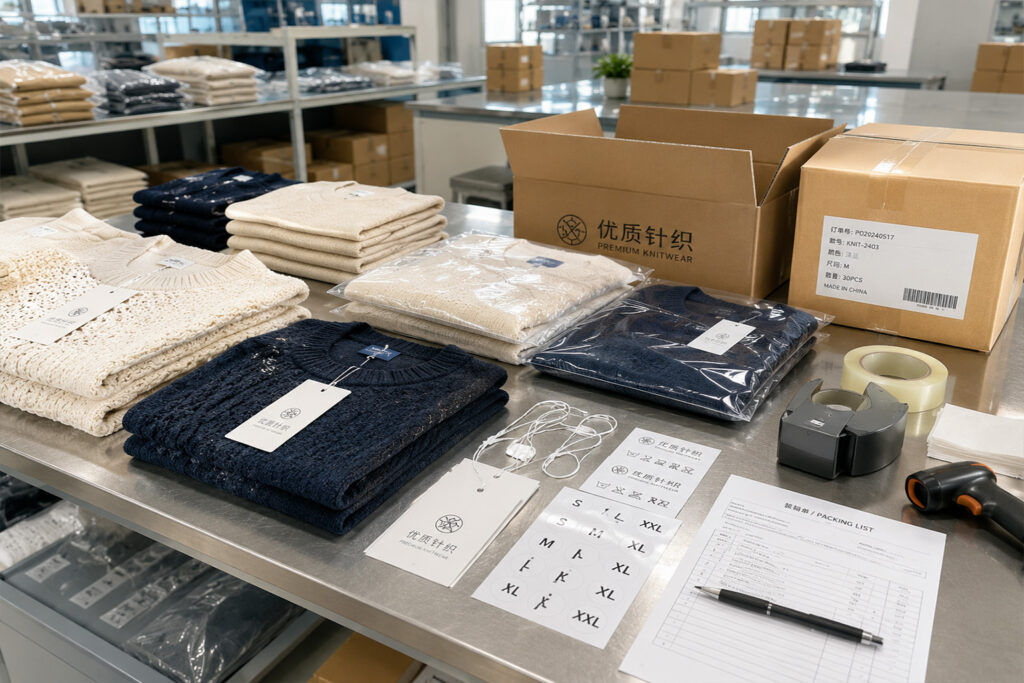
Private label sweater production includes more than the garment itself. Branding details can also affect cost.
These details may include:
Main labels
Care labels
Hang tags
Size stickers
Packaging bags
Barcode labels
Carton marks
Retail packing requirements
Custom folding methods
For fashion brands, wholesalers, importers, and online sellers, these details are important because they affect product presentation and customer experience.
A professional sweater manufacturer should confirm label and packaging requirements before bulk production begins.
7. Sampling and Development Time
Sampling is a necessary step for most custom sweater projects. It allows buyers to check fit, measurement, yarn hand feel, color, workmanship, pattern effect, and overall design before placing a bulk order.
If the design is simple and yarn is available, sampling may be faster. If the style requires special yarn, custom color, jacquard artwork, or multiple adjustments, sample development may take longer.
Sampling cost and development time should be considered as part of the full sweater manufacturing process.
8. Quality Control and Finishing
Quality control also affects production planning and cost. Sweaters need to be checked for measurements, yarn defects, loose threads, holes, stains, color consistency, label placement, packing accuracy, and overall workmanship.
Finishing steps such as washing, shaping, ironing, trimming, labeling, and packing can also affect the final cost.
For international buyers, stable quality control is important because poor finishing may lead to returns, complaints, and brand reputation problems.
What Buyers Should Send for an Accurate Sweater Quote
To receive a faster and more accurate quotation, buyers should prepare clear product information before contacting a sweater manufacturer.
Useful information includes:
Product photos, sketches, or tech packs
Yarn composition or preferred material
Gauge or sweater thickness requirement
Color references or Pantone numbers
Size chart and size range
Estimated order quantity
Label and packaging requirements
Target market and selling season
Expected delivery schedule
Shipping destination or trade terms, if available
The more complete the information is, the more accurate the quotation will be.
How Qite Clothes Helps Buyers Evaluate Sweater Manufacture Cost
Qingdao Qite Garments Co., Ltd. supports global buyers with custom sweater manufacturing, OEM and ODM knitwear production, private label sweater development, and bulk sweater orders. If you are comparing production models, our OEM vs ODM sweater manufacture guide can help you understand which option fits your brand.
Our team helps buyers review design details, yarn options, gauge requirements, sample needs, order quantity, label packaging details, and quality control requirements before preparing a quotation.
We work with fashion brands, wholesalers, importers, online sellers, and private label buyers who need reliable sweater manufacturing support for different product categories, including women’s sweaters, men’s sweaters, kids’ sweaters, Christmas sweaters, cardigans, pullovers, ponchos, and knitted accessories.
FAQ About Sweater Manufacture Cost
What affects sweater manufacture cost the most?
The main cost factors include yarn composition, gauge, design complexity, order quantity, color requirements, labels, packaging, sampling, finishing, and production lead time.
Why do small sweater orders cost more per piece?
Small orders usually have higher unit costs because yarn preparation, machine programming, sampling, production setup, inspection, and packing still require time and labor.
Does yarn choice affect sweater price?
Yes. Yarn composition is one of the most important price factors. Acrylic, cotton blends, wool blends, viscose blends, and other materials all have different cost levels and performance.
Are custom colors more expensive than stock colors?
Custom colors may increase MOQ, lead time, and cost because they can require lab dips, yarn dyeing, color approval, and bulk color control.
How can buyers get a faster quotation?
Buyers should send product images, tech packs, yarn requests, colors, size range, estimated quantity, labels, packaging needs, and delivery schedule.
Request a Custom Sweater Quotation
Understanding sweater manufacture cost helps buyers plan better collections, avoid unclear pricing, and communicate more efficiently with suppliers.
If you are developing custom sweaters, private label knitwear, Christmas sweaters, cardigans, or bulk sweater orders, Qite Clothes can help review your product details and prepare a suitable quotation.
Contact Qite Clothes today to discuss your sweater manufacturing cost, sampling needs, MOQ, and bulk production plan.
QITE GARMENTS sourcing resources
For buyers comparing suppliers, our OEM/ODM sweater manufacturing service explains how QITE GARMENTS supports sample development, yarn and gauge selection, private label details, bulk production and export coordination.
You can also review our knitwear manufacturing capability and sweater quality control process to understand how we manage production planning, measurement checks, workmanship inspection and final packing before shipment.
For men’s programs, our men’s knit sweater manufacturing page shows how QITE GARMENTS supports custom men’s sweater development.
If you are preparing a custom sweater or private label knitwear project, you can send your sweater project details to QITE GARMENTS for quotation and sampling support.