A buyer asks for 500 sweaters. The supplier asks how many styles and colours. The buyer replies, “Five styles, two colours each.” Both parties have used the same total, but they are discussing very different production plans.
A custom sweater MOQ guide becomes useful when it moves beyond the headline minimum and shows how an order is divided. This article is a planning worksheet for buyers developing custom sweaters: how to turn a collection total into a style–colour–size breakdown, identify the constraint and ask for a comparable quotation.
Ask what the minimum applies to
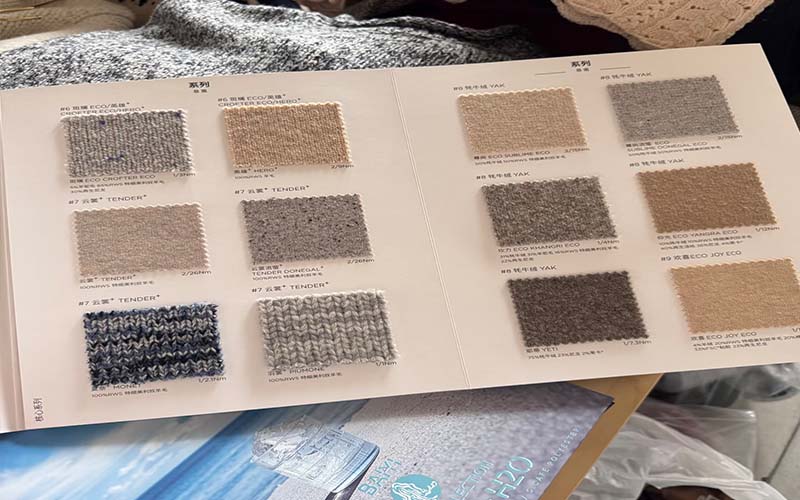
Write the unit beside every minimum the supplier gives you. Is it pieces per style, pieces per colour, yarn quantity per colour, a trim purchase quantity or a minimum order value? Do not combine those statements into one number called MOQ.
Also ask what counts as a style. A crewneck and a cardigan should not be assumed to share a garment minimum because they use the same yarn. A change to the silhouette, knitting programme, artwork or trim package may need a separate review. Let the supplier identify which proposed variants can be grouped.
If you need the introductory explanation of why a production minimum exists, see the existing sweater MOQ overview. The task here is different: determine whether the actual assortment meets the conditions of the offer.
| Quantity statement | Clarification to request |
|---|---|
| “500 pieces” | Per style, per colour or for the whole purchase order? |
| “Colours can be mixed” | Which colours and quantities, using which yarn articles? |
| “Sizes can be mixed” | Within which size range, and are any size quantities restricted? |
| “Stock yarn available” | Which article, shade, quantity and availability date were checked? |
| “Repeat orders accepted” | At what quantity and with what material and trim conditions? |
Record the answer against the proposed order version. A minimum quoted for a plain stock-colour pullover should not silently become a commitment for a different jacquard design.
Build the assortment before negotiating the total
Create one row per style and colour, then place the offered sizes in columns. Include zero quantities explicitly when a size is not being ordered. This makes it easier to distinguish an intentional omission from a missing entry.
Here is an illustrative allocation for one style, not a QITE quotation or approved colour minimum:
| Colour | S | M | L | XL | Total |
|---|---|---|---|---|---|
| Navy | 25 | 75 | 100 | 50 | 250 |
| Grey | 15 | 45 | 60 | 30 | 150 |
| Oat | 10 | 30 | 40 | 20 | 100 |
| Total | 50 | 150 | 200 | 100 | 500 |
The order contains 500 garments but 12 colour–size combinations. The smallest combination contains only 10 pieces. Neither the 500-piece total nor the average per combination establishes whether this order is workable. The supplier still needs to confirm the style minimum, colour quantities, size range and material route.
Do not distribute quantities equally just to make the sheet tidy. Use the demand information available to the buyer, identify uncertain cells and distinguish a sales forecast from an approved purchase quantity. If a proposed shade has weak demand, ordering more of it solely to satisfy a material requirement creates a different problem rather than solving the assortment.
Locate the material constraint separately
Ask whether the limiting factor is garment production or material procurement. The distinction changes the available choices.
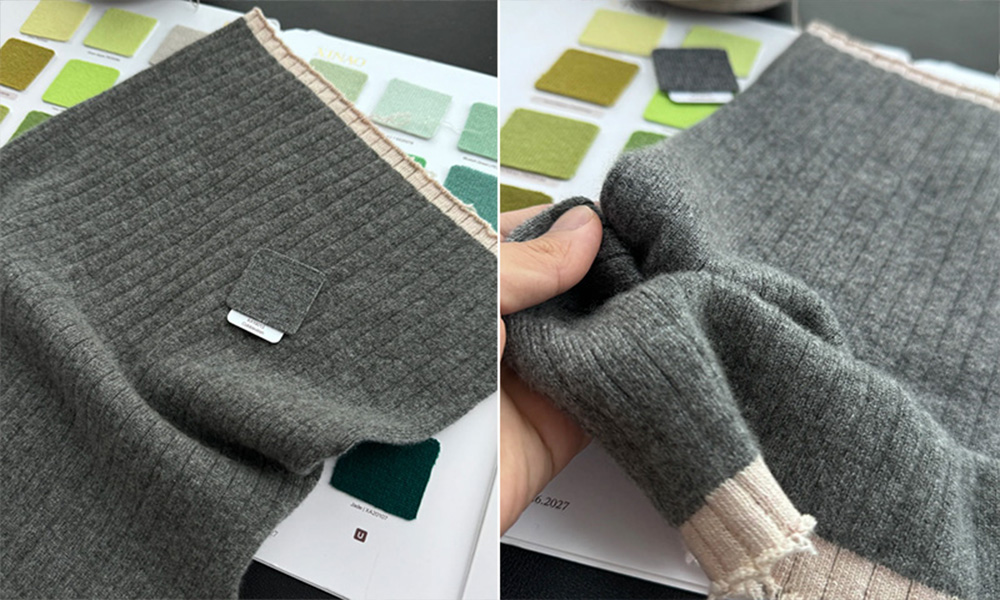
Stock-service shades are a real sourcing route: for example, yarn supplier Knoll lists stock-service colours for its Coast collection. That is an example of a supplier offering, not a statement that QITE uses that yarn or that the required quantity is currently available. A shade card is not an inventory reservation.
For the proposed yarn, confirm the article, colour reference, available quantity and whether the quote assumes stock or a new dye batch. Ask the same question for a second colour rather than assuming the answer transfers across the palette.
An illustrative calculation shows why pieces and material quantities must stay separate. Suppose the planning estimate is 0.40 kg of net yarn consumption per garment for 100 garments in one colour. That is 40 kg before any agreed allowances. If a hypothetical supplier requires a 60 kg purchase for that colour, the material commitment exceeds that estimate by 20 kg. These are assumed numbers, not a production recipe or a QITE minimum.
The next question is who buys, owns and holds any remaining material, and how its quantity will be reconciled. Do not assume that purchasing yarn below the garment factory’s usual run size automatically makes a smaller garment order acceptable. Both conditions need confirmation.
Change one constraint at a time
If the assortment is not workable, ask the supplier to name the constraint before changing the design. Then compare a small number of revised options.
- If one colour is the issue, ask about a confirmed available shade or a simpler palette. Keep the accepted material properties visible during that review.
- If the collection is split across too many styles, ask whether reducing the initial style count makes the programme workable. Do not assume unrelated styles can be pooled.
- If trims or packaging are the issue, separate their purchase quantities from the garment quantity and identify who holds any surplus.
- If the size spread is the issue, ask for the actual restriction. Removing a needed size merely to improve an average is not a sound assortment decision.
Keep the original and revised matrices side by side. Otherwise a lower headline price may hide fewer colours, different packaging or a changed product. The small-batch clothing guide provides the wider supplier and development context; use this matrix to keep the particular sweater proposal identifiable.
Request a quote that preserves the assumptions
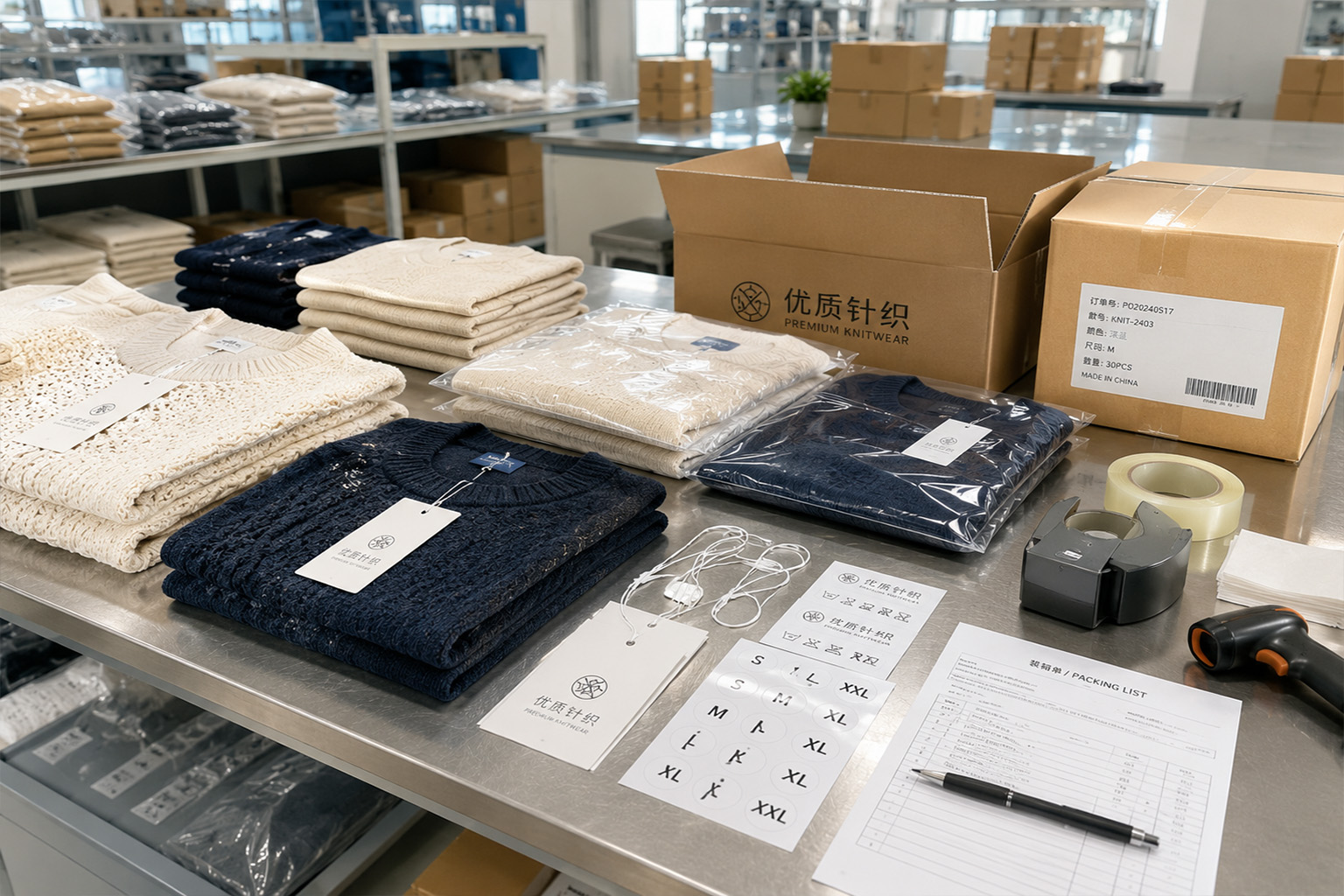
Send the matrix with the style reference and current specification. Ask the supplier to mark which quantities are accepted and which require a change, rather than replying only with a unit price.
The written response should identify the material basis, quantity basis, included labels and packing, development charges where applicable, and any separate purchase commitments. If the price is provisional pending a sample or yarn-consumption review, keep that condition visible.
Do not change the matrix after accepting a quotation without asking whether it changes material procurement, production planning or price. Replacing navy garments with additional oat garments may leave the same total while changing the limiting colour requirement.
Attach the accepted quantity sheet to the custom sweater Tech Pack and order references. A clear quantity version is as important as a clear artwork version when the factory plans what to make.
Separate the first order from the replenishment plan
A smaller repeat order should not be assumed simply because the first order was completed. Ask whether yarn, trims and the original construction remain available, whether any materials were reserved and what quantity conditions apply to a repeat.
Where unused materials are deliberately held, agree their identification, ownership, storage arrangement and approval before reuse. Holding yarn does not reserve machine time or guarantee an identical future shade from a new batch. A repeat also needs a confirmed size and colour breakdown.
Keep the expected reorder as a forecast unless it is an actual commitment. A projected future total is not necessarily a basis for treating a smaller initial run as accepted. The knitwear manufacturing review should address the proposed production route and schedule alongside those quantities.
Preparing a quantity review with QITE
QITE Garments has its production foundation in sweaters and knitwear. Its stated starting reference for custom sweater production is 500 pieces per style; that is not a promise that any colour split, size range or construction is accepted automatically. Confirm the specific plan in writing.
For an enquiry, send a separate matrix for each style, the yarn and colour direction, artwork, trim and packing requirements, and the intended delivery window. Ask QITE to review the quantity plan and identify the constraint if it cannot be quoted as submitted. That gives the next discussion a useful subject: which part of this assortment needs to change, rather than whether a single MOQ number sounds attractive.