
A cardigan can look straight when laid flat and pull out of shape as soon as it is fastened. Buttons expose small alignment problems. A full-length zipper can make an otherwise soft front feel rigid. Pockets introduce another load into the knitted body.
When comparing a men’s cardigan manufacturer, look for a development discussion that treats the opening, body and pockets as one product. This guide focuses on those construction decisions, rather than repeating a general yarn or factory-sourcing checklist. QITE’s men’s knitwear page provides the main product-category overview.
Judge the silhouette both open and fastened
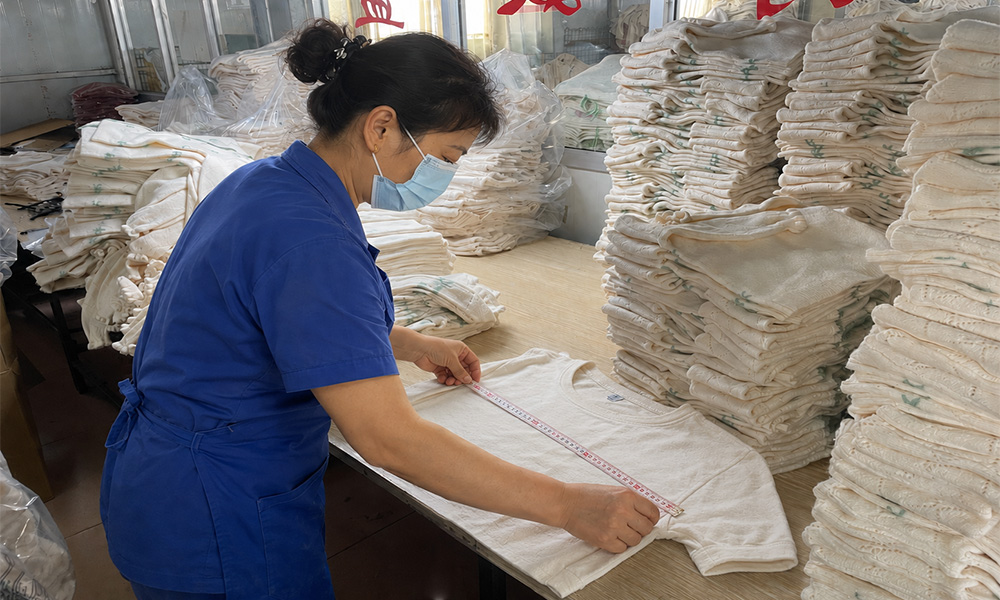
Decide whether the cardigan is primarily worn over a T-shirt, over a woven shirt or as a heavier outer layer. Show the intended layer during fit review. A fit approved over a thin base does not establish the room needed over a substantial shirt.
Review the garment open, then fastened, standing naturally rather than pulling the hem into position for a photograph. Look at the neckline, shoulder position, front length and hem balance. Check whether fastening introduces gaps, pulls the front upward or causes one side to hang differently.
For a V-neck style, record the point where the opening closes and the intended neckline shape. For a shawl collar, show how the collar should sit and turn. These are visible design decisions that a generic chest measurement will not describe.
Use the men’s fit and size-grading guide for the wider size system. Keep this review focused on what happens when the cardigan’s opening is actually used.
Choose the closure before finalising the front
A button front and a full-zip front should not be priced or sampled as though the closure were a detachable styling accessory. Identify the proposed route early so the technician can review its relationship to the knitted edge.
| Construction | Define in the brief | Check on the sample |
|---|---|---|
| Button front | Overlap, band width, button type and size, hole construction and spacing | Alignment, ease of fastening, gaping and the front when worn closed |
| Full-zip front | Zipper type, length reference, slider arrangement, exposed or covered finish | Insertion, clearance, front balance, waviness and operation |
| Open front | Edge treatment, front fall and intended drape | Whether the edges sit as intended without an imaginary closure holding them together |
Specify which side carries the buttons or zipper pull arrangement rather than relying on an assumed convention. Include clear front and inside sketches. If a reference photograph is mirrored, a written instruction prevents that accident becoming the production standard.
Make buttons and buttonholes a working pair
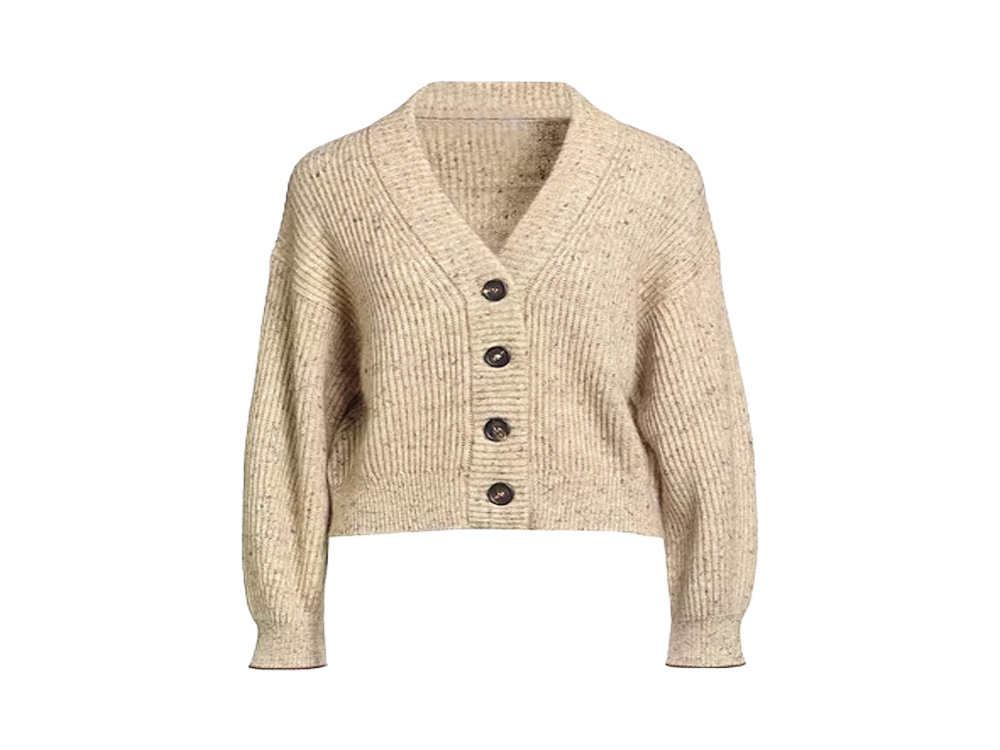
Confirm the actual button, not only its colour. Shape, thickness, edge and shank or hole arrangement can affect how it works with the opening. Show the proposed attachment and inside finish on the sample.
Fasten and unfasten each button through the actual knitted buttonhole. Look for a hole that is difficult to use, one that distorts conspicuously, or a button that sits awkwardly against a thick band. Check the front without deliberately stretching it to make the alignment look better.
Document button positions from a named reference point. Agree how button count or spacing changes across the size range. Copying the same number of buttons into every size is a design choice that needs review, not a rule that follows automatically from the base sample.
Attachment strength and durability requirements should be agreed for the intended product and market. Do not infer a pass from a photograph or set a universal pull force in a buying article. Where formal assessment is required, identify the method and acceptance criteria with the buyer and testing provider.
Assess a zipper as part of a stretchable garment
Request the full zipper specification, including whether the garment needs a separating opening and whether a one-way or two-way arrangement is intended. Check the finished length reference against the front and hem treatment. “Full zip” alone leaves too many details open.
YKK’s zipper sewing guidance explains that the slider needs clearance and recommends checking stretch during temporary fitting of long zippers, particularly in knits. That supports reviewing the actual assembly, not approving the zipper in isolation. It does not mean every cardigan needs the same seam allowance or stabilisation method.
On the garment, move the slider through its complete route. Look for fabric or yarn catching, difficult insertion and interference at the collar or hem. Check the front relaxed and worn, then review it in the agreed finished condition. If it waves, ask the technician to diagnose the relationship between zipper, knitted edge and attachment before changing several variables at once.
A quarter-zip reference is not a substitute for a full-opening cardigan sample. The quarter-zip development guide addresses that shorter opening; a cardigan needs its own bottom-opening and full-front review.
Decide whether the pockets are decorative or functional
A pocket shown on the sketch needs a defined opening, depth, position and construction. Ask whether it is a patch pocket, a pocket formed within the knit or a separate pocket-bag arrangement. These proposals can look similar from the front while feeling different inside.
For a functional pocket, agree a representative use check. Examine access, comfort and the effect on the front when it carries the intended kind of item. Do not prescribe an arbitrary weight as though it were a standard. The buyer and supplier should set a realistic review scope for the product.
Compare pocket height and symmetry with the cardigan both open and fastened. Look at the inside attachment and where any pocket bag ends. If the garment front drops or the opening distorts, record the symptom and discuss the construction; simply shortening the pocket may not address the cause.
Place branding after resolving the opening and pockets
A chest mark can compete with a pocket, become crowded by the band or change the feel of a light front. Place the intended artwork on the actual silhouette before accepting its scale. If embroidery is proposed, check the backing and local feel as well as readability.
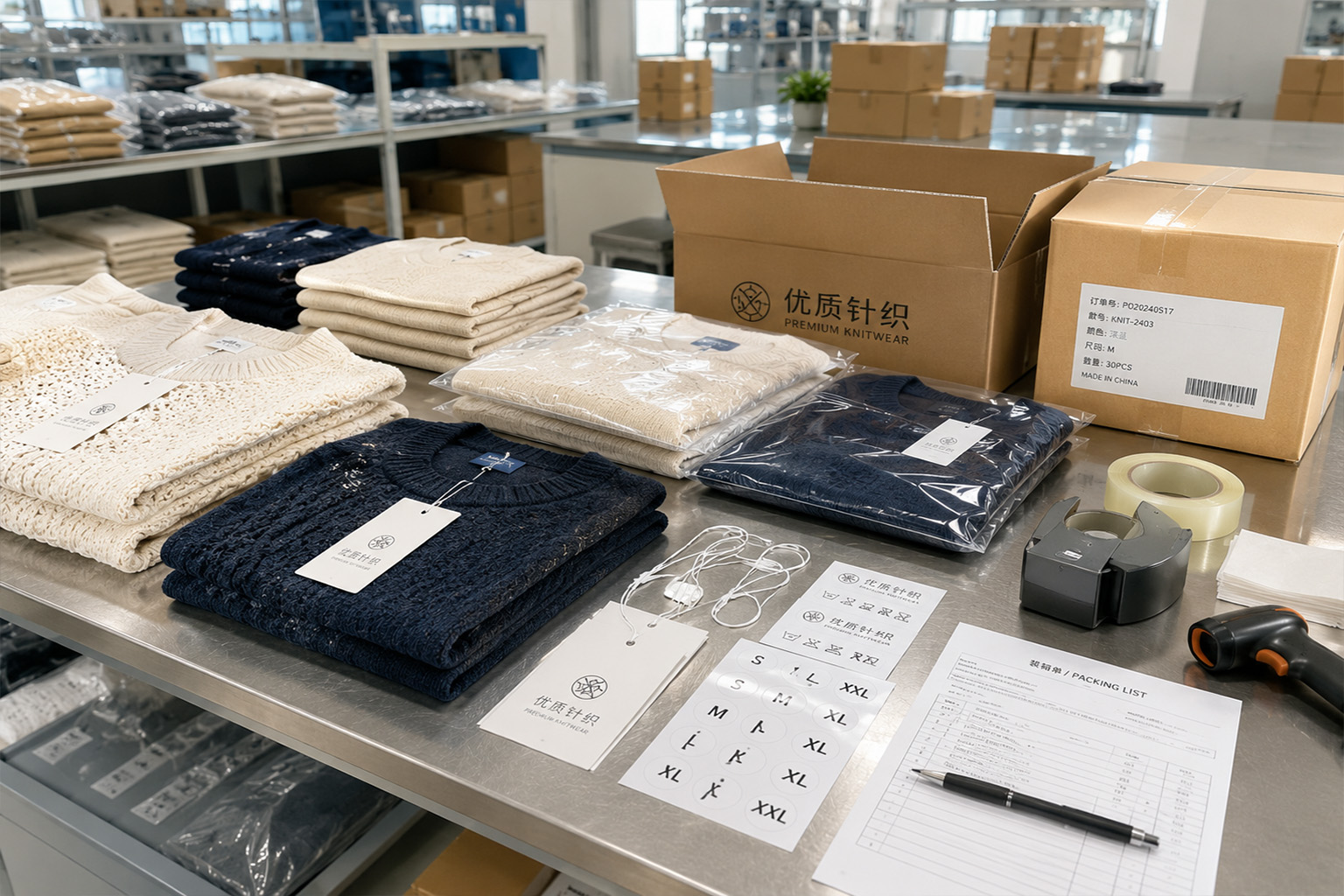
Keep the main label and care-label positions clear of an uncomfortable contact point. Record the size label and barcode relationship so the garment identity remains clear through packing. For technique selection, use the custom sweaters with logo guide instead of deciding from a logo file alone.
Private label should mean a controlled set of brand details, not permission to add the same neck label to an unresolved cardigan body.

Send a correction that identifies the construction problem
An illustrative sample comment, not a QITE case history, might read: “Sample C2 sits acceptably open. When fastened over the intended shirt, the front gaps between the middle buttons. Please review the overlap, band and body relationship. Keep the accepted neckline position, propose the correction and identify whether another fit sample is needed.”
That is more useful than “increase chest” because it identifies when the problem appears without pretending the buyer has already diagnosed its cause. A measurement change could be appropriate, but it should be considered alongside the opening construction rather than used as an automatic fix.
Use separate comments for a zipper problem, pocket issue or label correction. Give each a sample reference and an outcome to demonstrate. Once corrected, carry the accepted details into the men’s sweater Tech Pack so production works from one consistent revision.
Discussing a men’s cardigan with QITE
QITE Garments builds its offering on sweater and knitwear production. Through its custom sweater development service, a cardigan enquiry can start with a reference garment or a clear front-and-back sketch. Include the intended layer, closure, pocket use and any non-negotiable brand details.
Ask which construction decisions are still open before requesting the next sample or comparing quotations. A price for a button cardigan without pockets is not directly comparable to a full-zip style with functional pocket bags and different finishing. Send QITE the cardigan brief so the discussion can address the actual garment rather than a generic “men’s sweater” specification.