A yarn that feels lovely between finger and thumb may still be the wrong choice for a child’s everyday sweater. The neckline might feel different against bare skin, the surface may change where a schoolbag rubs, or the care routine may be unrealistic for the family buying it.
Choosing yarn for kids’ sweaters starts with the child’s use of the garment, not a ranking of fashionable fibres. This guide helps buyers build a material shortlist and decide which evidence is needed before committing to a yarn. It does not replace fit approval, wash testing or a destination-market compliance assessment.
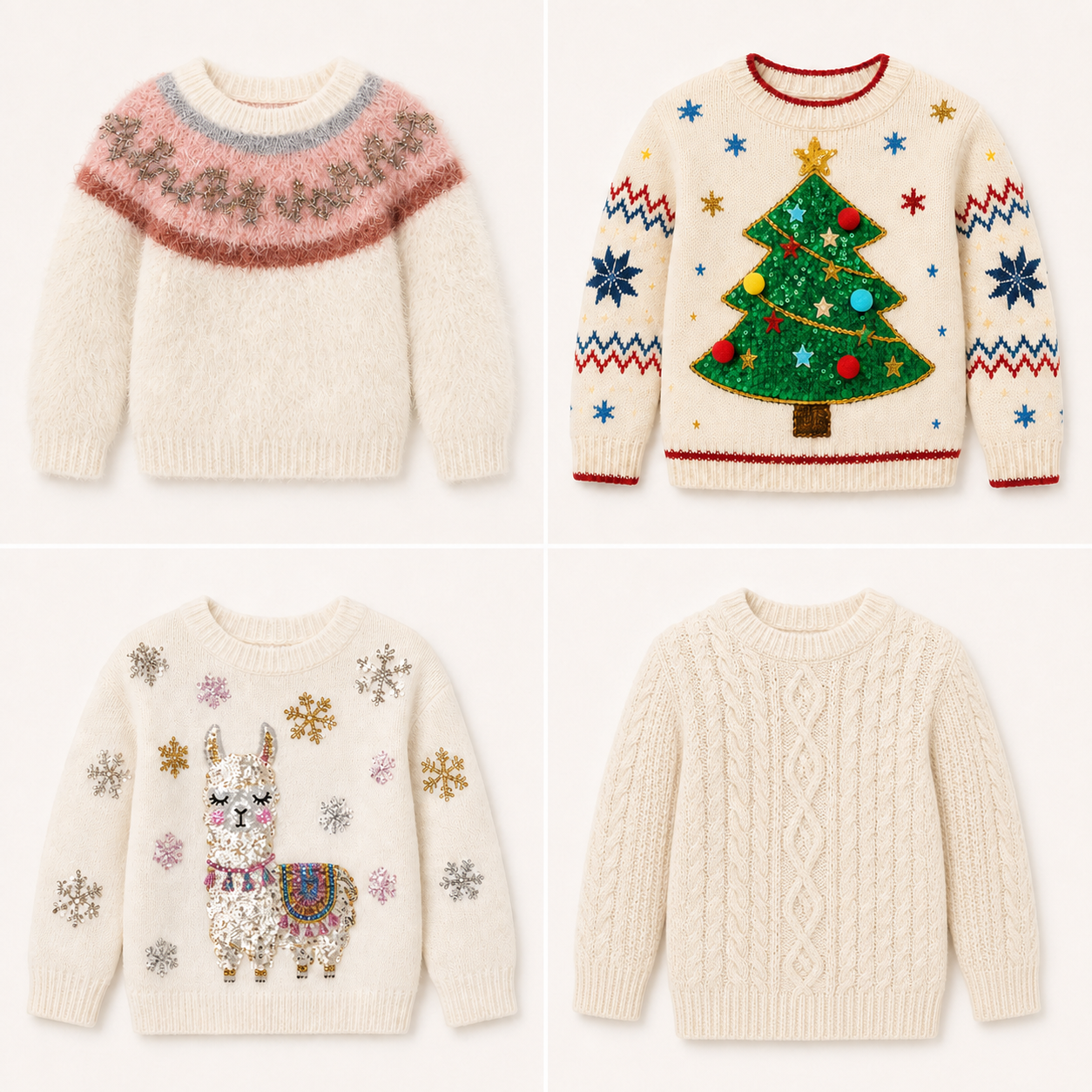
Describe a day in the garment before choosing a fibre
Write a short use brief that a yarn supplier can understand. Age group matters, but it is not the only distinction. A cardigan worn over a school shirt, a pullover worn against the neck and an occasional festive style can have quite different priorities.
| Use brief | Material question to resolve first | Trade-off to make explicit |
|---|---|---|
| Everyday school layer | What retains an acceptable surface under repeated wear and the intended care routine? | A very lofty handle versus a neater appearance over time |
| Next-to-skin pullover | How does the finished fabric feel at the neck, wrists and seams? | Surface softness versus the required structure and recovery |
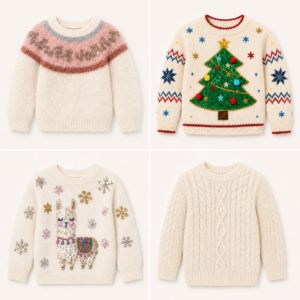
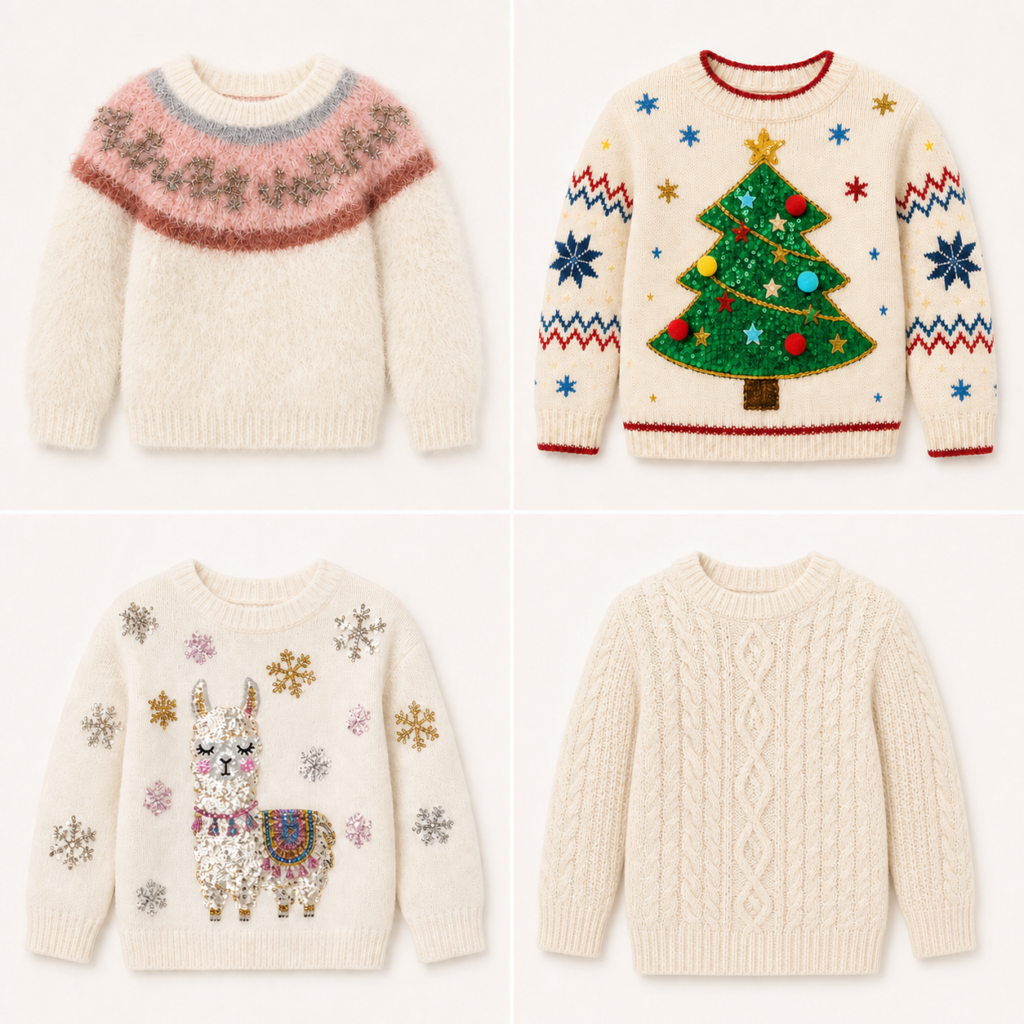
| Occasional textured style | Is the chosen surface appropriate for the age group and actual wear? | Decorative texture versus snagging, loose surface fibres and care needs |
These are development questions, not automatic fibre recommendations. The same family of yarns may contain suitable and unsuitable options for a particular brief. Decide which requirements are essential before comparing swatch prices.
Specify what will be worn underneath. “Soft enough” means little if one team evaluates the sweater over a shirt while another expects the neckline to touch bare skin throughout the day.
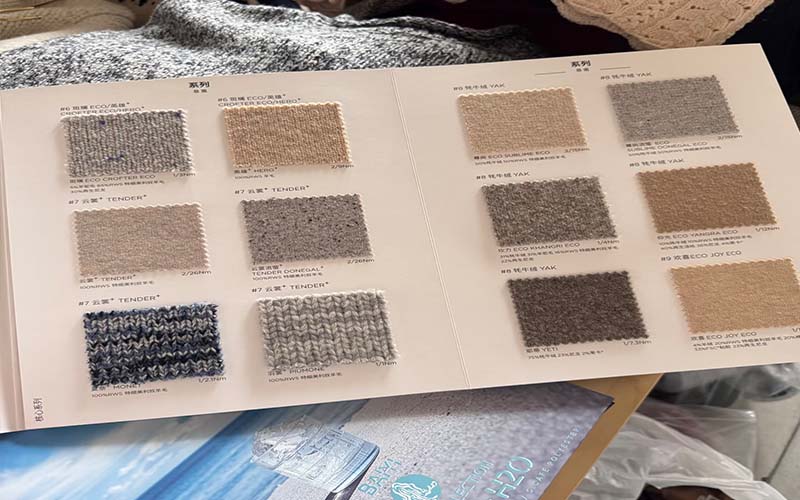
Compare finished fabrics, not fibre names
Cotton, wool and synthetic blends describe composition choices. They do not, by themselves, establish whether the finished sweater will be comfortable, hold its shape or tolerate the intended care. Ask what the particular yarn is designed to do, then assess it in the intended knitted construction.
For a wool candidate, fibre fineness is a useful question rather than an incidental marketing detail. Woolmark’s explanation of Merino softness connects the sensation of prickle with fibre coarseness. That does not establish that every wool yarn feels the same, or that any particular child’s response can be guaranteed.
Avoid product claims such as “itch-free for every child” or “hypoallergenic” simply because a sample feels soft. Keep the buying claim within the evidence available. Individual comfort needs should not be turned into a medical promise in a product description.
For cotton or blended candidates, ask the same practical questions about the finished fabric: feel at contact points, body support, surface behaviour and care compatibility. Do not give a blend an automatic durability pass, or assume a natural-fibre description removes the need for testing.
Check the inside where the child will notice it
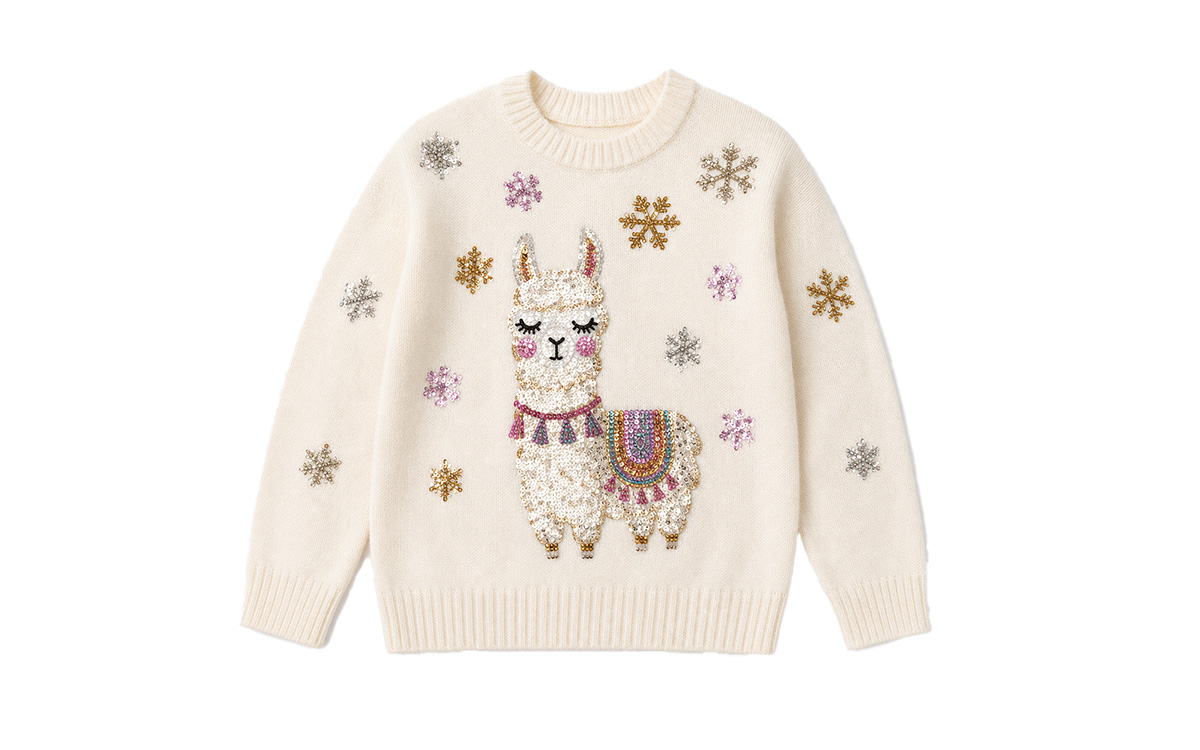
A hand-feel review often concentrates on the front face because that is what the product photograph shows. Turn the sample inside out. Feel the neck join, shoulder seams, cuff joins, label area and any decoration backing. A soft body panel does not compensate for a harsh contact point elsewhere.
Where a representative garment is available, arrange an appropriate supervised comfort and movement review with the necessary consent. Record the issue in specific terms: a rough seam edge, pressure at a cuff or a backing that feels stiff. Do not record “yarn uncomfortable” when the cause could be a seam, trim or tight construction.
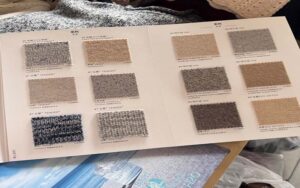
If only swatches are available, state that limitation. They can support material shortlisting, but cannot approve the complete garment. A fluffy swatch that everyone likes in a meeting should still be assessed for surface fibres, catching and suitability for the intended age and use. A photo cannot supply that evidence.
Decide what acceptable wear will look like
An everyday children’s sweater is unlikely to stay untouched by friction. Identify the likely contact areas for the product: underarms, cuffs, elbows and, where relevant, the points touched by a bag or outer layer. Ask how the proposed yarn and structure will be evaluated for that use.
Woolmark’s pilling guidance links pilling with rubbing during wear and explains why it depends on several factors. For buying purposes, this means a fibre name and a smooth new sample are not enough to promise a surface outcome.
Keep pilling, loose surface fibres and snagging as separate observations. They are not interchangeable defects, and a correction aimed at one may not resolve another. If a laboratory assessment is required, agree the method and acceptance criteria with the relevant testing provider and buyer; do not invent a universal pass level from a swatch photograph.
There is also a commercial choice to make. Is the intended customer buying a lightly worn fashion piece or a frequently used school layer? Record the expected appearance rather than allowing “softest” to win every comparison while wear expectations remain unstated.
Treat care convenience as an early selection requirement
If the product brief requires a particular care routine, tell the supplier before the yarn is shortlisted. Do not choose a delicate-looking fabric first and hope a convenient care label can be added later.
Ask for the proposed yarn article’s care information and identify what still needs verification on the finished garment. A yarn-level recommendation does not automatically establish the behaviour of a sweater with seams, buttons, embroidery and labels.
The existing kids’ sweater wash-testing guide covers test conditions, dimensional change and reporting. Use it for that procedure rather than copying the test checklist into the yarn brief. At selection stage, the decision is simpler: can this candidate plausibly meet the required care direction, and what evidence is missing?
If a candidate fails a non-negotiable care requirement, reject it or revise the brief openly. Do not quietly relax the requirement because the colour and first-touch softness are attractive.
Ask what a certificate actually covers
Where certification is part of the buying requirement, request the actual documentation rather than accepting a logo on a yarn card. Check the holder, article description, scope and validity, and use the scheme’s verification tool where available.
For example, OEKO-TEX STANDARD 100 distinguishes product classes by intended use and offers certificate verification. Establish whether the evidence relates to yarn, fabric or the finished article. Do not turn component documentation into an unsupported claim that every part of the completed sweater is certified.
This is a documentation check, not a claim that QITE or the pictured products hold a particular certificate. It also does not settle every product-safety obligation. Confirm the required compliance scope for the age group, product and destination before the order is released.

Use rejection gates before a preference score
A simple comparison sheet becomes more useful when unacceptable candidates cannot win by accumulating points for colour or softness. Set mandatory requirements first; only compare preferences among candidates that remain eligible.
| Decision gate | Evidence to request | Action if unresolved |
|---|---|---|
| Intended contact and comfort | Finished-fabric review; garment contact-point review where available | Hold the choice and identify whether yarn or construction causes the concern |
| Required care direction | Yarn information plus an agreed finished-garment verification plan | Do not promise the care claim yet |
| Required documentation | Identifiable, applicable and valid records | Resolve the scope before making a certification claim |
| Wear expectations | Relevant assessment of surface and structure | Agree what must be checked; do not mark it passed by appearance alone |
| Production identity | Named yarn article and substitution approval rule | Do not approve an unidentified alternative as equivalent |
After those gates, compare the eligible options for handle, appearance and cost. Keep one physical reference for the selected option. Ask for a review if the yarn or finish changes; otherwise a later substitute may inherit approvals it never earned.
A focused yarn enquiry for QITE
For example, a buyer developing a school cardigan might write: “This is an illustrative brief: worn over a shirt, intended for regular school use, with a buyer-defined home-care requirement. Please propose identifiable yarn options and state what remains to be verified for surface wear and care.” This is more useful than “send your softest kids’ yarn.” It is not an actual customer case or a product-performance guarantee.
QITE Garments builds its offering on sweater and knitwear production. Send the use brief with a garment reference through its custom sweater development service, or contact the team with the material priorities. Fit and grading should remain in their own approval record, as explained in the kids’ size-grading guide. Keeping those decisions separate makes it easier to correct the actual problem instead of changing the yarn every time a sample needs work.