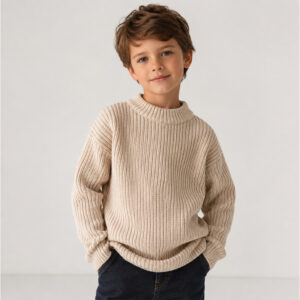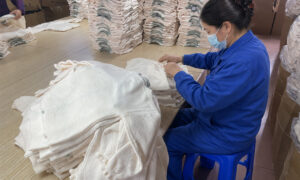

The sample arrives, the artwork looks good and the delivery window is getting tighter. Someone replies “approved” to the email. Does that authorise buying the bulk yarn, starting knitting, attaching the decorations, or shipping the order?
Those are different decisions. A custom Christmas sweater sample approval checklist should make the permission clear enough that a factory can act on it without guessing. This guide is for the point between receiving a development sample and releasing the agreed production stage. For the product-development service itself, visit QITE’s custom Christmas sweaters.

First establish what the sample represents
A buyer-supplied garment and a newly developed approval sample serve different purposes. The photo-and-reference-sample guide explains what can be learned from the original reference and what still needs to be demonstrated on the proposed sweater.
Before judging appearance, ask which parts of the sample represent the proposed order. It may use a substitute yarn colour, temporary label, sample-room decoration or unconfirmed trim. None of those differences automatically makes it useless. They do limit what it can approve.
Attach a short difference list to the sample record. Identify the physical sample, current artwork file, specification revision and proposed production materials. Ask the supplier to state substitutions explicitly, including anything that cannot be seen in a front-view photograph.
A swatch can settle an artwork detail. A garment can reveal placement and fit. Neither automatically approves all sizes, colours and packing variants. Use the Christmas sweater design guide for preparing the original brief; at this stage, the task is establishing which parts have actually been demonstrated.

Review three decisions separately
Separate appearance approval, performance evidence and production readiness. A garment can pass one review while remaining on hold for another.
| Decision | Question to answer | Evidence to identify |
|---|---|---|
| Product appearance and function | Is the demonstrated garment acceptable in the reviewed size and colour? | Sample identity, measurements, artwork, front/reverse details and functional observations |
| Required performance or compliance | Have the specified checks been completed for the relevant product? | Applicable reports, tested sample identity, results and unresolved requirements |
| Permission to proceed | Which operation is authorised, using which materials and specifications? | Written release scope, exclusions, conditions and responsible approver |
Do not mark an unanswered item “pass” merely because the deadline is close. Use “not reviewed,” “not representative” or “pending evidence.” These descriptions tell the next person what remains to be done; a blank cell does not.

Check the festive artwork as a garment, not a screenshot
Read the text at normal viewing distance. Check spelling, logo version, colour arrangement and motif position against the approved file. Examine where a design meets the armhole, neck rib, side seam or hem. A composition that works in the middle size may crowd the smaller front.
Turn the garment over and inspect its inside. Look at the proposed knitting back, yarn ends, embroidery backing and attachment areas as applicable. Record the actual concern instead of asking for “better quality.” For example, identify the location of a rough backing edge or an unwanted opening at a colour boundary.
Do not reopen the entire technique choice if the chosen construction already meets the brief. If it does not, the Christmas decoration comparison explains the trade-offs between jacquard, intarsia, embroidery and appliqué. Link the resulting correction to a new artwork or construction revision, rather than relying on a verbal instruction to the technician.
Use a release checklist with an action column
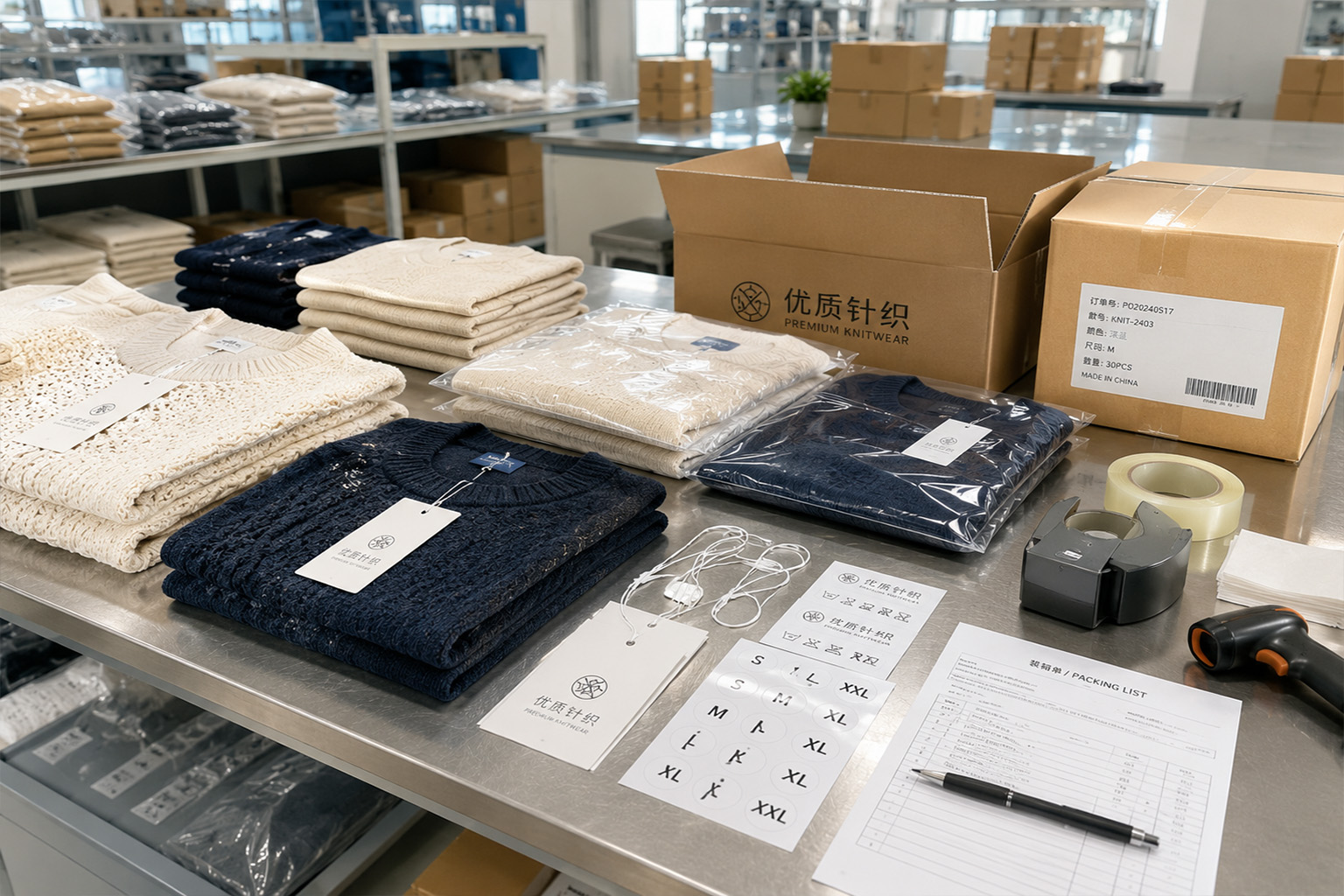
The checklist below is a working review aid, not a testing standard. Add the buyer’s actual requirements and avoid universal tolerances or pass levels that were never agreed.
| Review item | Record before releasing the relevant stage | If unresolved |
|---|---|---|
| Sample and material identity | Style, sample revision, yarn article, colour and any substitutes | Restrict approval to the properties the sample genuinely represents |
| Artwork and placement | Correct file, wording, motif dimensions and placement references | Hold the affected knitting or decoration step |
| Fit and measurements | Reviewed size, measurement condition, specification and recorded deviations | Request a correction or explicitly scoped fit decision |
| Sizes and colourways | Which variants were physically reviewed and which remain open | Agree the missing size/colour evidence; do not imply complete coverage |
| Decoration and trims | Actual components, attachment, inside finish and function | Identify the required replacement, check or new sample |
| Care and specified tests | Relevant procedure, sample identity, report and acceptance decision | Keep that approval pending; do not relabel appearance approval as test approval |
| Branding and packing | Current label files, variant identification and assortment instructions | State whether only those finishing or packing operations remain on hold |
| Final release | Authorised operation, current references, remaining restrictions and approver | Do not issue an unrestricted “approved” message |
Not every open item has the same consequence. An unresolved main motif may prevent the intended panel from being knitted. An unresolved carton mark is a different dependency. Ask the supplier which operations depend on each decision, and document any partial release before materials are committed.
Write corrections that close a decision
A useful correction states the observed problem, the required outcome and the evidence needed to close it. “Logo too low” is a starting observation, not a complete instruction. Identify the measuring reference and approved target, then say whether a revised placement drawing is enough or another physical sample is required.
Avoid combining unrelated corrections into one sentence. If the neckline, artwork and label are all changing, give them separate entries with owners and revision references. That makes it possible to see what was corrected and prevents a new photograph of the logo from silently closing a fit issue.
Where a proposed correction changes material or construction, reassess which previous results still apply. A softer replacement yarn, a larger embroidered area or a different backing can create a product that the original checks did not represent. Agree the necessary repeat review instead of automatically carrying every approval forward.
A conditional approval should say what remains forbidden
Consider this illustrative release scenario, not a QITE customer case. A sample has acceptable motif placement, but its green yarn is a temporary shade and the final label artwork is missing.
“Approved, please proceed” is ambiguous. A clearer record would state: “Motif placement on sample S2 is accepted against artwork A3. Bulk green colour remains unapproved. No bulk yarn purchase or knitting is released by this message. Label attachment remains on hold pending file approval. Please confirm the next evidence required for colour approval.”
The exact restriction should fit the actual project and agreement. The point is not that every open label must stop all production. It is that someone must define the boundary, and the factory must acknowledge what the message permits.
If a sample fails an agreed requirement, do not call it conditionally approved simply to keep the schedule looking unchanged. Record the failure and correction. Then review the remaining production window using the Christmas sweater lead-time guide. A deadline does not turn incomplete evidence into acceptance.
Keep the approved reference available during production
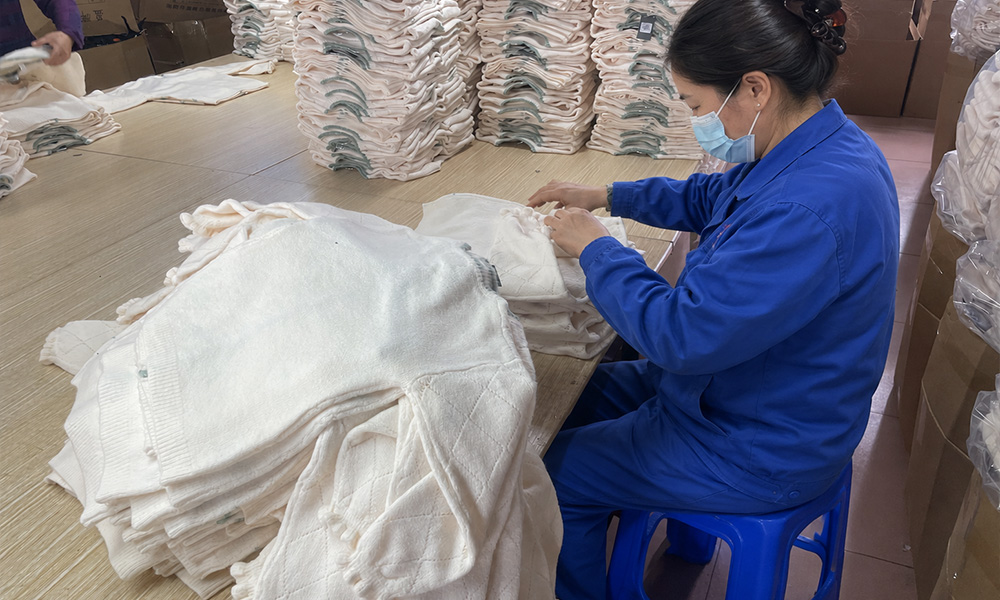
Once the release is issued, the production team needs access to the accepted physical reference, current files and documented exceptions. Keep a dated record showing which earlier references have been superseded. If the buyer and factory retain different samples, identify them so a later inspection does not compare two different versions.
Sample approval does not replace production inspection. Intertek’s textile and apparel inspection overview distinguishes checks before production, during production and before delivery. That separation is useful here: accepting a development reference is not evidence that every bulk garment matches it.
Connect the accepted reference and project-specific criteria to the knitwear quality-control plan. Decide how any later material or construction change will be reviewed before it enters production.
Sending an approval review to QITE
QITE Garments has its production foundation in sweaters and knitwear. For a seasonal programme, send the sample comments with the current artwork, specification revision and a list of open decisions. Use the custom sweater service for the broader development scope, and contact QITE to clarify the release boundary if the team is unsure what can proceed.
The most useful final message is short but specific: which sample is accepted, for which properties, against which documents, and what is authorised next. That is much easier to work from than an enthusiastic “looks great” followed by corrections in three separate conversations.