Finding the right children’s sweater manufacturer is different from sourcing adult knitwear. Kids’ sweaters need to look good, feel comfortable, wash well, and stay durable through daily wear. But for boys and kids brands, there is another layer of responsibility: safety.
If your sourcing plan also includes adult women’s styles, this OEM women knitted sweater manufacturing guide explains a related buyer workflow.
Children move, pull, climb, play, and wash garments more often than adults do. A sweater that works for a women’s fashion collection may not be suitable for children if the yarn is itchy, the seams are rough, the buttons are weak, the neck opening is too tight, or decorative parts can come loose.
For brands developing private label kidswear, boys’ knitwear, school sweaters, toddler cardigans, or seasonal children’s collections, a reliable OEM knitwear production partner should understand both garment quality and child-focused product risks.
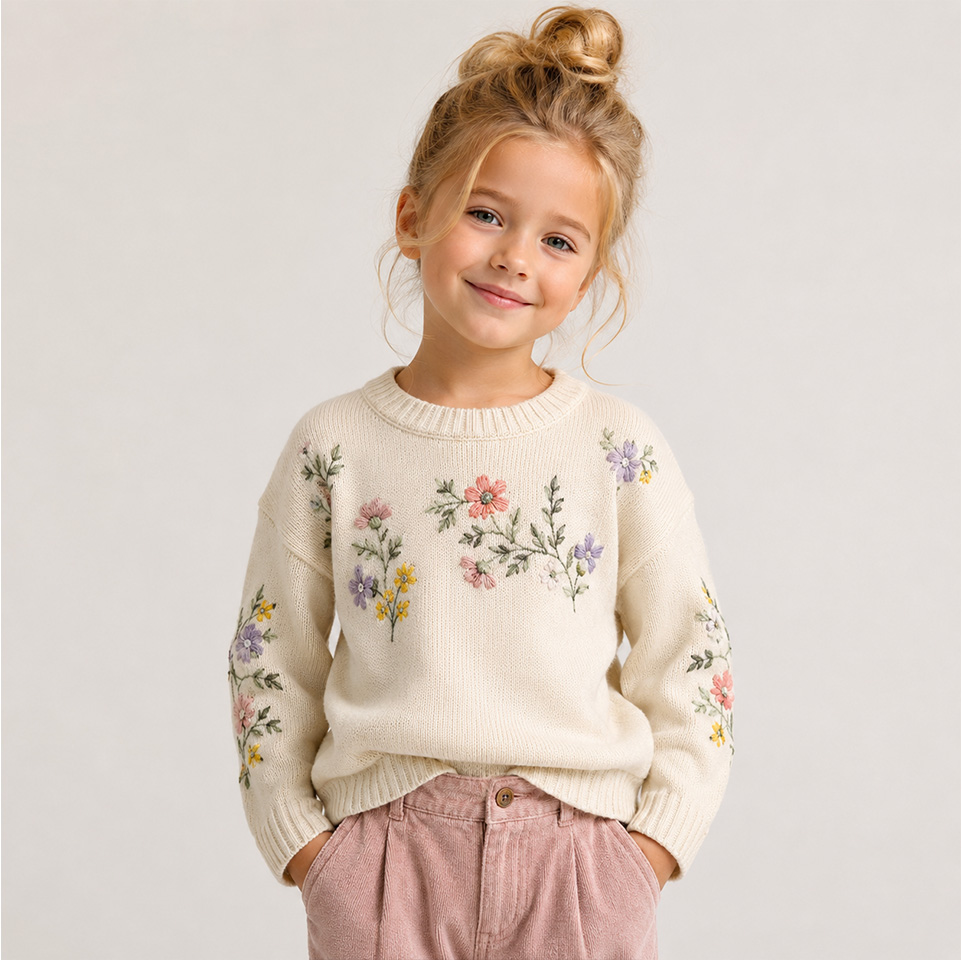
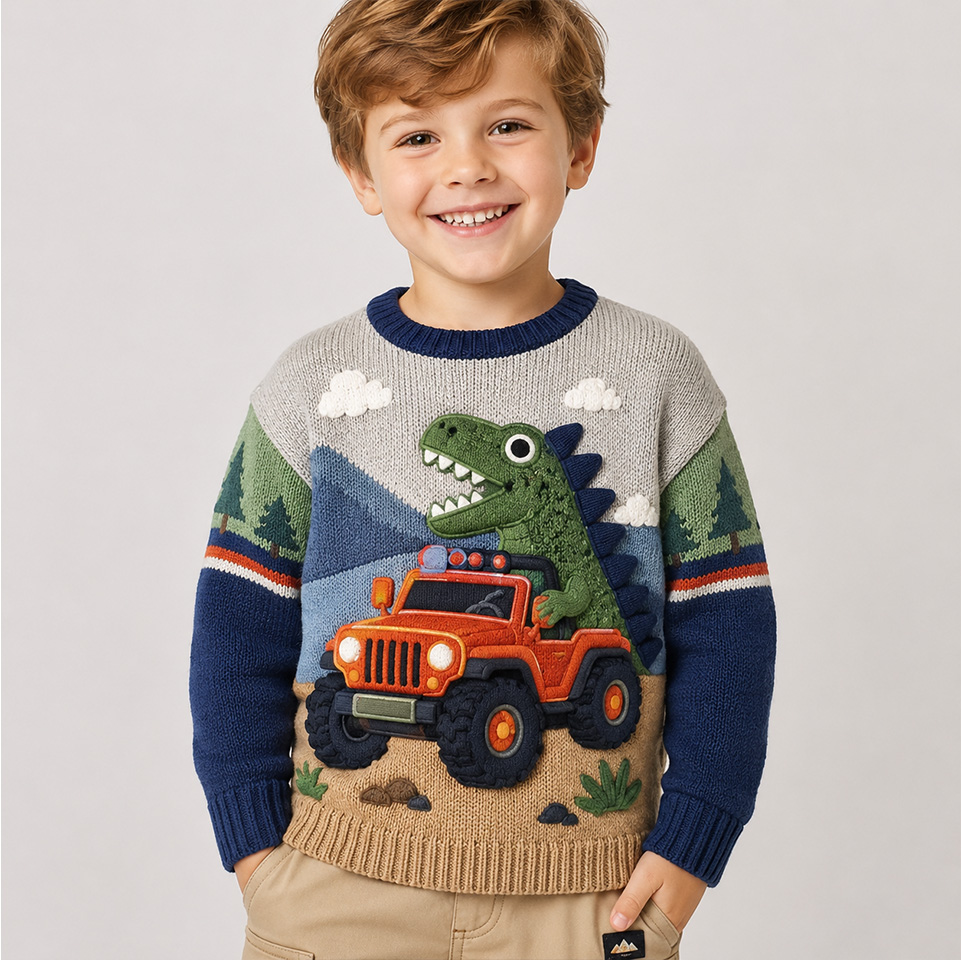
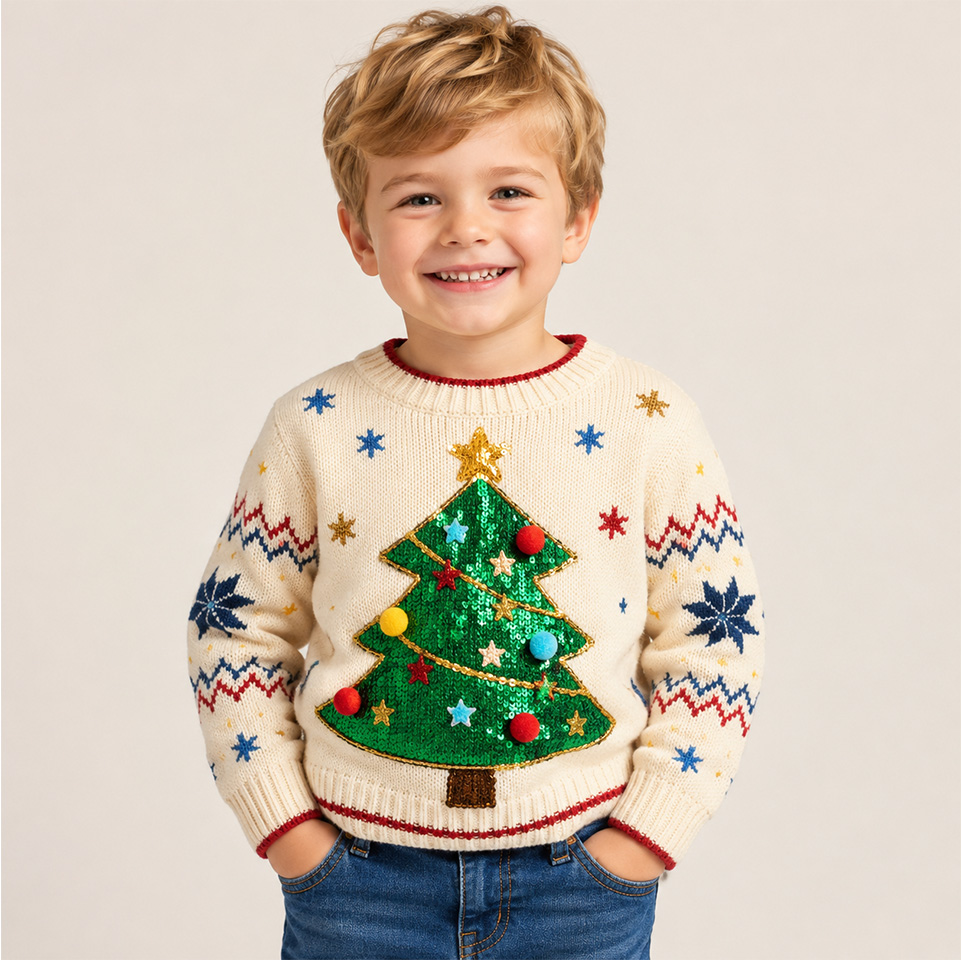
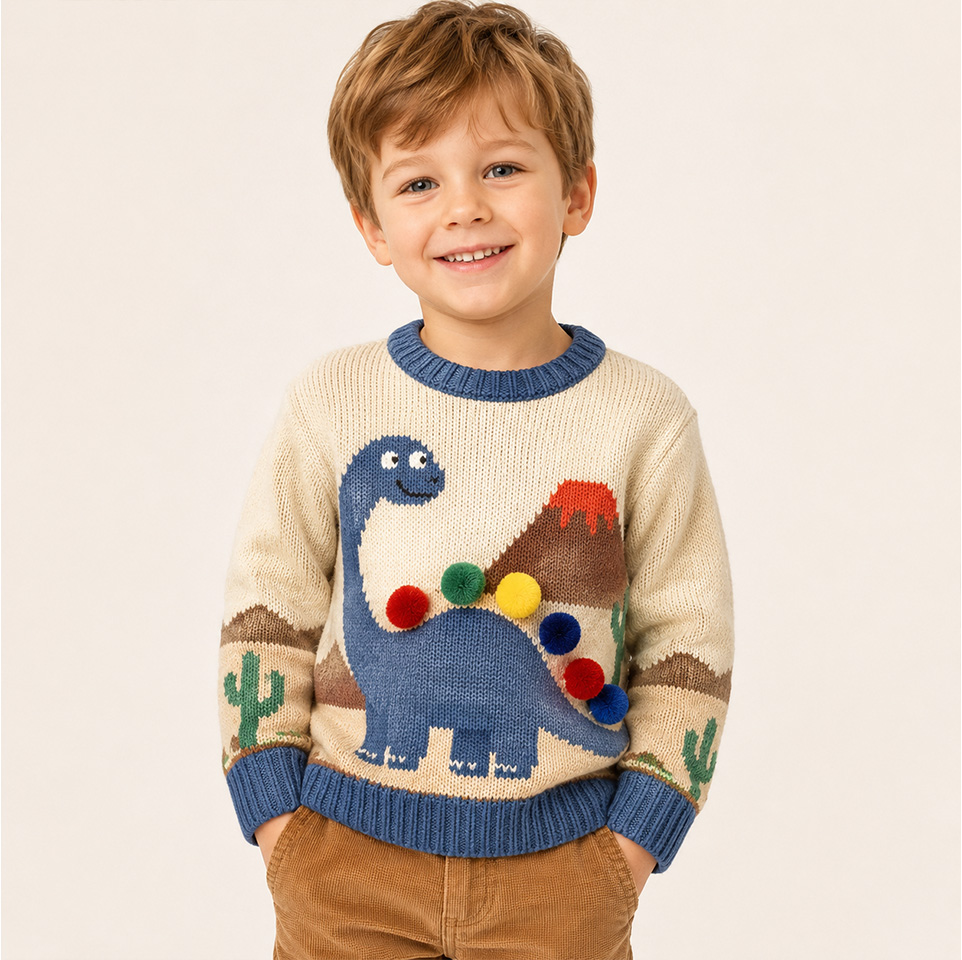
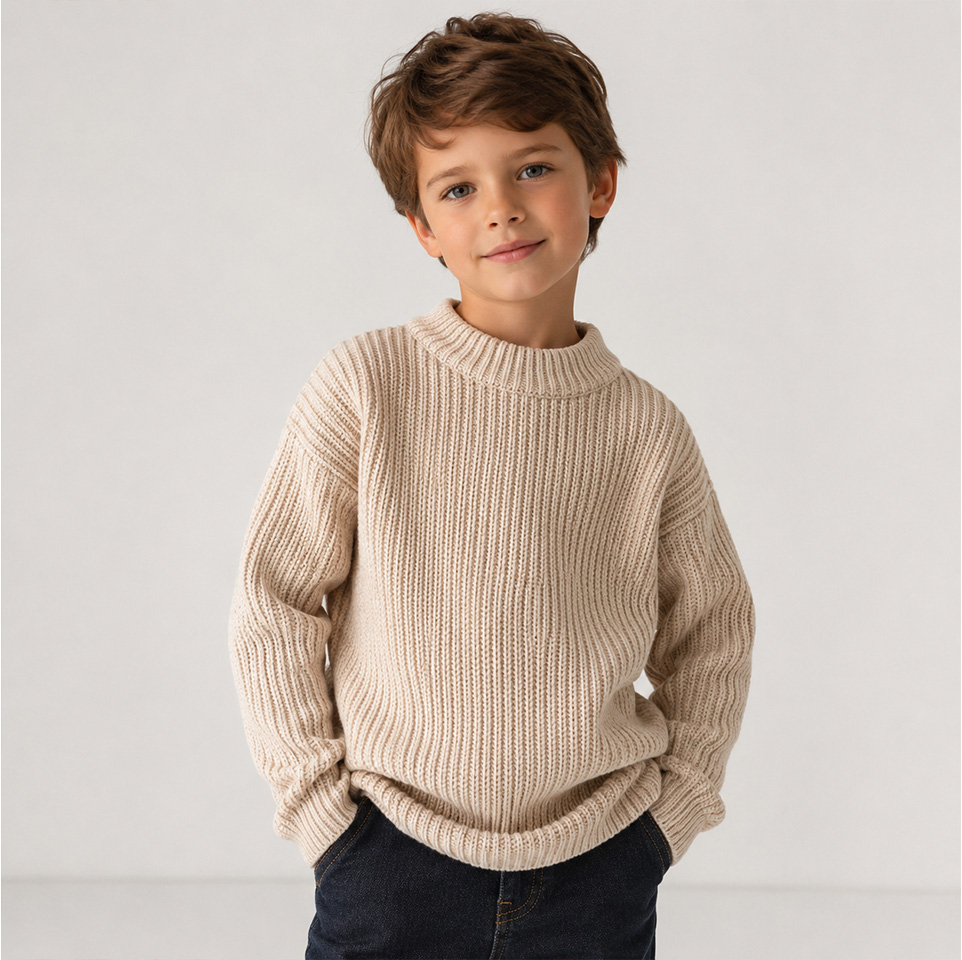
Why Children’s Sweater Production Needs a Specialist Manufacturer
Sweater manufacture is already more technical than many basic apparel categories. The final garment depends on yarn, gauge, stitch tension, linking, washing, finishing, size grading, and quality inspection.
For children’s sweaters, the manufacturer also needs to consider:
- Soft handfeel against sensitive skin
- Easy movement and comfort
- Strong seams and trims
- Stable measurements after washing
- Safe design details
- Age-appropriate sizing
- Correct labels and documentation
- Testing requirements for the target market
A good kids sweater manufacturer should not only make the design. They should help the brand identify potential problems before sampling and bulk production.
1. Confirm the Age Group First
Before developing any children’s sweater, buyers should define the exact age range. “Kids” is too general for production.
A collection may include:
- Baby sweaters
- Toddler cardigans
- Little boys’ pullovers
- School uniform sweaters
- Teen boys’ knitwear
- Family matching sweaters
- Holiday or gift knitwear
Each group has different requirements. Baby and toddler sweaters need softer yarns, easier dressing, fewer hard trims, and more safety attention. Older boys’ sweaters may need better abrasion resistance, stronger elbows, and easy-care yarns for school or daily wear.
The age range also affects sizing, fit, neck opening, sleeve length, label placement, and testing requirements.
2. Choose Yarn for Comfort, Durability, and Easy Care
Yarn selection is one of the most important decisions in OEM children’s knitwear production. Kids’ sweaters need to be comfortable, but they also need to survive repeated washing and active use.
Common yarn options include:
- Cotton blends for breathable everyday sweaters
- Acrylic blends for affordable warmth and easy care
- Cotton-acrylic blends for soft, commercial kidswear
- Viscose blends for smoother handfeel
- Nylon blends for strength and shape recovery
- Wool blends for warmer winter collections
- Recycled yarns for brands with sustainability goals
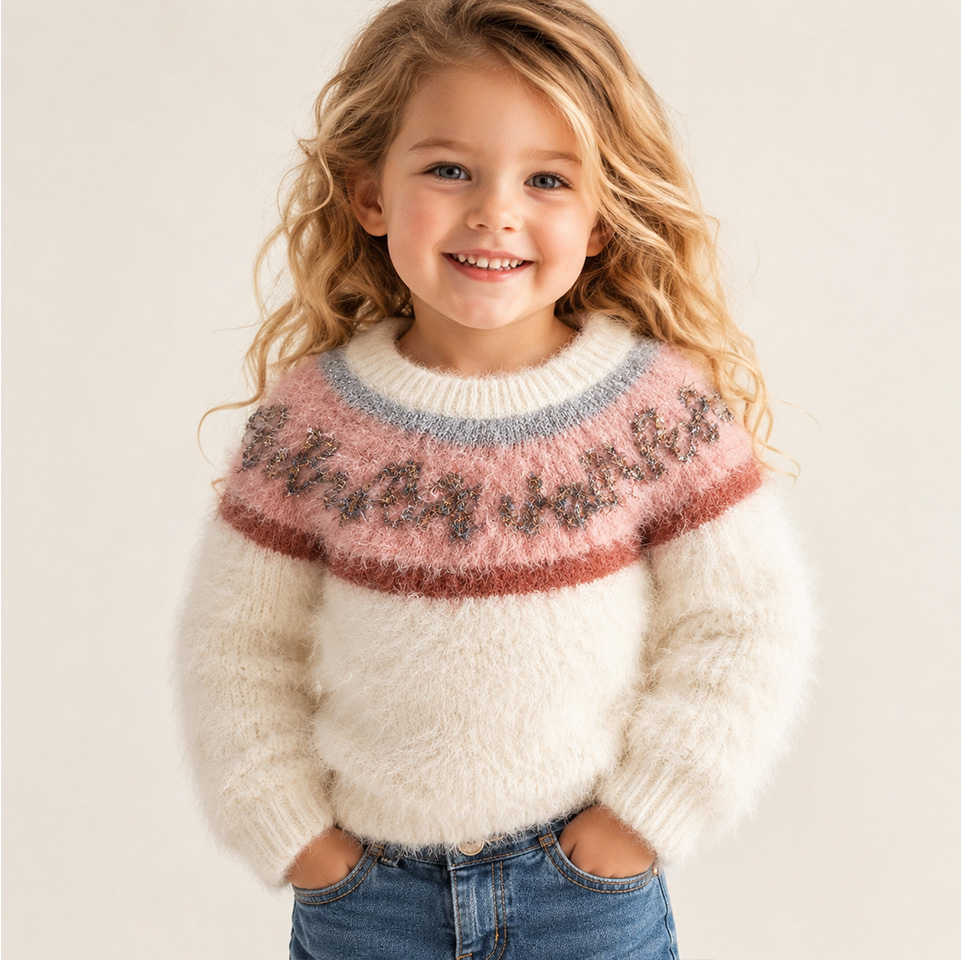
For children’s sweaters, buyers should be careful with yarns that feel soft at first but pill quickly, shed fibers, or lose shape after washing. A fluffy brushed yarn may look attractive for holiday styles, but it should be checked for pilling, fiber shedding, and care performance.
A professional children’s sweater manufacturer should be able to suggest yarn options based on the brand’s price range, target market, season, and testing needs.
3. Check Gauge and Stitch Structure
Gauge affects the thickness, warmth, weight, and appearance of a sweater. For kidswear, gauge also affects comfort and movement.
Fine gauge sweaters can work well for school uniforms, layering pieces, and lightweight cardigans. Mid-gauge styles are common for commercial kids’ pullovers and everyday knitwear. Chunky gauge sweaters can look warm and seasonal, but they may feel heavy for younger children.
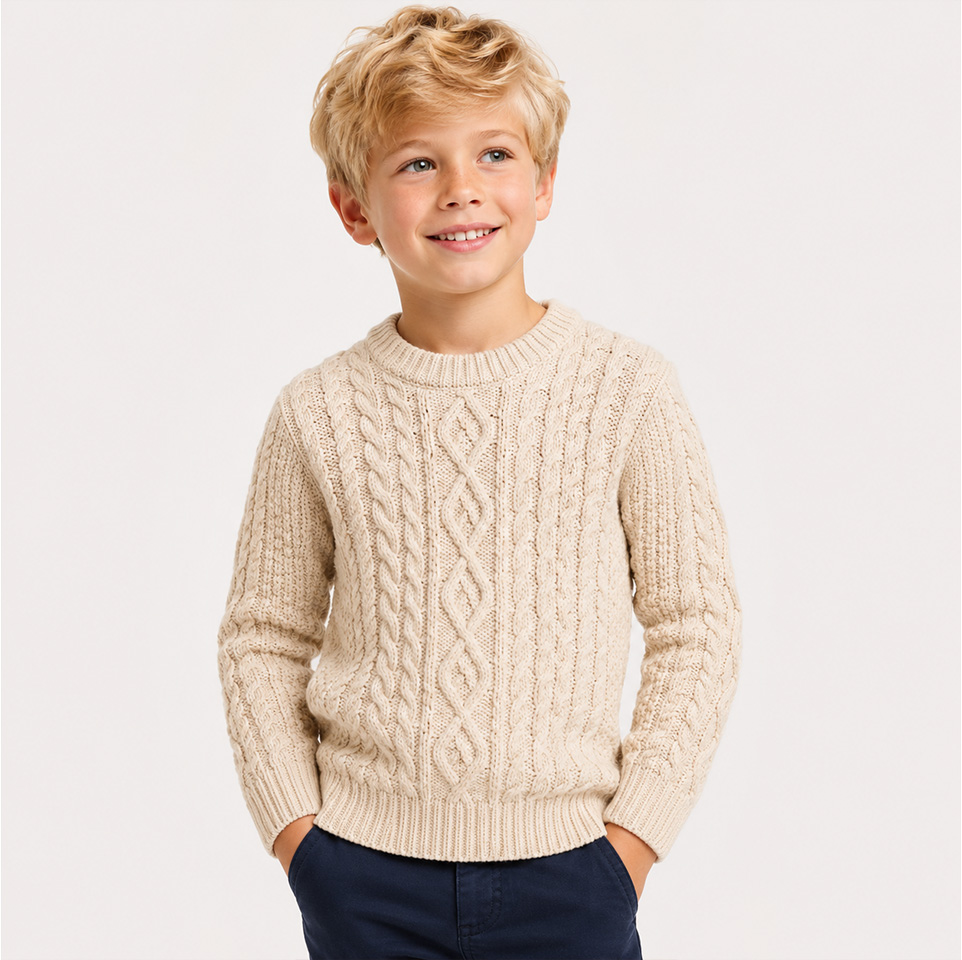
Stitch structure should also be reviewed carefully. Rib, jersey, cable, jacquard, intarsia, links-links, and textured stitches all create different effects. A cable sweater may look premium, but it can add weight. A loose open stitch may not be ideal for active children because it can snag more easily.
4. Pay Attention to Child-Safe Design Details
Design safety is one of the biggest differences between adult sweater manufacture and children’s sweater production.
Brands should carefully review:
- Drawstrings and cords
- Neck openings
- Buttons and snaps
- Pom-poms and decorative trims
- Beads, pearls, sequins, and patches
- Zippers and pullers
- Long belts or ties
- Loose loops or snag points
- Sharp or rough trim edges
For the U.S. market, the CPSC identifies hood and neck drawstrings on children’s upper outerwear in sizes 2T to 12 as a strangulation hazard. Waist and bottom drawstrings on children’s upper outerwear in sizes 2T to 16 also have limits and construction requirements. This is especially relevant for hooded sweater jackets, heavy cardigans, sweater coats, and other knitwear sold as outerwear.
Even when a sweater is not classified as outerwear, buyers should still avoid unnecessary cords, loose decorations, and weak attachments on children’s garments.
5. Confirm Size Chart and Fit Before Sampling
Children’s sizing is not only about scaling down adult measurements. Kids grow quickly, and body proportions change by age group. A toddler cardigan, a boys’ school sweater, and a teen pullover need different grading logic.
Before sampling, buyers should confirm:
- Target age range
- Sample size
- Full size chart
- Body length
- Chest width
- Shoulder width
- Sleeve length
- Neck width
- Armhole
- Hem width
- Cuff opening
- Measurement tolerance
For children’s sweaters, neck opening is especially important. The sweater should be easy to put on and take off, but not so loose that it looks poorly fitted. Sleeve length also matters because children need free movement without cuffs covering their hands.
6. Test Washing Performance Early
Parents expect children’s sweaters to be practical. A sweater that looks good before washing but shrinks, twists, pills, or loses softness after a few washes will create customer complaints.
Before bulk production, brands should check:
- Shrinkage after washing
- Pilling resistance
- Colorfastness
- Seam strength
- Appearance after washing
- Rib recovery
- Button or trim attachment strength
- Handfeel after laundering
For boys’ sweaters and school knitwear, durability is especially important. These garments may be worn weekly, washed often, and exposed to more friction than occasional fashion pieces.
7. Confirm Compliance for the Target Market
Children’s products may require more documentation than adult apparel. Requirements vary by country and product type, so brands should confirm details with their compliance team or testing lab before production.
For the U.S. market, children’s apparel may involve CPSC rules, textile labeling, flammability requirements, and certification depending on the product. General wearing apparel is covered by flammability rules under 16 CFR Part 1610. If a garment is designed or marketed as children’s sleepwear, additional sleepwear flammability standards may apply.
For the EU market, the General Product Safety Regulation requires consumer products placed on the market to be safe, and businesses need to consider traceability, safety information, and product risk. Children are a vulnerable consumer group, so safety review is especially important for kidswear.
A capable OEM kids sweater manufacturer should support the buyer with production records, material details, label information, and testing coordination.
8. Confirm Labels, Care Instructions, and Private Label Details
Private label children’s sweaters need accurate branding and product information. Labels should be comfortable and securely attached, but not irritating to the child.
Buyers should confirm:
- Main brand label
- Size label
- Care label
- Fiber content
- Country of origin
- Tracking or batch information if required
- Hangtag
- Barcode sticker
- Polybag warning text if needed
- Carton marks
For U.S. textile products, FTC guidance notes that many textile and wool products need labels showing fiber content, country of origin, and the identity of the manufacturer or another responsible business. Care instructions should also match the yarn and test results.
9. Review the Pre-Production Sample Carefully
The pre-production sample should represent the actual bulk standard. For children’s sweater production, buyers should check more than the front appearance.
Review:
- Yarn handfeel
- Neck comfort
- Inside seams
- Trim attachment
- Measurement accuracy
- Stretch and recovery
- Color consistency
- Label placement
- Washing result
- Overall safety risks
- Final packaging presentation
Both the buyer and manufacturer should keep an approved PP sample. This becomes the production reference during bulk knitting, finishing, and inspection.
10. Ask About MOQ and Production Lead Time
MOQ for children’s sweaters depends on yarn, color, gauge, size range, and private label requirements. Kidswear often has more sizes than adult styles, which can make quantity planning more complex.
Before production, confirm:
- MOQ per style
- MOQ per color
- Size breakdown
- Color ratio
- Yarn availability
- Custom color lead time
- Sampling lead time
- Bulk production timeline
- Extra quantity for testing
- Packing and shipment schedule
If the brand is launching a new kidswear line, stock yarn may be a practical choice for first orders. For established brands with clear sales forecasts, custom yarn and exclusive colors may be more suitable.
Final Thoughts
A strong children’s sweater manufacturer should understand more than knitting. For boys and kids brands, the right OEM knitwear production partner needs to support yarn selection, sizing, child-safe design, testing, labeling, private label packaging, and consistent bulk quality.
Children’s sweaters must be soft, durable, washable, and safe for the intended age group. When buyers confirm these details before sampling and production, they reduce risk and create better products for both retailers and families.
CTA
Looking for a children’s sweater manufacturer for your boys’ or kidswear collection? Contact us to discuss OEM knitwear production, custom yarns, sampling, MOQ, private labels, and bulk sweater manufacturing.
FAQ
What should brands check when choosing a children’s sweater manufacturer?
Brands should check yarn options, gauge capability, kidswear experience, safety awareness, sampling quality, testing support, MOQ, private label services, and quality control.
What yarn is best for children’s sweaters?
Common choices include cotton blends, acrylic blends, cotton-acrylic blends, nylon blends, and wool blends. The best option depends on season, price, softness, durability, and care requirements.
Can an OEM manufacturer make private label kids sweaters?
Yes. A professional OEM sweater manufacturer can support custom labels, hangtags, care labels, packaging, size grading, yarn sourcing, sampling, and bulk production.
Why is testing important for children’s sweaters?
Testing helps check shrinkage, pilling, colorfastness, seam strength, flammability requirements, trim safety, and washing performance before shipment.
Are children’s sweaters different from adult sweaters in production?
Yes. Children’s sweaters require more attention to comfort, sizing, safety details, trim attachment, washing durability, and market compliance.