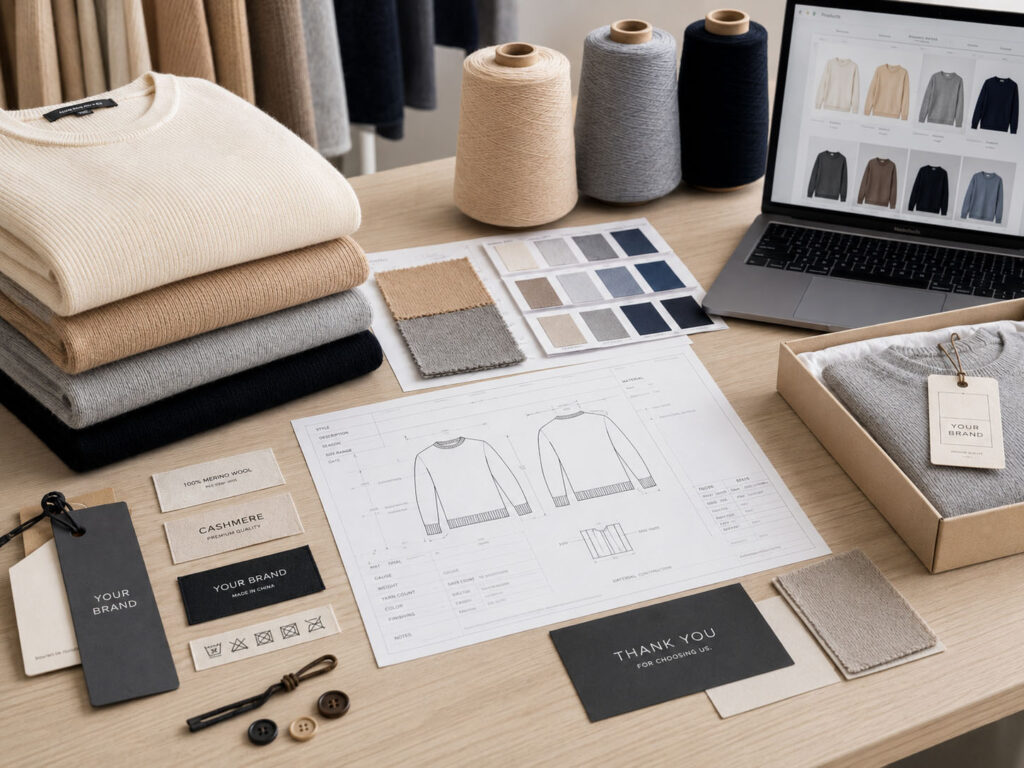
Choosing a private label sweater manufacturer is only the first step. The real test begins before bulk production starts. This is the stage where brands need to confirm every technical, commercial, and packaging detail, because small misunderstandings in knitwear can become expensive problems once yarn is purchased and machines are booked.
Sweaters are more sensitive than many cut-and-sew garments. Yarn quality, gauge, stitch tension, linking, washing, finishing, and packing all affect the final product. A sample may look good, but bulk production needs stronger control. For private label knitwear brands, the goal is not only to make a sweater that looks right. The goal is to produce consistent, sellable garments with correct labels, stable measurements, acceptable pilling performance, and delivery timing that matches the sales season.
If you are preparing custom women’s sweaters, cardigans, knitted tops, sweater vests, or Fall/Winter knitwear, here is what brands should check before confirming production with a sweater manufacture partner.
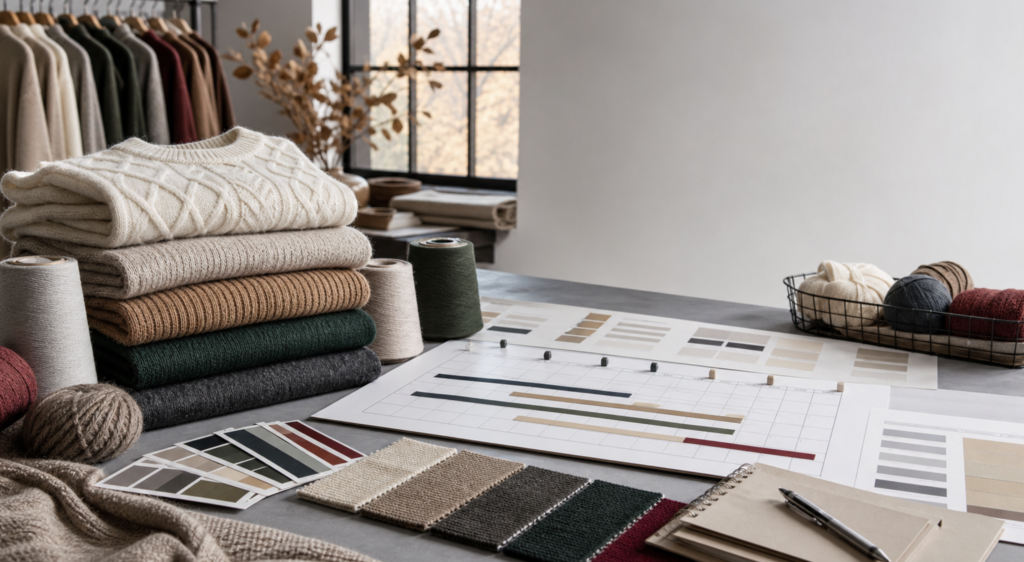
1. Confirm the Final Approved Sample
Before production, the brand and manufacturer should agree on one final approved sample. This is often called the pre-production sample, or PP sample.
The PP sample should represent the exact production standard, including:
- Yarn quality
- Gauge
- Stitch structure
- Color
- Measurements
- Fit
- Trims
- Labels
- Washing and finishing
- Packaging method
For private label sweater production, a salesman sample or photo sample is not always enough for production approval. Those samples may be made to show design direction, but the PP sample should reflect what the factory will actually produce in bulk.
Brands should keep one approved sample, and the manufacturer should keep one approved sample for production reference. This avoids confusion later if there is a dispute about handfeel, fit, color, or workmanship.
2. Check Yarn Composition, Count, and Bulk Availability
Yarn is the foundation of knitwear manufacture. Before placing a bulk order, brands should confirm the exact yarn composition and yarn count, not only a general material description.
For example, “soft wool blend” is not specific enough. The production file should clearly state whether the yarn is 50% acrylic 30% nylon 20% wool, or another exact blend.
Buyers should confirm:
- Fiber composition
- Yarn count
- Ply
- Yarn supplier
- Stock yarn or custom-dyed yarn
- Bulk yarn lead time
- Color lot control
- Substitute yarn approval process
This is especially important for private label knitwear because the fiber content must match the care label and selling description. If the sweater is marketed as wool, cashmere blend, recycled polyester, organic cotton, or other special material, the brand should make sure the manufacturer can provide supporting information before production starts.
3. Confirm Color Standards and Lab Dips
Color problems are common in sweater production. Yarn color can look different under different light sources, and bulk yarn may not perfectly match the first sample if the standard is unclear.
Before production, brands should confirm:
- Pantone number or physical color swatch
- Approved lab dip
- Number of colorways
- Bulk color tolerance
- Stripe or jacquard color placement
- Mélange or heather effect
- Contrast trim color
- Lighting condition for color approval
If the sweater has multiple colors, the artwork or stitch map should clearly show where each color appears. This matters for striped sweaters, jacquard sweaters, intarsia designs, and contrast rib details.
4. Review Gauge, Stitch, and Construction Details
Gauge and stitch structure directly affect cost, thickness, handfeel, fit, and production time. Before bulk production, brands should make sure the approved sample and production worksheet match.
Important points include:
- Machine gauge
- Stitch type
- Rib height
- Neckline construction
- Shoulder construction
- Linking method
- Seam position
- Cuff and hem tension
- Placket width for cardigans
- Buttonhole quality
- Pocket placement
A good private label sweater manufacturer should be able to explain whether the design is suitable for bulk production. If a stitch is too loose, the sweater may lose shape. If the yarn is too heavy, the garment may stretch after hanging. If the rib tension is weak, cuffs and hems may not recover well after wear.
5. Confirm Size Chart, Grading, and Measurement Tolerance
Sweater sizing needs careful control because knitwear stretches and relaxes. Measurements can change after steaming, washing, or hanging.
Before production, confirm:
- Base size
- Full size chart
- Grading rules
- Measurement points
- Tolerance by measurement
- Measuring method
- Whether garments are measured before or after steaming
- Final measurement standard after finishing
For women’s sweaters, key measurements usually include chest width, body length, shoulder width, sleeve length, armhole, sleeve opening, hem width, neck width, and cuff height.
For oversized sweaters, buyers should be extra clear. Oversized does not mean uncontrolled. The shape still needs balance across sizes.
6. Check Labels and Market Requirements
Private label production is not complete without correct labels. Labels are not only branding details; they can also affect compliance in the destination market.
Brands should confirm:
- Main label
- Size label
- Care label
- Country of origin
- Fiber content
- RN number if required for the U.S. market
- Hangtag
- Barcode sticker
- Price sticker
- Polybag warning text if needed
For the U.S. market, FTC guidance says many textile and wool products need labels showing fiber content, country of origin, and the identity of the manufacturer or another responsible business. The U.S. care labeling rule also requires manufacturers and importers to provide regular care instructions for textile wearing apparel.
This is why the brand should not leave care label content until the last minute. The care instruction should match the yarn, construction, and test results.
7. Confirm Testing Before Bulk Shipment
Sweaters should be tested according to the brand’s market and quality level. Not every style needs the same test package, but buyers should decide testing requirements before production starts.
Common sweater tests include:
- Fiber composition
- Shrinkage
- Pilling resistance
- Colorfastness to washing
- Colorfastness to rubbing
- Seam strength
- Dimensional stability
- Appearance after washing
- Nickel release for metal trims if applicable
- Needle detection if required
Pilling is especially important for sweaters. ASTM D4970/D4970M covers pilling resistance and related surface changes using a Martindale tester, and it notes that pilling is affected by fiber type, yarn construction, fabric structure, and finishing. In practical terms, this means buyers should not judge pilling risk only by touching a new sample. Wear and test performance matter.
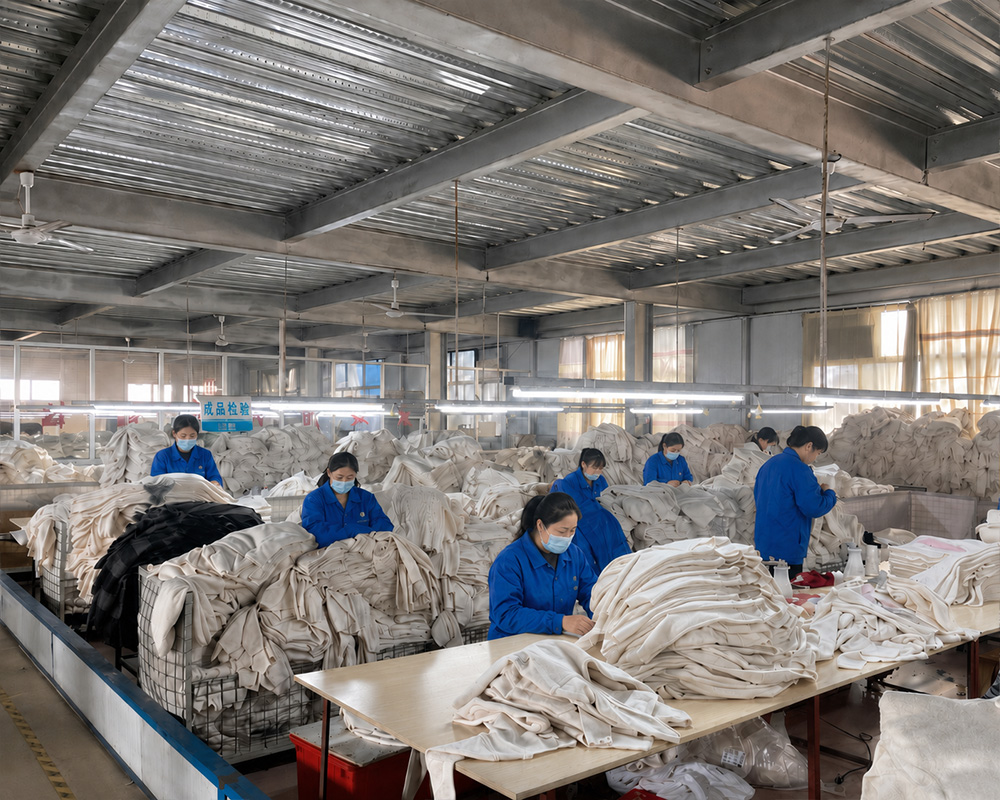
8. Agree on Quality Control Standards
Before production starts, the buyer and manufacturer should agree on what counts as an acceptable product and what counts as a defect.
Common sweater defects include:
- Uneven measurements
- Color shading
- Dropped stitches
- Loose yarns
- Poor linking
- Twisted seams
- Weak rib recovery
- Uneven neckline
- Dirty marks
- Odor
- Incorrect label placement
- Poor folding or packing
For larger orders, brands often use AQL inspection before shipment. Even for smaller private label orders, it is useful to define critical, major, and minor defects in advance. This makes final inspection more objective.
9. Confirm Packaging and Retail Presentation
Sweater packaging affects both shipping condition and customer experience. Poor folding or tight packing can create creases, deformation, or poor presentation when the product arrives.
Before production, confirm:
- Folding method
- Individual polybag size
- Sticker placement
- Hangtag position
- Tissue paper if needed
- Carton size
- Carton weight limit
- Size and color ratio per carton
- E-commerce packaging requirements
- Hanger packing if required
For private label knitwear, packaging should match the brand’s sales channel. Wholesale, boutique retail, marketplace, and direct-to-consumer orders may all need different packing methods.
10. Lock the Production Timeline
Sweater production has several stages, and delays in one stage can affect the whole delivery plan.
A clear production schedule should include:
- Bulk yarn order
- Yarn dyeing if needed
- Bulk knitting
- Linking
- Washing
- Finishing
- Label attachment
- Inspection
- Packing
- Shipment booking
For Fall/Winter knitwear, timing is especially important. A sweater delivered late may miss the selling season, even if the product quality is good.
11. Confirm MOQ, Size Breakdown, and Color Ratio
MOQ should be confirmed before production, not after sampling. For sweaters, MOQ can depend on yarn type, custom dyeing, machine setup, number of colorways, and private label packaging.
Brands should confirm:
- MOQ per style
- MOQ per color
- MOQ per size if applicable
- Total order quantity
- Size ratio
- Color ratio
- Extra quantity for testing or replacement
- Allowed overproduction or underproduction percentage
This helps avoid surprises when the final purchase order is prepared.
12. Check Production Documents Before Deposit
Before paying the production deposit, brands should make sure the main production documents are complete.
A strong production file should include:
- Purchase order
- Final tech pack
- Approved PP sample comments
- Yarn details
- Color standards
- Size chart
- Label artwork
- Packaging instructions
- Test requirements
- Inspection standard
- Delivery schedule
- Payment terms
- Shipping terms
A reliable private label sweater manufacturer will welcome clear documentation because it reduces mistakes during bulk production.
Red Flags Before Production
Brands should be careful if a manufacturer:
- Cannot confirm exact yarn composition
- Gives vague MOQ or lead time
- Does not prepare a PP sample
- Changes yarn without approval
- Avoids discussing testing
- Cannot explain measurement tolerance
- Has no clear QC process
- Rushes production before details are confirmed
- Provides unclear label or packing information
Good sweater manufacture requires communication, not guesswork.
Final Thoughts
Working with a private label sweater manufacturer can help brands build custom knitwear collections with their own labels, sizing, colors, and packaging. But before production starts, buyers need to confirm the details that protect the final product: yarn, color, gauge, fit, labels, testing, packaging, inspection, MOQ, and delivery schedule.
A professional knitwear manufacture partner should help brands identify risks before bulk production, not after goods are finished. The more clearly these details are confirmed in advance, the smoother the production process will be.
CTA
Looking for a private label sweater manufacturer for your next knitwear collection? Contact us to discuss custom yarns, sample development, MOQ, labels, packaging, and bulk sweater production.
FAQ
What is a private label sweater manufacturer?
A private label sweater manufacturer produces sweaters for brands using the brand’s own labels, hangtags, packaging, size chart, colors, and design requirements.
What should brands confirm before sweater production?
Brands should confirm the approved sample, yarn, color, gauge, size chart, labels, testing, packaging, MOQ, QC standard, and delivery schedule.
Why is yarn confirmation important in sweater manufacture?
Yarn affects handfeel, cost, weight, warmth, shrinkage, pilling, color, and care instructions. It also needs to match the fiber content shown on the label.
Do private label sweaters need testing?
Yes, many brands test sweaters for shrinkage, pilling, colorfastness, fiber composition, appearance after washing, and seam strength before shipment.
Can a sweater manufacturer support custom labels and packaging?
Yes. A professional OEM or private label sweater manufacturer can usually support main labels, care labels, size labels, hangtags, barcode stickers, polybags, and carton marks.