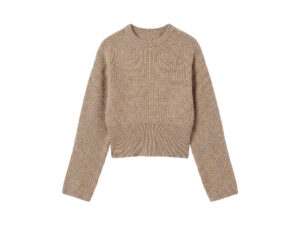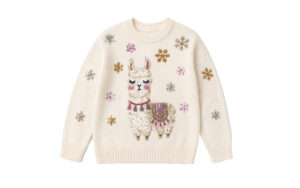
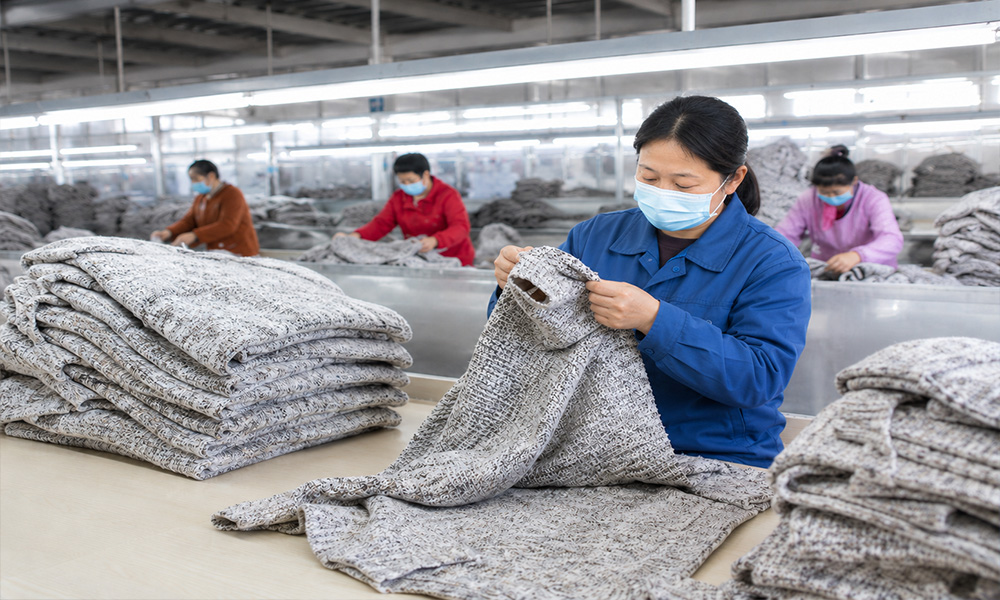
For women’s sweaters, cardigans, knit tops, dresses, and vests, this women’s knitwear quality control checklist shows why quality control is not a final inspection task. When working with a knitwear manufacturer in China, quality planning begins when the yarn, gauge, stitch structure, fit, and care method are first approved.
A knitwear sample can look excellent immediately after pressing but perform poorly after washing or wear. It may pill at the underarm and side seams, shrink in body length, grow at the neckline, lose color during laundering, or transfer dye onto other garments. These issues are expensive to correct once bulk production has started.
For private-label brands, retailers, importers, and sourcing teams, the goal is to create a quality-control plan that connects the approved sample to bulk yarn, production measurements, finishing, laboratory testing, packing, and shipment release.
This women’s knitwear quality control checklist explains the key points buyers should confirm for pilling, shrinkage, and colorfastness. For the production route behind each check, review our knitwear manufacturing process. For product development options, visit our women’s knit sweater manufacturer page.
Women’s Knitwear Quality Control: Why It Requires a Different Approach
Knitted garments behave differently from woven garments. Their shape and performance are influenced by yarn characteristics, loop structure, stitch density, gauge, finishing, and how the garment is handled after knitting.
For example:
- A loose rib top may grow in length after wear.
- A wool-blend pullover may change measurements after washing.
- A brushed sweater may look soft but have a higher pilling risk.
- A dark knit cardigan may transfer color through rubbing.
- A fine-gauge top may become transparent or distorted when stretched.
- A cable sweater may measure differently after washing, drying, and shaping.
A reliable quality plan therefore needs three stages:
| QC Stage | Main Purpose |
|---|---|
| Before production | Confirm yarn, sample, measurements, wash expectations, and test requirements |
| During production | Control yarn lots, stitch density, panel dimensions, workmanship, and finishing |
| Before shipment | Verify final garments, test records, labels, packing, measurements, and carton details |
1. Use the Approved Sample as the Quality Standard
The approved sample should be more than a visual reference. It should become the production standard for fit, yarn hand feel, color, stitch structure, workmanship, trims, labels, and packing.
Before bulk production begins, confirm:
- Approved sample number and approval date
- Final fiber composition and yarn source
- Approved yarn color and color standard
- Gauge and stitch-density requirement
- Garment weight by base size
- Size chart, points of measure, and tolerances
- Approved wash and care method
- Pilling, shrinkage, and colorfastness requirements
- Label, hangtag, barcode, and packaging artwork
- Any retailer-specific inspection or testing standard
If the factory needs to substitute yarn, trims, labels, or packaging, the change should be approved in writing before use in bulk production.
2. Pilling Control: Review the Yarn, Structure and End Use
Pilling occurs when loose fibers on the surface of a knit become entangled through friction and form small balls. It is one of the most common customer complaints for sweaters, especially around the underarm, side seam, sleeves, chest, and areas affected by bags or outerwear.
Pilling is influenced by more than fiber composition. The following factors can also matter:
- Yarn fiber length and twist
- Yarn hairiness
- Fiber blend
- Brushed, fluffy, boucle, or hairy surface effects
- Gauge and stitch density
- Loose versus compact knit structure
- Garment fit and friction points
- Finishing method
- Consumer washing and wearing habits
A soft or brushed yarn can be appropriate for a fashion style, but buyers should not assume that a softer surface will have the same pilling performance as a compact, smooth yarn.
Pilling Checks During Sample Approval
Before approving a women’s sweater sample, review:
- Surface condition under normal lighting
- Underarm and side-seam areas
- Cuffs, hem, neckline, and plackets
- Brushed or fuzzy sections
- Contrast-color yarn intersections
- Areas likely to rub against handbags, coats, or denim
- Appearance after washing and controlled wear simulation
ASTM D4970/D4970M is a recognized Martindale-based method for evaluating pilling resistance and related surface changes. However, ASTM notes that it should be used cautiously for acceptance testing because interlaboratory precision data are not available for that purpose.
In practical sourcing terms, a pilling test result should support, not replace, a clear buyer-approved sample standard and physical review.
How to Reduce Pilling Risk
Buyers and manufacturers can reduce risk by reviewing:
- A more suitable yarn blend or yarn specification
- Higher twist or more compact yarn options
- Stitch density and gauge
- Brushed finishing intensity
- High-friction design areas
- Garment fit and ease
- Washing and care instructions
The correct approach depends on the product. A premium hairy knit may accept a different surface character from a smooth office cardigan, but the expected appearance should be agreed before bulk production.
3. Shrinkage and Dimensional Stability: Measure Before and After Washing
Shrinkage is only one type of dimensional change. Knitwear can also grow, twist, curl, become uneven, lose shape, or change proportions after washing and drying.
For women’s knitwear, monitor:
- Body length
- Chest width
- Shoulder width
- Sleeve length
- Neck opening
- Armhole shape
- Cuff and hem recovery
- Placket stability
- Garment balance
- Twist, skew, or distortion
A loose-gauge cardigan may grow after washing. A cotton-blend knit top may shrink. A rib garment may lengthen during wear and partly recover after laundering. These behaviors need to be checked against the intended care method.
Set a Clear Wash-Test Standard
The tech pack and quality file should state:
- Base size and full size range
- Points of measure
- Pre-wash measurements
- Post-wash measurements
- Measurement tolerances
- Washing temperature and cycle
- Drying method
- Required resting time before measurement
- Whether the garment is measured flat or hung
- Acceptable dimensional change by length and width
Avoid vague instructions such as “low shrinkage” or “good wash stability.” The buyer and supplier should agree on the actual testing conditions and acceptance criteria.
AATCC TM135 is a test method for dimensional changes of fabrics after home laundering. It provides standardized laundering options to assess length and width change under defined wash and drying conditions. For finished garments, buyers should work with their laboratory and retailer standard to select an appropriate garment-level method and test plan.
Sample Review for Shrinkage and Shape
After laundering, inspect more than measurements:
- Has the neckline become loose or distorted?
- Do cuffs and hems recover?
- Has the cardigan placket waved or curled?
- Has the garment become uneven from front to back?
- Has a pointelle or openwork pattern stretched excessively?
- Does the garment still match the intended silhouette?
- Are care-label instructions still realistic for the actual product?
The final care label should describe a care method the garment can withstand repeatedly, not simply the easiest method for the factory sample.
4. Colorfastness: Test Fading and Dye Transfer Separately
Colorfastness is the ability of a textile to resist color change or color transfer when exposed to external conditions. For women’s knitwear, color issues can appear through washing, rubbing, perspiration, light exposure, or contact with another garment.
A dark navy cardigan, a saturated red knit, a black rib top, and a contrast-color jacquard may each have different risk points.
Common Colorfastness Checks
| Test Area | What It Helps Assess |
| Colorfastness to washing | Fading and dye transfer during laundering |
| Colorfastness to rubbing | Dry and wet dye transfer caused by friction |
| Colorfastness to perspiration | Color change or staining caused by acidic or alkaline perspiration |
| Colorfastness to light | Fading after light exposure |
| Colorfastness to water | Color change or staining through water contact |
| Colorfastness to dry cleaning | Performance for garments sold with dry-cleaning instructions |
Colorfastness to washing is important for machine-washable knitwear. Rubbing fastness is especially relevant for dark shades, heavily dyed yarns, color blocks, and garments likely to contact light-colored bags, coats, or upholstery.
Colorfastness to perspiration may be relevant for fitted knit tops, lighter layers, warm-climate programs, and products worn close to the body.
Color Checks Before Bulk Production
Before starting bulk production, confirm:
- Approved color swatches or Pantone references
- Yarn color-lot control procedure
- Contrast-color placement
- Colorfastness requirements by destination market or retailer
- Whether dark colors need additional rubbing assessment
- Whether color combinations may bleed during washing
- How the factory will manage shade variation across panels and batches
A sample should be checked in natural and indoor light. For multi-color jacquards or stripes, review whether colors remain clear after washing and whether adjacent colors create visible staining or bleeding.
5. Material and Color Control During Production
Many knitwear problems begin with material inconsistency rather than final garment workmanship.
During production, the factory should control:
- Yarn composition and approved source
- Yarn-lot and shade consistency
- Hand feel and yarn appearance
- Gauge and stitch density
- Panel dimensions
- Color placement and jacquard accuracy
- Missed stitches, holes, and loose yarns
- Linking and seam quality
- Washing, drying, pressing, and shaping conditions
For women’s knitwear, the production team should compare in-line garments with the approved sample rather than relying only on a written specification. This is particularly important for soft yarns, fine gauges, cables, ribs, jacquards, pointelle, and brushed finishes.
6. Final Inspection Checklist Before Packing
Finished sweaters should be inspected against the approved sample, size chart, workmanship standard, and packing instructions.
Appearance and Workmanship
- Correct gauge, stitch density, and garment shape
- No holes, missed stitches, broken yarns, or loose ends
- Clean surface with no stains, oil marks, or pressing marks
- Consistent color and panel matching
- Correct cable, rib, jacquard, pointelle, or embroidery appearance
- Secure buttons, zippers, badges, and appliqués
- Correct linking, seams, neckline, cuffs, hem, and plackets
Measurements and Performance
- Measurements within agreed tolerances
- Correct garment weight where specified
- Balanced front and back length
- Stable neckline, cuffs, and hem
- Approved wash-test and performance records available
- Pilling, dimensional stability, and colorfastness requirements reviewed
Labels and Packing
- Accurate fiber-content label
- Correct care label and country-of-origin marking
- Correct brand label, size label, hangtag, barcode, and price ticket
- Correct folding and polybag method
- Correct size stickers, carton ratios, carton marks, and shipping labels
- Final quantity and assortment confirmed
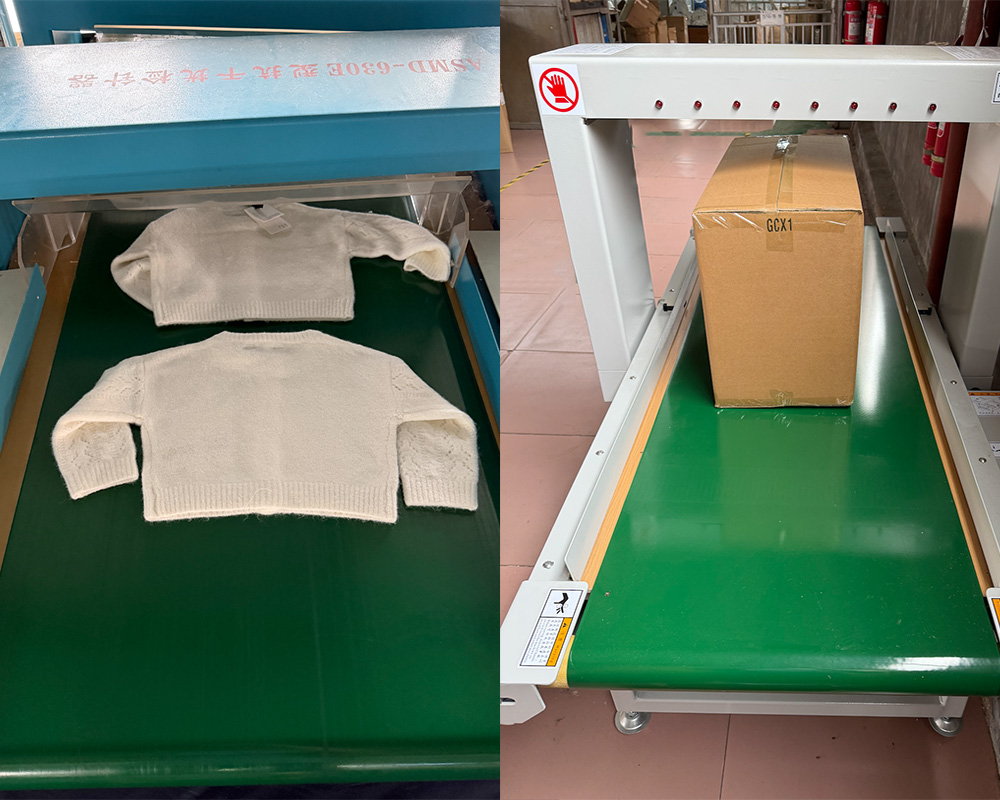
QITE GARMENTS manages knitwear quality through material inspection, approved-sample control, in-line checks, measurement review, workmanship inspection, needle and metal detection, packing verification, and shipment preparation. Learn more about the QITE knitwear quality-control process.
7. Buyer Quality-Control Checklist Before Bulk Release
Use this table before approving bulk production for women’s sweaters, cardigans, knit tops, dresses, or vests.
| Approval Area | Buyer Confirmation |
| Approved sample | Sample number, final comments, and production reference confirmed |
| Yarn | Composition, supplier, color, hand feel, and bulk availability approved |
| Gauge and structure | Gauge, stitch density, cable, rib, jacquard, or pointelle details confirmed |
| Measurements | Size chart, grading, points of measure, and tolerances approved |
| Pilling | Required method, expected appearance, and acceptance requirement confirmed |
| Shrinkage and shape | Wash method, drying method, dimensional-change criteria, and post-wash appearance approved |
| Colorfastness | Required washing, rubbing, perspiration, light, or other performance checks confirmed |
| Workmanship | Linking, seams, neckline, cuffs, hems, plackets, and trims reviewed |
| Testing | Laboratory, test plan, destination-market rules, and retailer requirements confirmed |
| Labels | Fiber content, care, origin, size, and branding information approved |
| Packing | Folding, polybags, barcodes, carton ratio, carton marks, and shipping instructions approved |
| Shipment release | Inspection results, test records, packing verification, and delivery details checked |
Common Buyer Mistakes to Avoid
Approving a Sample Before It Is Washed
A pressed development sample may not show shrinkage, growth, curling, color bleeding, or surface changes. Review the sample after appropriate laundering where the product is intended to be washable.
Using Only One Pilling Test Result
Pilling performance is influenced by sample preparation, test method, construction, and real wearing conditions. Use testing alongside sample review and an agreed surface-appearance standard.
Treating All Colors the Same
Dark, bright, and contrast colors can have different colorfastness risks. Review the actual colorways planned for bulk production.
Leaving Care Instructions Until the End
Care instructions affect the dimensional-stability test plan and the customer experience. Confirm them while the yarn and finishing process are still being selected.
Inspecting Only Finished Cartons
Final inspection is necessary, but it cannot efficiently correct problems caused by the wrong yarn lot, unstable measurements, or incomplete production instructions. In-line checks are essential.
FAQ
What is the most important quality test for women’s knitwear?
There is no single test for every product. Pilling resistance, dimensional stability after laundering, and colorfastness are common priorities, but the correct test plan depends on the yarn, construction, end use, destination market, and retailer requirements.
How can a buyer reduce pilling complaints on sweaters?
Start with suitable yarn and stitch-density selection, review the physical sample after washing and friction exposure, identify high-friction areas, and agree on a product-specific pilling requirement before bulk production.
Why does a sweater shrink or grow after washing?
Knitwear responds to yarn type, stitch structure, tension, finishing, wash cycle, drying method, and garment weight. A product can shrink in one direction and grow in another, so both length and width should be measured.
Which colorfastness tests are important for knitwear?
Colorfastness to washing and rubbing are common requirements. Depending on the style and market, perspiration, water, light, and dry-cleaning colorfastness may also be relevant.
When should testing be arranged?
Testing requirements should be identified before bulk production. The supplier, buyer, and laboratory should agree on the product-specific test plan while yarn, color, construction, and care instructions can still be adjusted.
Develop Quality-Controlled Women’s Knitwear With QITE GARMENTS
QITE GARMENTS supports OEM and ODM women’s knitwear projects from yarn and gauge review through sample development, bulk production follow-up, quality inspection, private-label packing, and export coordination.
For a custom sweater, cardigan, knit top, dress, or vest program, send your tech pack, target quantity, yarn direction, quality requirements, and delivery plan to QITE GARMENTS.
Planning a custom knitwear collection? Explore Qite’s custom-made sweaters capabilities for style development, yarn and gauge options, logo applications, sampling, private labels and bulk production.