A sweater vest can match the chest measurement on a size chart and still fit badly. The armholes may expose too much of the shirt underneath, the shoulder may extend beyond the intended position, or the neckline may pull away from the body.
For buyers developing custom sweater vests, the most useful early decision is how the garment will be worn. A close-fitting vest over a T-shirt needs a different shape from a relaxed vest layered over a substantial shirt.
That wearing situation should guide the measurements, yarn and edge construction before the first sample is knitted.
Start with the garment underneath
“Regular fit” gives a factory very little information. A reference photograph helps, but the development brief should also identify the intended base layer.
If the vest is designed for office wear, fit it over a shirt similar to the one your customer would wear. For a fashion collection, decide whether the shoulder should sit close to the body or extend into a wider silhouette. A cropped vest also needs to be assessed with the intended trouser or skirt rise.
These choices affect more than chest width.
| Design decision | What to establish during sampling |
|---|---|
| Close-fitting vest | Body ease, armhole coverage and comfort over the intended base layer |
| Relaxed layering vest | Space through the chest and armhole without an unnecessarily wide neck |
| Cropped vest | Body length and hem position when the wearer sits or raises their arms |
| Extended-shoulder vest | Shoulder width, armhole shape and how the edge sits on the upper arm |
Ask for front, back and side photographs during the fit review. A front photograph alone can hide an armhole that stands away from the body.
For collections covering different customers, use separate fit references rather than treating every style as the same vest in different sizes. QITE’s custom sweater development page shows the broader range of silhouettes that may require different specifications.
For a men’s range, the men’s sweater fit and size-grading guide explains how to carry the approved base-size fit into a broader size range.
Choose the yarn, gauge and stitch as a combination
A yarn card answers questions about colour and initial hand feel. It cannot show how a completed vest will hang.
The same design can change substantially when the yarn, knitting structure or finishing changes. Woolmark’s technical introduction to knitwear discusses yarn selection, knitting and finishing as connected parts of product development. That is a more useful way to approach a vest than choosing a gauge number in isolation. Woolmark: Introduction to Knitwear
Give the supplier a practical target:
A lightweight layering vest with a smooth surface, enough body to hold the neckline, and no bulky ridge under a jacket.
That description still needs a sample, but it communicates the intended result better than “premium yarn.”
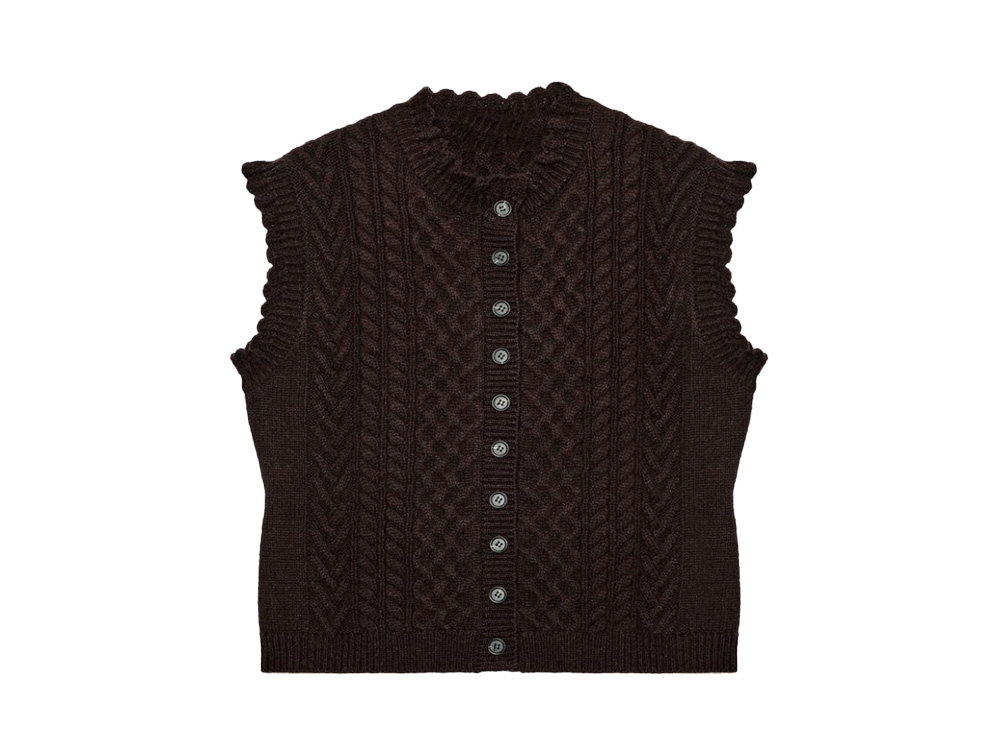
For a textured winter vest, the priorities may be different: visible stitch definition, a fuller handle and a hem that supports the garment’s weight. Ask the factory to propose a suitable yarn and construction, then compare the actual knitted and finished result.
Keep the approved yarn reference with the sample. If a substitute is used during development, record what remains provisional. A sample in replacement yarn should not silently become the standard for bulk production.
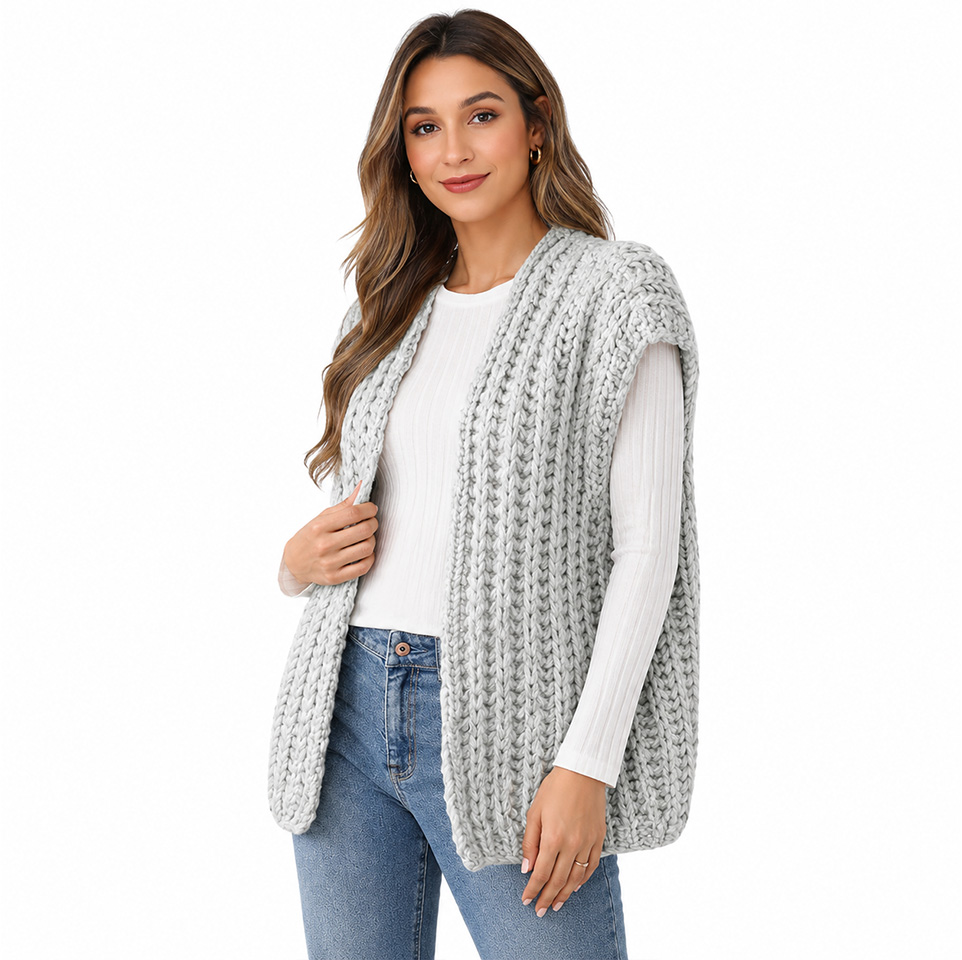
Give the neckline and armholes their own specifications
A sweater vest has three highly visible openings: the neck and two armholes. Each needs more detail than a general drawing.
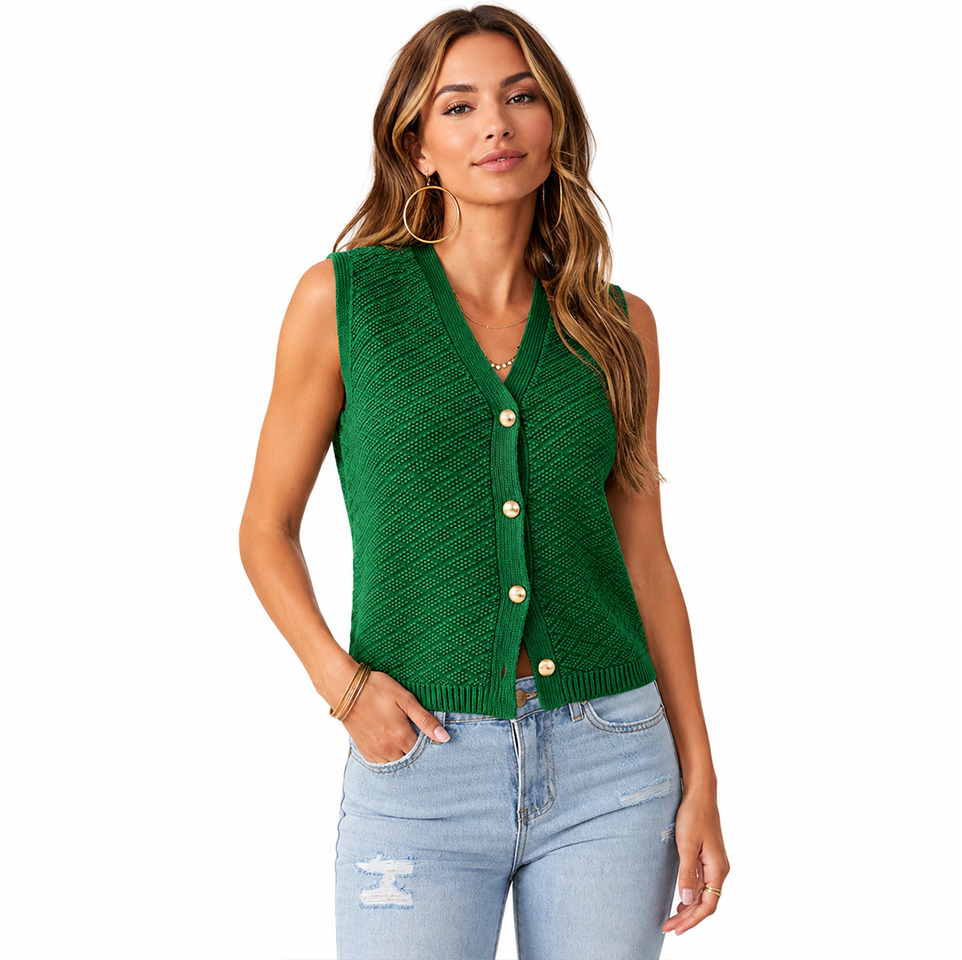
For a V-neck, specify the depth, width and finished band width. Make the measuring points clear. A neckline measured to the seam where the band joins the body is different from one measured to the finished outer edge.
The same issue occurs at the armhole. Agree whether a measurement refers to the body opening before the band is attached or to the finished opening.
Useful sample comments describe the problem and the intended correction:
The chest fit is approved. The front armhole stands away from the body when worn over the approved shirt. Please review the armhole curve and band construction while retaining the approved chest width.
That is more actionable than “make the armhole smaller.” It also avoids changing a measurement that was already working.
For a V-neck, inspect the point as well as the overall depth. Check whether the two sides meet evenly, whether the band lies flat and whether the point changes shape when the garment is worn.
For a crewneck, check the relationship between neck width and shoulder coverage. Widening the neck can alter the appearance of the whole upper body, even if the chest measurement remains unchanged.

Approve the vest while it is being worn
Flat measurements are necessary, but they do not fully explain fit.
During the sample review, ask the wearer to stand naturally, sit down and move their arms. Observe whether the vest rides up, whether the armholes catch on the shirt underneath and whether the neckline maintains its intended position.
Then assess the garment after the agreed care procedure. Compare the measurements and appearance using the same method as before washing. Pay particular attention to the neck band, armhole bands and hem.
Keep three decisions separate:
- Measurement approval: Does the sample meet the agreed dimensions and tolerances?
- Fit approval: Does it sit and move as intended on the target wearer?
- Appearance approval: Are the yarn, surface, colour, bands and workmanship acceptable?
A sample can pass one of these checks and still need revision in another.
QITE’s knitwear quality-control process covers the wider inspection stages. For the buyer, the important step is to connect those checks to a dated specification and an identifiable approved sample.
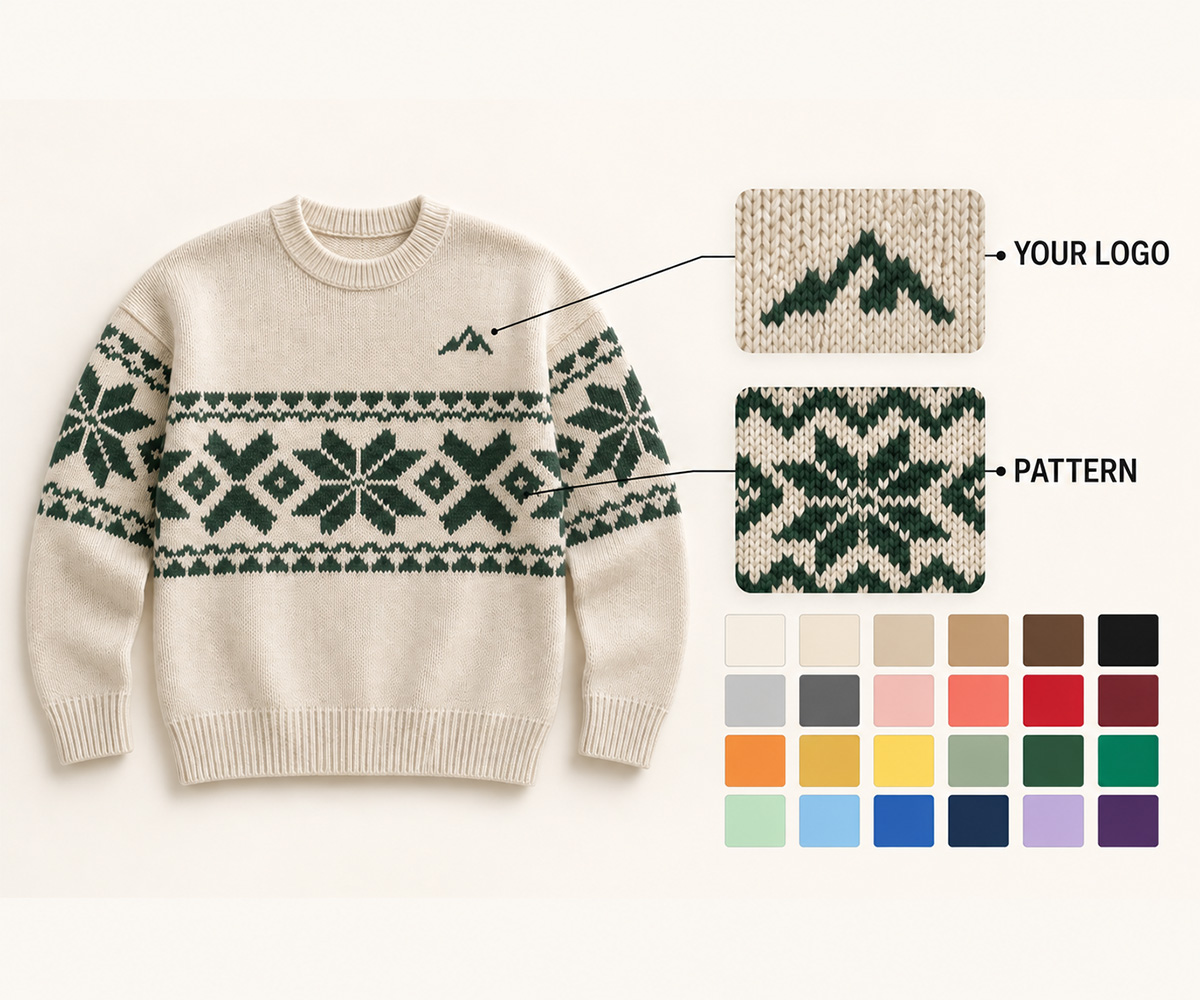
Place artwork on the actual silhouette
A logo that looks balanced on a digital drawing may sit too close to an armhole once the vest is worn.
Show artwork dimensions and placement from fixed measurement points. For a chest mark, confirm its relationship to both the neckline and the armhole. Review placement on more than the base size if the size range is wide.
The decoration method also changes the product. Embroidery, jacquard, intarsia and attached badges should be discussed against the artwork and knit structure, rather than selected only by name.
Request a physical trial when the branding is important to the product’s value. Assess the outside appearance, the inside finish and the feel of the decorated area.
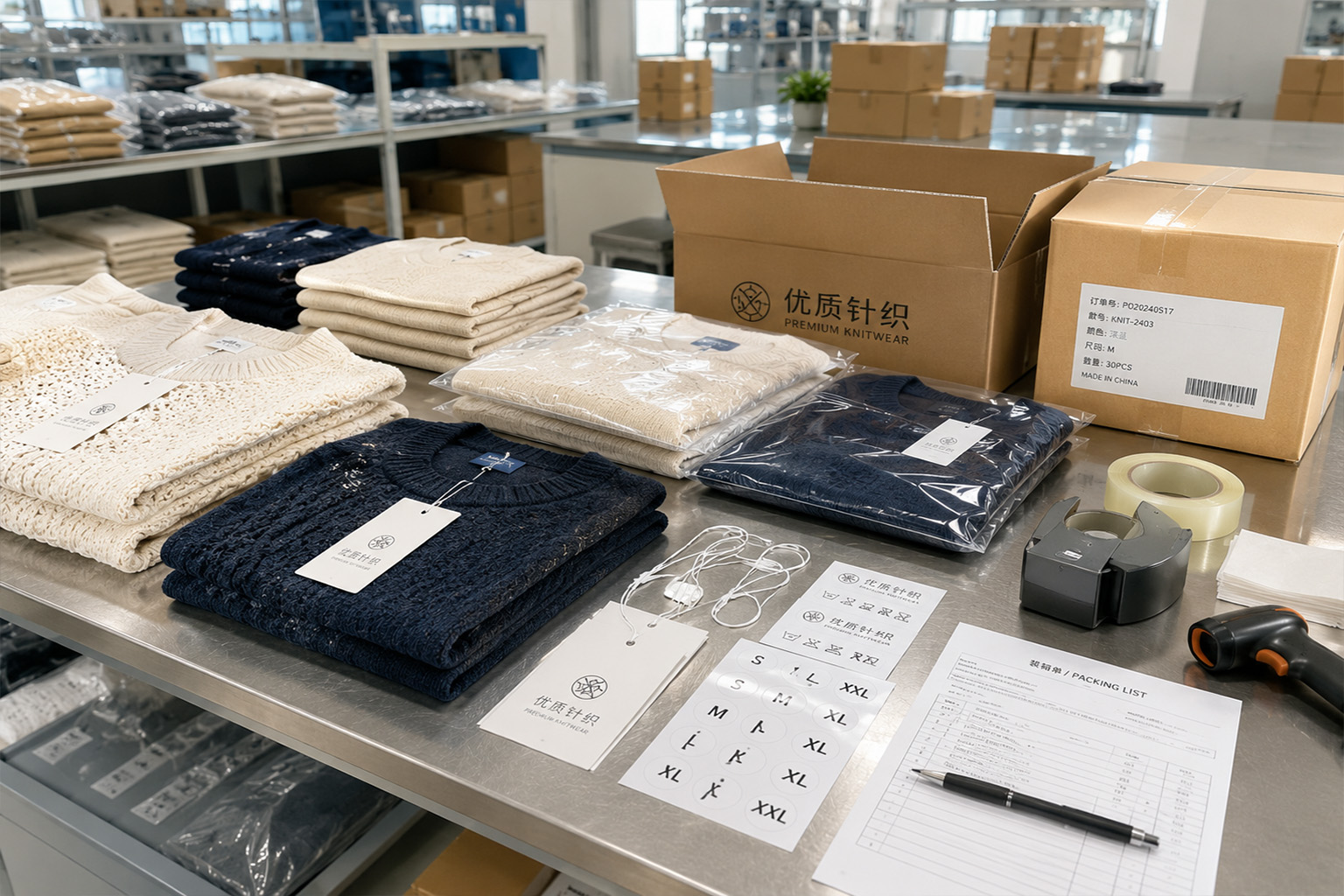
For private-label orders, keep the artwork version, label files and packaging instructions with the final OEM development specification. A late label change should not be confused with approval of an earlier file.
Compare quotations against the same vest
Two quotations are only comparable when their assumptions match.
Before choosing a supplier, check whether both prices use the same yarn composition, approximate finished weight, stitch structure, artwork, labels and packing. Confirm whether sample development, testing, custom trims and freight are included or quoted separately.
If the price is above target, ask for specific alternatives:
Please quote the approved construction and a simpler stitch option separately. Identify any change in yarn, weight, appearance or finishing.
This makes the trade-off visible. A lower price is less useful if the buyer discovers during production that the material or construction has changed.
Developing a sweater vest with QITE
QITE GARMENTS has its own sweater and knitwear production foundation, supported by coordinated production resources. Its custom knitwear programs cover yarn, gauge, sizing, branding, sampling and bulk production. The published starting MOQ is 500 pieces per style, with project details requiring confirmation.
For a useful first review, send the reference style, intended base layer, fit direction, size chart, yarn preference, artwork and quantity by colour. If you have an existing garment whose fit works, explain exactly which parts should be retained.
Send QITE your sweater vest brief with those details. The first discussion should establish what can be quoted confidently and what needs to be resolved through sampling.