“100% cotton, 220 GSM, oversized fit” sounds like a reasonably complete T-shirt specification. It still leaves a manufacturer making several important decisions.
What should the fabric surface feel like? How should the neck sit? Does “oversized” mean a wider body, a dropped shoulder, a longer sleeve—or all three? What should happen to the measurements and print after washing?
Those unanswered questions can produce different samples from the same short brief.
Custom T-shirt manufacturing becomes easier to manage when fabric, fit and decoration are approved together. The aim is to give the supplier enough information to make the intended product, then create a reference that can be followed in bulk production.
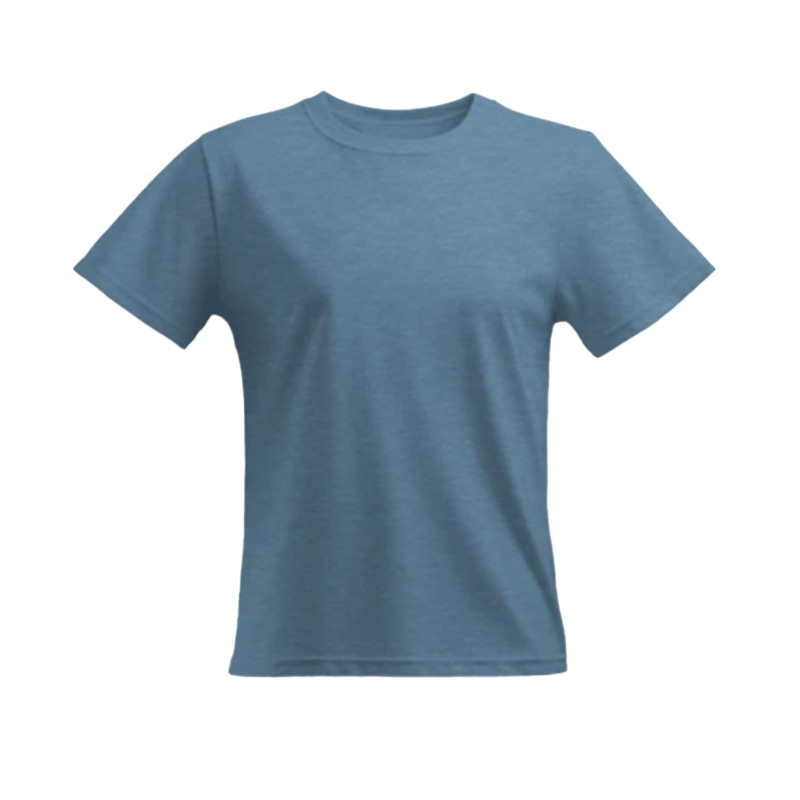
Decide whether you need a new T-shirt or an existing blank
There are two different starting points.
With an existing blank, the body pattern, fabric and construction are already established. Development focuses mainly on choosing the garment, applying decoration and confirming permitted label or packaging changes.
With a custom cut-and-sew T-shirt, the buyer can define the fabric, body shape, sleeve, neckline and construction. That creates more control, but also more decisions, sampling work and material commitments.
Use the route that fits the product.
If the existing blank already meets the requirements, developing a new pattern may add little value. If the brand depends on a distinctive fit, collar or fabric, printing a logo on a stock garment may not deliver the intended result.
State the route in the first enquiry. It helps a custom clothing manufacturing partner assess the work involved and explain the quotation.
When comparing suppliers, use a manufacturer comparison checklist to record what each quotation includes and which approvals remain open.
Use GSM to describe weight, then approve the fabric itself
GSM means grams per square metre. It describes fabric mass per unit area; it does not, by itself, establish softness, opacity, durability or print performance.
Two fabrics with the same composition and GSM can still feel different. The yarn, knitted construction and finishing need to be considered alongside the weight.
For a white T-shirt, inspect the actual fabric for the coverage your customer expects. For a structured fashion tee, assess whether it holds the intended shape. For a soft everyday style, evaluate the handle and drape rather than simply reducing or increasing GSM.
A stronger fabric brief might read:
Cotton single jersey, target finished weight 220 GSM, with the permitted range to be agreed. Smooth face for a front graphic, substantial handle and opacity to match the approved physical swatch.
The number is an illustrative specification, not a recommendation for every T-shirt.
Keep a named or numbered swatch as the reference. If the sample uses a different fabric, record the substitution and identify which approvals remain outstanding.
Also ask what the quoted fabric description includes. A price based on available stock fabric may change if the order requires a custom colour or finish.
Treat “oversized” as a set of proportions
An oversized T-shirt is not always a standard T-shirt enlarged uniformly.
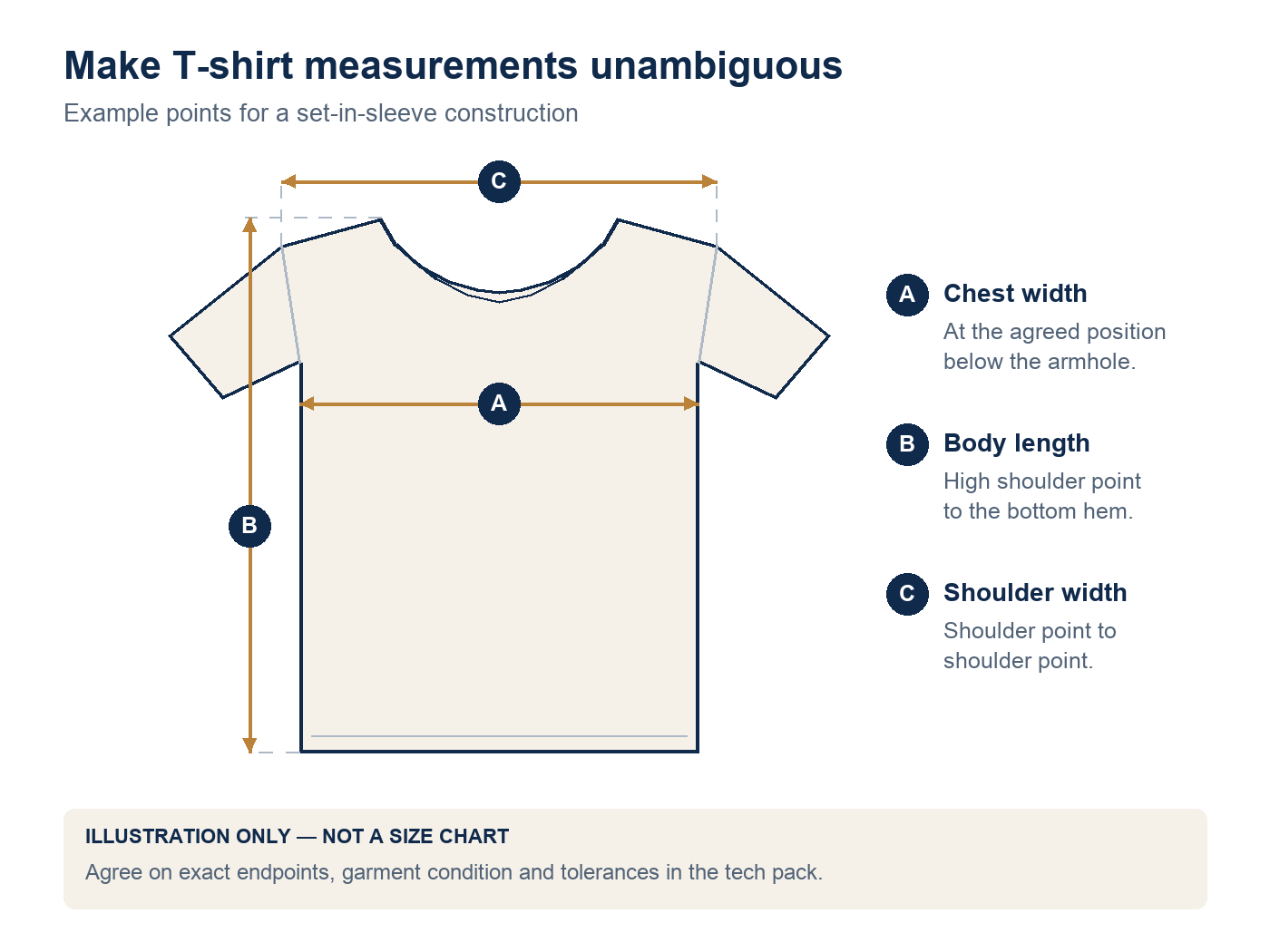
A wider chest with a controlled body length creates a different silhouette from a long, loose body. A dropped shoulder changes where the sleeve begins. Sleeve length must therefore be reviewed together with shoulder width.
Include the chest, body length, shoulder, sleeve length, sleeve opening, armhole and neck measurements. For every point, define how it is measured.
The collar deserves separate attention. Specify its finished width, opening shape, material direction and inside finishing. Review whether it lies flat on the sample and whether it maintains an acceptable appearance after care.
If the fit is wrong, describe where it is wrong.
Instead of:
Make it less oversized.
Write:
Retain the approved chest and body length. Reduce the shoulder extension and review the sleeve proportion against the reference photograph.
The factory can then work on the intended area without undoing measurements that were already approved.
Select the printing process using the fabric and artwork together
A print method should be chosen after reviewing the artwork, garment colour, fabric, order quantity and expected finish.
The following comparison is a starting point for discussion, not a substitute for a printed sample.
| Process | Useful question to ask | What to assess on the sample |
|---|---|---|
| Screen printing | What ink system and setup are proposed for this artwork and quantity? | Colour, opacity, detail, print feel and performance after the agreed care procedure |
| Direct-to-garment printing | Is the proposed printer, ink and pretreatment suitable for this fabric? | Detail, surface appearance, colour and wash result |
| Direct-to-film transfer | Which transfer system and application conditions will be used? | Adhesion, edges, feel, stretch behaviour and wash result |
Avoid blanket claims such as “DTG only works on cotton” or “DTF works equally well on every fabric.” Equipment and treatment systems matter. Epson’s garment-printing guidance, for example, specifies different pretreatment requirements for cotton and polyester and recommends test printing where results may vary. Epson: Required Equipment for T-Shirt Printing
For polyester-containing garments, discuss dye migration when heat-applied decoration is proposed. STAHLS’ explains how garment dyes can move into decoration under heat and why the transfer material and application conditions need to be considered. STAHLS’: Dye Migration Handbook
Ask to see the intended artwork on the intended fabric colour. Approval of a white shirt does not automatically resolve the result on a dark colourway.
For a large graphic, also assess how the printed area feels when worn. The size of the design is a product decision, not just an artwork-file setting.
Give fit approval and print approval separate records
A fit sample may use temporary fabric or omit the final decoration. A print trial may be produced on a fabric panel. Both can be useful, provided the buyer records what each one proves.
Keep the approval status explicit:
- Fit and measurements approved; production fabric still pending.
- Print colour approved; placement requires revision.
- Fabric approved; care review not yet complete.
- Complete pre-production sample approved against the current specification.
Before bulk release, bring those decisions together in a complete sample or an agreed set of representative approval references.
Artwork instructions should identify the file version, finished dimensions, placement and colour reference. Decide whether the graphic stays the same size across the garment range. A fixed-width print may sit differently on the smallest and largest sizes.
An email saying “sample approved” should not leave the factory guessing whether that includes the fabric, fit, print, labels and packaging.
Check the washed garment for more than a smaller chest measurement
Cotton T-shirt development should include an agreed review of dimensions and appearance after care.
Record body length and width separately. Also examine the neckline, hem, side-seam position and print. A garment can remain within one measurement tolerance while developing an appearance problem elsewhere.
Cotton Incorporated explains that dimensional stability depends on construction and processing, with consequences that can include changes in fit, seam appearance and the relationship between body fabric and trims. A generic “pre-shrunk” description does not answer all of those questions. CottonWorks: Shrinkage & Skewing
Agree on the washing and drying procedure, number of cycles, measuring method and acceptance criteria before the review. Keep the before-and-after results with the sample reference.
If the result fails, ask what will change and how the correction will be checked. Simply making the next sample longer does not establish that a twisting seam or distorted collar has been corrected.
Ask for an MOQ breakdown, not only a total number
A total order quantity can hide the way the work is divided.
For illustration, 600 T-shirts in two colours means 300 pieces per colour before the size breakdown. The same total in six colours means 100 pieces per colour. Those programmes can have different material and decoration requirements.
Ask the supplier to separate garment minimums from fabric, colour, print and label minimums. Confirm whether the quotation includes sampling, artwork setup, testing, packaging and any unused-material commitment.
For repeat orders, retain the fabric reference, colour standard, pattern version and approved print details. A successful first order is more useful when its specification can be reproduced.
How QITE approaches T-shirt enquiries
QITE GARMENTS has its own sweater and knitwear manufacturing foundation and more than 20 years of experience serving international buyers. Its broader apparel business includes selected T-shirt programmes coordinated through suitable production resources, with the scope confirmed for each project.
For T-shirts, that means reviewing the fabric, construction, artwork, measurements, quantity and production availability before confirming the manufacturing plan. The MOQ and schedule should come from that review rather than being copied from a knitwear quotation.
Send QITE your T-shirt project brief with a reference garment or tech pack, fabric direction, artwork, quantities by colour and size, destination market and delivery window. If a detail is undecided, identify it as open. That gives the development team a clearer basis for proposing options—and gives you a clearer basis for approving the product.