Developing OEM women’s knit tops is not simply a matter of choosing a silhouette. Lightweight knits, crochet-look tops and fitted rib styles react differently to yarn, gauge, finishing and wear. A clear development brief helps a fashion brand turn a reference image into a sample that can be evaluated, costed and repeated in bulk.
This checklist is designed for brands, boutiques and wholesalers building spring/summer, transitional or layering collections with an OEM women’s knitwear manufacturer. Use it before sampling to align the design team, buyer and factory on the details that affect fit, hand feel and production feasibility.
1. Define the knit-top category before choosing yarn
Start by describing the product’s job in the collection. “Lightweight knit top” can mean very different constructions, and each one needs a different development route.
- Fine-gauge jersey or plain knit: smooth, compact and suitable for clean fitted or relaxed tops.
- Rib knit top: more body-hugging, with stretch and recovery becoming major fit controls.
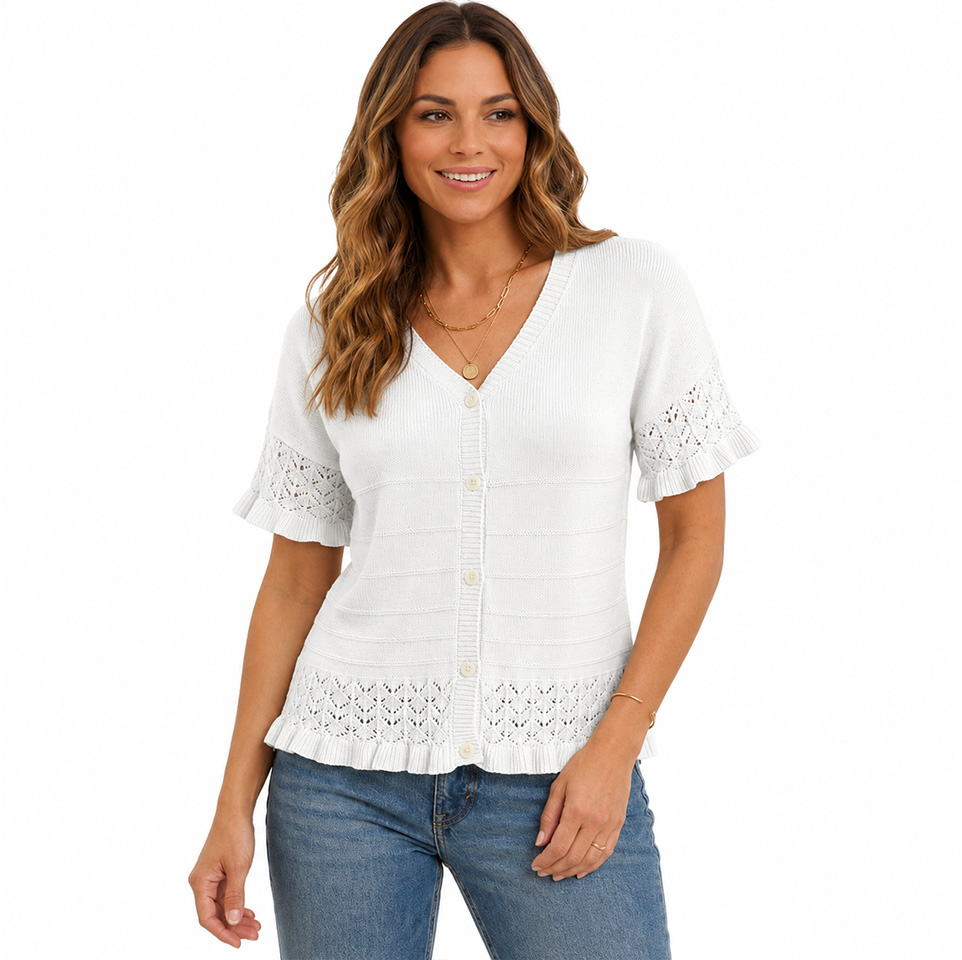
- Crochet or openwork knit: visual texture and openness are important; lining, transparency and snag risk need early review.
- Pointelle, cable or textured knit: the stitch pattern changes weight, width and production time.
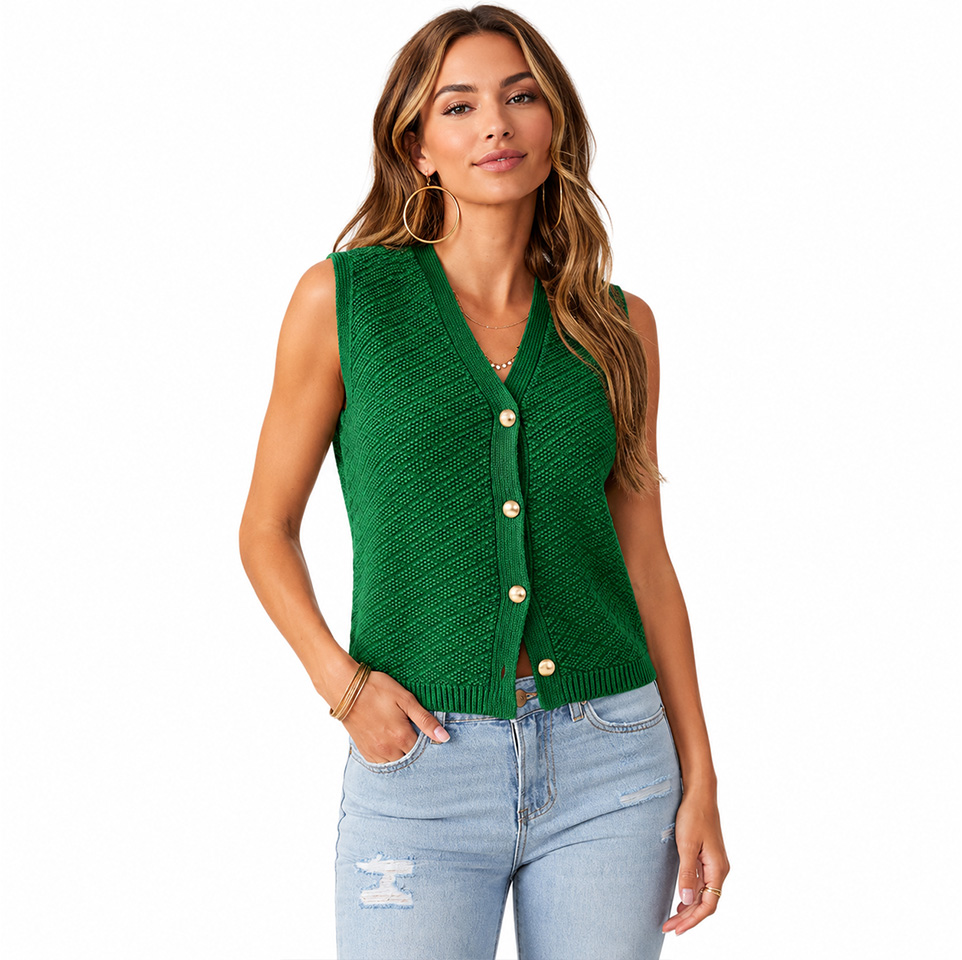
- Sleeveless vest or polo-style knit: armhole, neckline and placket finishing often determine the perceived quality.
Provide front and back artwork, close-up reference images, intended season, target retail price and target customer fit. If you only have a mood image, the factory can propose a development direction, but the first sample should be treated as a construction trial rather than a final production approval.
2. Specify yarn, gauge and hand feel together
For lightweight women’s knit tops, yarn selection, machine gauge and stitch density work as one system. A yarn can feel soft in a swatch yet become too sheer, unstable or heavy after the full garment is washed and finished.
- State the preferred fiber direction, such as cotton-rich, viscose blend, wool blend or a recycled-content requirement.
- Describe the required hand feel: dry and crisp, cool and smooth, soft and brushed, or fluid and drapey.
- Confirm whether the body should be opaque, semi-sheer or intentionally open.
- Ask the factory to propose the gauge and stitch density after reviewing the yarn and reference.
- For matching sets, confirm that the top and bottom retain a consistent shade and hand feel.
For a wider view of OEM and ODM choices, see our custom knitwear OEM/ODM service. The production route should be decided before a buyer compares quotations, because yarn composition, gauge and stitch complexity all change material use and knitting time.
3. Build fit and stretch recovery into the measurement spec
Fit is visible immediately on a rib top, cropped top or close-fitting sleeveless style. Do not rely on a flat measurement chart alone. Add the intended wearing ease, the measurement points to control and the expected behavior after wash or finishing.
- Body length, chest width, hem width and shoulder width
- Neck opening, armhole shape and sleeve opening
- Rib height, hem tension and cuff recovery
- Garment weight and tolerance by size
- Wash or finishing condition used when measuring the approved sample
For rib styles, ask the factory to assess stretch and recovery at the neckline, hem and body—not only at the chest. A top that measures correctly while laid flat can still become too loose after wear if the construction or yarn recovery is unsuitable. Our knitwear quality-control process is a useful reference for the checkpoints to agree before bulk production.
4. Send a sampling brief the factory can act on
A factory can sample faster and more accurately when the brief eliminates avoidable assumptions. Include the following items in the first development package:
- Reference images or a physical reference, with notes on which details must be copied and which may be adapted
- Front/back technical sketch and measurement chart, including size range and grading direction
- Fiber-content target, color references and any yarn restrictions
- Construction notes: gauge, rib, stitch pattern, placket, buttons, trims and labels
- Target quantity by color and size, target ex-factory price and launch date
- Required tests, inspection standard and packaging instructions
If your team is still preparing the specification, use this guide to prepare a knitwear tech pack. You can also review how an approved development sample moves into production in our article on knitwear sample development.
5. Plan label and testing requirements for the destination market
For U.S. retail programs, the finished garment and product information should be reviewed for fiber-content, country-of-origin and responsible-business information. The FTC’s textile and wool labeling guidance explains the applicable labeling framework. Care instructions are addressed separately by the U.S. Care Labeling Rule (16 CFR Part 423).
Where a buyer requests dimensional-change testing after home laundering, agree the test method, wash/dry conditions, sample size and acceptance criteria before sampling. AATCC TM135 is one referenced method for dimensional changes after home laundering; naming a method is not the same as confirming that a garment has passed a test. Requirements vary by market and product, so the buyer should confirm final label and compliance details with their own qualified compliance adviser.
6. Confirm bulk-production checkpoints before approval
Once a sample is close to approval, convert the comments into a production-ready checklist. This protects the approved look as the order moves from sample yarn and sample operators to bulk materials and production lines.
- Approved sample, comments and final measurement chart
- Bulk yarn color confirmation and trim approval
- Size-set or pre-production sample when required
- Appearance, measurement, workmanship and packing checkpoints
- Clear approval owner and revision date for every change
For a broader factory workflow, visit knitwear manufacturing in China. If you are comparing costing factors, our sweater manufacturing cost guide explains why material, gauge, stitch complexity, quantity and finishing all affect the quotation.
OEM women’s knit tops: quick FAQ
Can you develop a knit top from a reference image?
Yes. A reference image can start the discussion, but a clearer brief—measurements, yarn direction, intended fit and target quantity—makes the sample more reliable. The factory should confirm which details are technically feasible before bulk production.
What matters most for a fitted rib knit top?
Body measurements, rib structure, yarn recovery, neckline tension and the measurement condition after wash or finishing should all be agreed. These factors determine whether the garment keeps its intended shape during wear.
What should I send for a first quotation?
Send reference images or a tech pack, fiber direction, size range, colors, target quantity by color, labeling requirements and target market. This gives the factory enough context to propose an appropriate construction and sampling plan.
Planning an OEM women’s knit-top program? Send QITE GARMENTS your references, target quantity and development requirements to begin the sampling discussion.