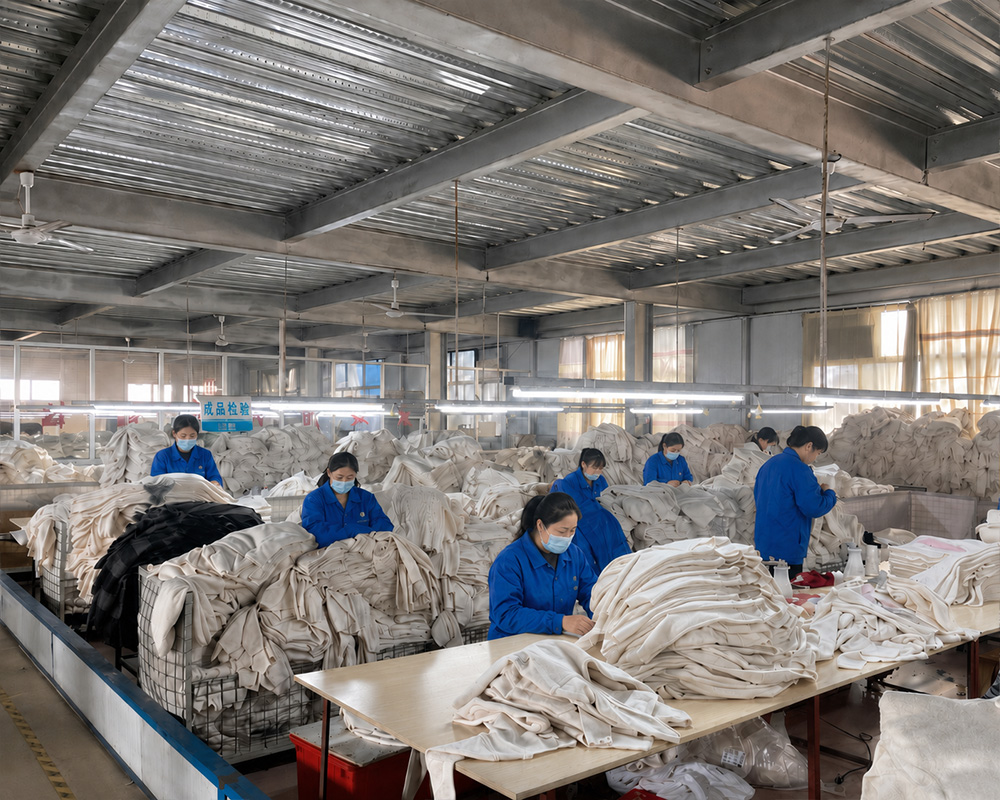
OEM women’s pullover development begins before a factory makes the first sample. A reference photo can communicate the intended look, but yarn weight, machine gauge, stitch construction and measurement standards determine whether the finished garment has the right hand feel, fit, cost and stability in bulk production.
This checklist helps fashion brands, private-label buyers and wholesalers turn a women’s pullover idea into a clear sampling brief. It is especially useful for lightweight pullovers, everyday mid-gauge sweaters, rib styles, textured knits and winter-weight designs.
1. Define the target pullover before discussing price
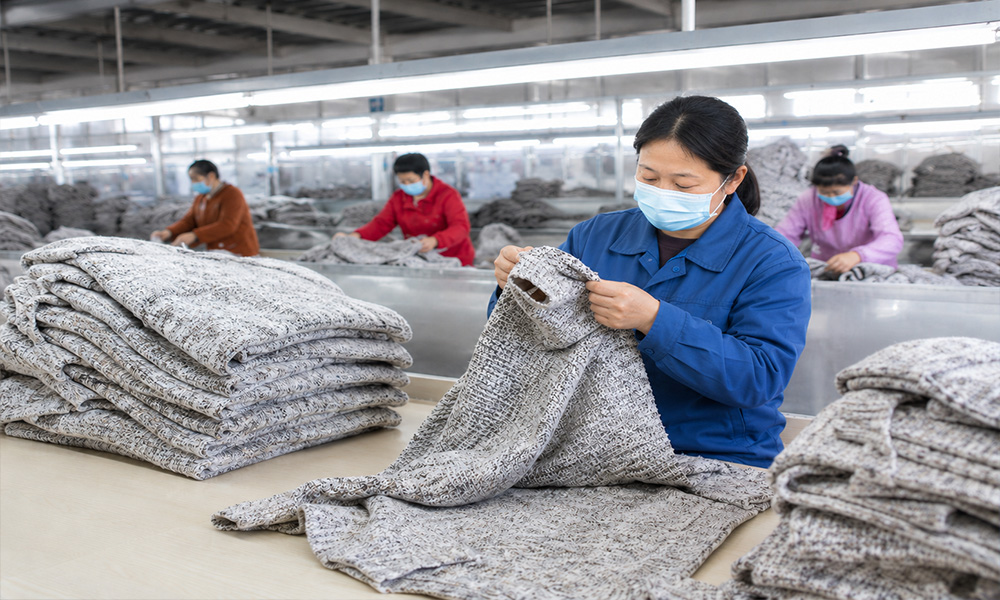
“Women’s pullover” is a broad category. Before asking for a quotation, define the product’s purpose in the collection and the customer it is designed for. A fine-gauge layering sweater has very different material, machine and fit requirements from a chunky cable pullover.
- Lightweight fine-gauge pullover for layering or transitional weather
- Relaxed everyday sweater with a regular or easy fit
- Fitted rib pullover with controlled stretch and recovery
- Cropped, oversized or dropped-shoulder fashion pullover
- Cable, pointelle, jacquard or intarsia design with visible texture
- Turtleneck, mock-neck, polo or V-neck construction
Share front and back references, close-up stitch images, intended season, target retail position and non-negotiable design details. If the starting point is only a mood image, treat the first sample as a construction trial—not final approval—so the factory can propose a workable yarn and gauge direction.
For adjacent women’s categories such as rib tops, crochet-look pieces and sleeveless styles, see our OEM women’s knit tops development checklist. It helps avoid applying a heavy-pullover construction to a lightweight product.
2. Choose yarn weight for the intended hand feel and season
Yarn weight influences warmth, drape, transparency, garment weight, cost and how the pullover responds after finishing. Fiber composition alone is not enough: the buyer and factory should evaluate yarn count, ply, twist, color, hand feel and the target garment weight together.
- Fine or lightweight yarn: generally suited to smooth layering pullovers, compact stitches and a lighter hand.
- Mid-weight yarn: useful for many commercial women’s sweaters, balancing coverage, shape and comfort.
- Heavier yarn: can create warmth and visible texture, but needs special attention to shoulder stability and stretch from hanging.
- Blends: can be developed for softness, warmth, drape, recovery or a particular surface appearance; the final effect should be checked in a full-garment sample.
Specify whether the factory may use suitable stock yarn for early development or whether a custom color and exact composition are required. Custom-dyed or specially sourced yarn may offer closer brand control, while timing, minimums and bulk availability should be confirmed before the sample is approved.
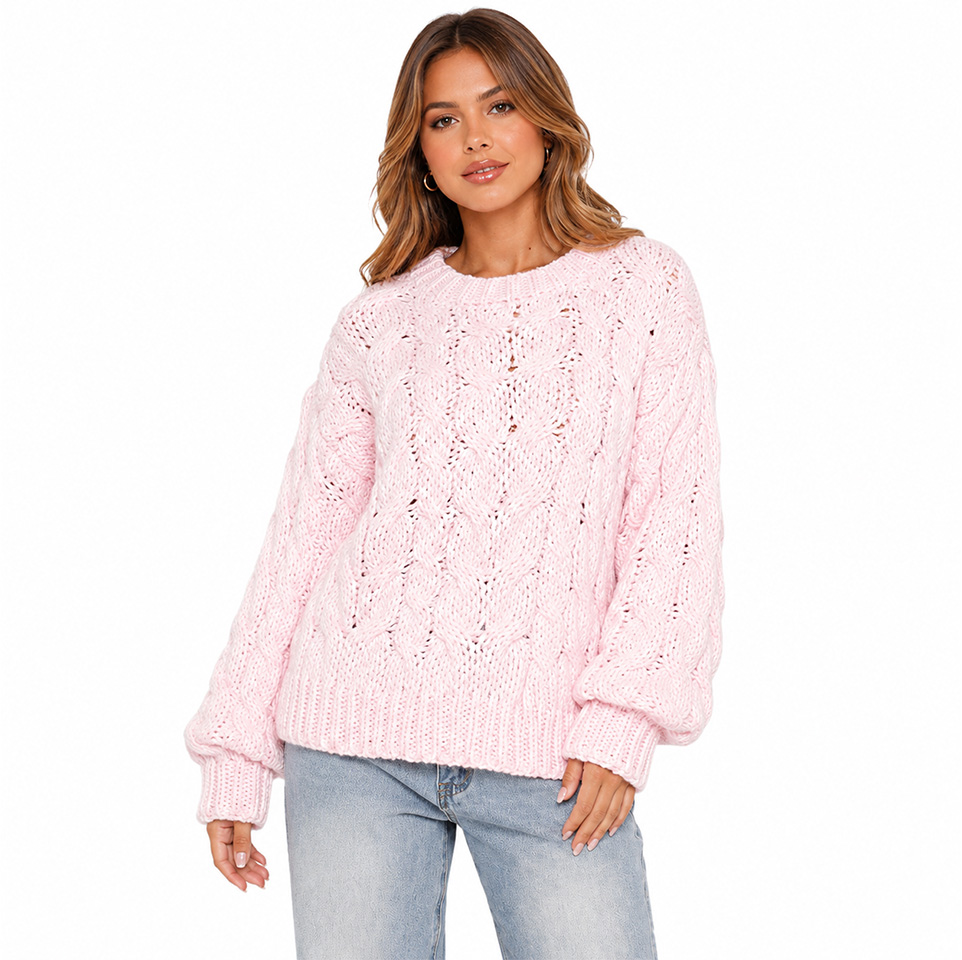
3. Match machine gauge and stitch structure to the design
Gauge affects the density, thickness, texture and production time of a pullover. It should be selected after the yarn and design have been reviewed together. Avoid treating broad terms such as “fine gauge” or “chunky gauge” as a complete specification; confirm the proposed machine gauge and the resulting swatch or sample.
- Fine-gauge construction often suits clean, lightweight layering pieces.
- Mid-gauge construction is commonly used for versatile women’s sweaters with more body.
- Lower-gauge or chunkier construction supports heavier winter styles and more visible texture.
- Rib, cable, pointelle, jacquard and intarsia constructions can change width, yarn consumption and knitting time even when the base yarn is the same.
For complex patterns, provide repeat artwork, color placement and close-up details. The factory should confirm the feasibility of the artwork, expected joins or float management, and any impact on the inside of the garment. Our custom knitwear OEM/ODM service explains how these development decisions are converted into a production route.
4. Make fit measurable, not descriptive
Words such as “regular,” “relaxed” and “oversized” are useful design language but do not replace a measurement chart. For a women’s pullover, the buyer should define the intended ease and the points of measure that will be checked on the approved sample and in bulk.
- Body length, chest width and hem width
- Shoulder width or dropped-shoulder position
- Sleeve length, bicep, cuff opening and cuff height
- Neck width, neck drop and collar height where applicable
- Garment weight, size grading direction and tolerances
- Whether measurements are taken relaxed, gently stretched, after steaming or after wash
For a fitted or ribbed style, confirm stretch and recovery at the neckline, cuffs, hem and body separately. A garment can meet a flat measurement chart yet lose its intended silhouette after wear if yarn recovery or stitch tension is not suitable.
5. Turn the reference into a sample-ready development brief
A clearer brief leads to a more useful first sample. Send the factory the details below before sampling so that technical questions are addressed early rather than after bulk materials are ordered.
- Front/back artwork, reference photos and close-up construction details
- Technical sketch, size chart, fit direction and grading requirements
- Fiber and hand-feel target, color references and any restricted materials
- Gauge, stitch, trim, label and packaging direction where known
- Target quantity by color and size, target price and delivery window
- Required tests, inspection expectations and destination-market requirements
If a complete specification is not ready, use our guide on preparing a knitwear tech pack. You can also see how an approved sample supports supplier evaluation in knitwear sample development.
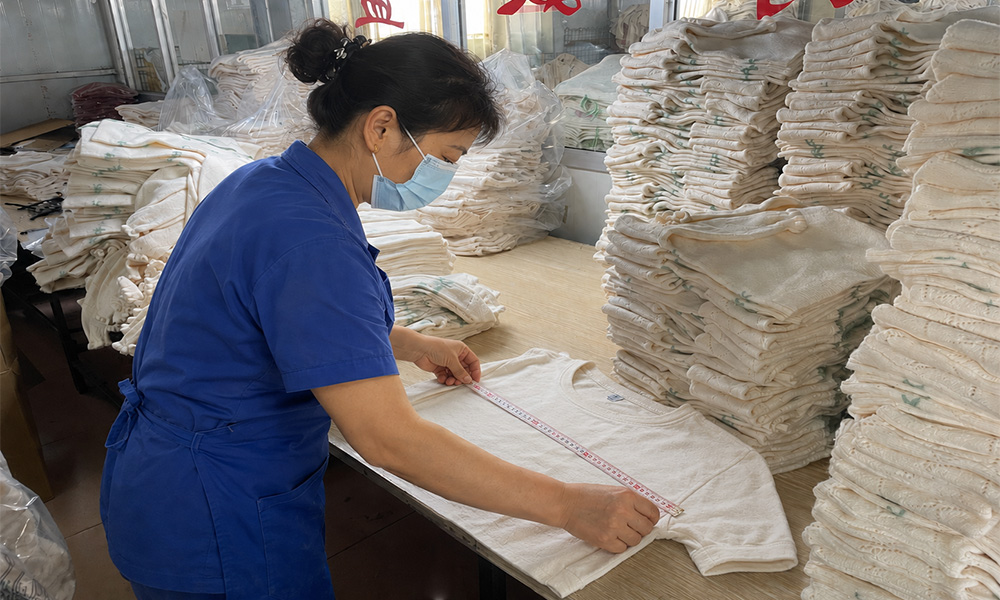
6. Agree wash, dimensional-change and measurement conditions early
Knitted garments can change after washing, drying, steaming or finishing. Agree the care process, measurement condition, permitted tolerance and acceptance criteria before sample approval. This prevents one party measuring an untreated garment while another measures a finished or laundered garment.
When a buyer requires dimensional-change testing after home laundering, AATCC TM135 is one referenced method for determining length and width changes under defined home-laundering procedures. The buyer and supplier should agree the wash/dry setting, sample condition and pass/fail requirement in advance; citing a method alone does not confirm that a garment has passed a test.
Use the approved measurement condition consistently in the pre-production sample, inline checks and final inspection. For further production checkpoints, review our knitwear quality-control process.
7. Plan pilling evaluation as part of product performance
Pilling and related surface changes are influenced by fiber type, yarn construction, stitch density, finishing and friction in actual wear. For a style with a soft, hairy or textured surface, define the expected appearance after use and laundering before bulk production—not only the appearance of a new sample.
ASTM D4970/D4970M covers pilling resistance and related surface changes using a Martindale tester. Its published guidance cautions that the method is not generally recommended as an acceptance test on its own. If buyer and supplier choose to use it, they should agree the specimen condition, test cycles, rating method and acceptance level before testing; laboratory results should be reviewed alongside the garment’s intended use and appearance.
8. Lock production checkpoints before releasing bulk
Once the sample is close to approval, make every approved detail traceable in a production checklist. This is how a brand protects the approved look when production moves to bulk yarn, bulk knitting lines, finishing and packing.
- Approved sample, revision notes and final measurement chart
- Bulk yarn color, trim, label and packaging confirmation
- Pre-production or size-set sample where required
- Appearance, measurement, workmanship and packing checkpoints
- Named approval owner and version date for each change
For the wider factory workflow, visit knitwear manufacturing in China. If you are comparing quotes, our sweater manufacturing cost guide explains how yarn, gauge, stitch complexity, order quantity and finishing affect cost.
OEM women’s pullover development FAQ
What has the biggest effect on women’s pullover cost?
Yarn composition and weight, gauge, stitch complexity, garment weight, color count, order quantity, trims, labels, packaging and test requirements all affect the final quotation. A factory needs the intended construction and quantity to give a meaningful estimate.
Why is gauge so important?
Gauge changes thickness, texture, drape, coverage, production time and garment weight. The right gauge should be verified with the selected yarn and a full-garment sample, rather than specified from a reference image alone.
How can a brand reduce sample revisions?
Provide a clear reference, a measurement chart, fit notes, material direction, color references, target quantity and test requirements before sampling. Treat the first sample as a review of construction, not just color or styling.
Developing an OEM women’s pullover collection? Send QITE GARMENTS your reference images, target quantity and product requirements to start a technical sampling discussion.