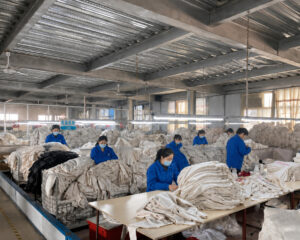
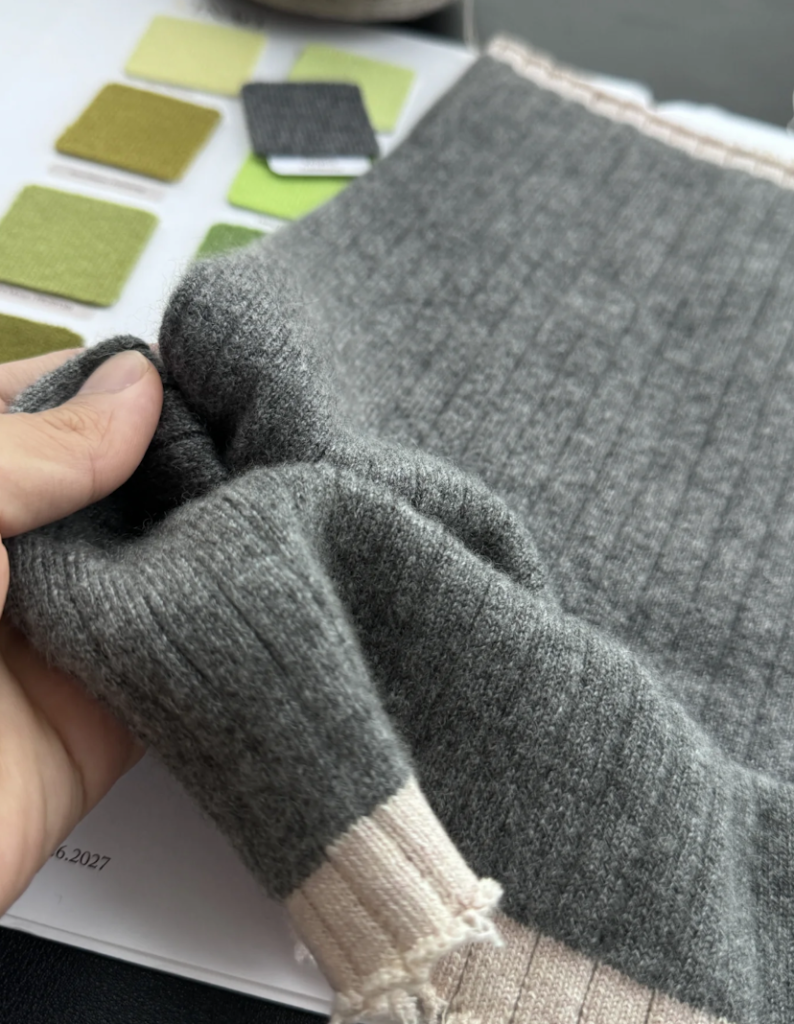
Sampling is one of the most important stages in OEM women’s knitted sweater production. A good sample does more than show the shape of a sweater. It confirms whether the yarn, gauge, stitch, fit, workmanship, color, handfeel, and cost direction can work for bulk production
That is why choosing the right sweater manufacture partner matters. A capable OEM sweater manufacturer should not only follow a tech pack, but also help buyers check whether the design is practical for real knitwear manufacture, bulk production, and final delivery.
For a broader sourcing overview, buyers can also read our OEM women knitted sweater manufacturing guide, which covers materials, MOQ, sampling, quality control and private label planning for women’s knitwear projects.
Why Pre-Sampling Confirmation Matters in Knitwear Manufacture
Knitted sweaters are different from many woven or cut-and-sew garments. The fabric is created during production, not purchased as finished yardage. This means the yarn, knitting machine, gauge, stitch structure, tension, washing, and finishing process all affect the final garment.
For women’s sweaters, small changes can create big differences. A slight yarn change may affect softness and garment weight. A different gauge may change the shape and cost. A loose stitch may create a relaxed look but reduce recovery. A brushed finish may improve handfeel but increase pilling risk.
Before starting a sample, buyers should make sure the factory understands the product goal clearly:
- Is this sweater designed for premium retail or value fashion?
- Should the handfeel be soft, compact, fluffy, dry, smooth, or structured?
- Is the fit slim, regular, relaxed, cropped, oversized, or longline?
- Is the style for Fall/Winter, transitional wear, or year-round layering?
- Does the brand need stock yarn, custom-dyed yarn, recycled yarn, wool blend, cotton blend, or synthetic blend?
The clearer the product direction, the more useful the first sample will be.
1. Confirm the Target Market and Price Range
Before discussing yarn or stitch details, buyers should confirm the target retail level and cost direction. A women’s sweater for a premium boutique brand may require very different yarn, finishing, and measurement control from a high-volume promotional knitwear program.
An experienced OEM women sweater manufacture partner will usually ask about:
- Target FOB price
- Target retail price
- Sales market
- Customer age group
- Fit preference
- Quality expectations
- Order quantity estimate
- Delivery window
This information helps the manufacturer recommend realistic yarns and construction methods. Without a target price range, the supplier may develop a sample that looks good but is too expensive for bulk order.
2. Confirm Yarn Composition and Yarn Count
Yarn is the foundation of sweater production. It affects softness, warmth, stretch, weight, drape, color, pilling performance, care instructions, and price.
Common yarn choices for custom women’s sweaters include:
- Cotton blends for breathable everyday knitwear
- Viscose or rayon blends for soft drape
- Acrylic blends for affordable warmth
- Nylon blends for strength and recovery
- Polyester blends for durability and cost control
- Wool blends for warmth and premium positioning
- Recycled yarns for brands with responsible sourcing goals
Buyers should not only confirm the fiber composition, but also yarn count, ply, twist, handfeel, and availability. If the brand requires certified yarns or recycled materials, this should be confirmed before sampling, not after the first sample is approved.
Material planning is becoming more important across the apparel industry. Textile Exchange reported that global fiber production reached 132 million tonnes in 2024, with polyester remaining the largest fiber category. For buyers, this means yarn choice is not only a design decision. It also affects cost, sourcing story, compliance, and long-term product positioning.
3. Confirm Gauge and Stitch Structure
Gauge is one of the most important technical details in sweater manufacture. It refers to the number of needles per inch on the knitting machine. Lower gauge sweaters are usually heavier and chunkier, while higher gauge sweaters are finer and lighter.
Common choices include:
- Fine gauge for lightweight cardigans, fitted sweaters, and layering pieces
- Mid-gauge for commercial pullovers and everyday knitwear
- Chunky gauge for heavier Fall/Winter sweaters and textured styles
The stitch structure should also be confirmed before sampling. Jersey, rib, cable, jacquard, pointelle, links-links, Milano, and textured stitches all have different effects on cost, garment weight, production time, and fit.
For example, a cable sweater may look premium but use more yarn and require more production time. A jacquard design may need clearer artwork and color planning. A ribbed sweater may need careful recovery control to avoid stretching out after wear.
4. Confirm Measurements and Fit Before Sampling
Fit is one of the most common reasons for sample revisions. For women’s knitted sweaters, measurement control is more complex because knitwear stretches and relaxes differently depending on yarn and stitch.
Before sampling, buyers should provide:
- Size chart
- Sample size
- Garment measurements
- Tolerance requirements
- Fit comments
- Reference sample or photos if available
- Intended model or body fit
Key sweater measurements usually include body length, chest width, shoulder width, sleeve length, sleeve opening, armhole, hem width, neck width, and cuff height.
For oversized sweaters, buyers should be especially clear. “Oversized” can mean relaxed and balanced, or it can become too wide, too long, or poorly proportioned if not defined correctly.
5. Confirm Design Details and Trims
Many sample delays happen because small design details are missing. Before the factory starts development, buyers should confirm all visible and functional details.
These may include:
- Neckline shape
- Rib height at collar, cuff, and hem
- Placket width for cardigans
- Button size and material
- Zipper type
- Pocket shape and placement
- Embroidery or logo position
- Contrast color placement
- Label type and placement
- Hangtag and packaging requirements
If the sweater includes brand trims, buyers should confirm whether the factory will source them or whether the brand will supply them. For private label knitwear, main labels, care labels, size labels, hangtags, polybags, and carton marks should be discussed early.
6. Confirm Color Development
Color is another critical part of OEM knitted sweater production. Buyers should confirm whether the sample will use available stock yarn color or custom lab dip color.
Stock yarn is usually faster and better for small MOQ or urgent sampling. Custom-dyed yarn gives brands more control but usually requires longer lead time and higher minimum quantity.
Before sampling, confirm:
- Pantone or color standard
- Solid color or mélange effect
- Lab dip requirement
- Number of colorways
- Contrast color placement
- Bulk color tolerance
- Whether yarn is stock or custom dyed
For multi-color knitwear, such as stripes or jacquard sweaters, buyers should also confirm color ratio and layout before sampling.
7. Confirm MOQ and Bulk Feasibility
Sampling should always connect to bulk production reality. A sample may be possible, but that does not always mean the style is suitable for the buyer’s MOQ, price, or delivery schedule.
MOQ may depend on:
- Yarn type
- Custom color requirements
- Gauge
- Machine setup
- Number of sizes
- Number of colors
- Trim sourcing
- Packaging customization
Buyers should ask the OEM knitwear manufacturer to confirm MOQ before sampling begins. This avoids wasting time developing a style that cannot be produced at the required quantity.
8. Confirm Testing Requirements
For women’s sweaters, testing is especially important because knitwear may change after washing, steaming, wearing, or hanging.
Common test points include:
- Shrinkage
- Pilling resistance
- Colorfastness
- Seam strength
- Fiber composition
- Appearance after washing
- Twisting or distortion
- Dimensional stability
If the buyer sells to department stores, chain retailers, or regulated markets, testing requirements should be shared with the manufacturer before sample development. The OECD’s garment and footwear due diligence guidance also highlights the importance of identifying supply chain risks, which is why more brands now ask suppliers for compliance support and clearer documentation.
9. Confirm Lead Time for Sampling and Bulk Production
A realistic timeline is essential for Fall/Winter knitwear programs. Sweater production involves several stages, and each stage can affect delivery.
A typical process includes:
- Tech pack review
- Yarn confirmation
- Lab dips if needed
- First sample
- Fit comments
- Revised sample
- Pre-production sample
- Bulk yarn preparation
- Knitting
- Linking
- Washing and finishing
- Inspection
- Packing and shipment
Buyers should not only ask, “How many days for sample?” They should also ask how long bulk production will take after sample approval. For custom yarns or peak-season orders, planning early is much safer.
10. Confirm Communication and Sample Feedback Process
A good OEM sweater manufacturer should communicate clearly during development. Buyers should expect the supplier to point out possible risks before making the sample, such as:
- The yarn may be too heavy for the design
- The stitch may not hold the intended shape
- The target price may not match the requested material
- The MOQ may be too low for custom dyeing
- The design may need construction adjustment for bulk production
This kind of feedback is valuable. It helps buyers reduce revisions and move faster from concept to approved sample.
Final Checklist Before Starting a Women’s Sweater Sample
Before asking your supplier to make the first sample, confirm these points:
- Target market and price range
- Yarn composition and yarn count
- Gauge and stitch structure
- Sample size and measurement chart
- Fit direction
- Color standard
- Trims and labels
- MOQ by style and color
- Testing requirements
- Packaging needs
- Sampling lead time
- Bulk production lead time
- Compliance or certification needs
When these details are clear, the sample process becomes faster, more accurate, and more useful for production planning.
Conclusion
OEM women’s knitted sweater production requires more than sending a design image to a factory. Buyers need to confirm yarn, gauge, stitch, fit, color, trims, MOQ, testing, packaging, and delivery expectations before sampling begins.
A reliable partner in sweater manufacture and knitwear manufacture can help brands avoid costly revisions, improve product quality, and build stronger seasonal collections. Whether you are developing custom women’s sweaters, private label cardigans, or Fall/Winter knitwear programs, the best results start with clear communication before the first sample is made.
FAQ
What should buyers prepare before sampling women’s knitted sweaters?
Buyers should prepare a tech pack, size chart, target price, yarn preference, color standard, design details, trims, label requirements, and estimated order quantity.
What affects the cost of OEM women’s sweaters?
Main cost factors include yarn composition, gauge, garment weight, stitch complexity, order quantity, trims, washing, finishing, testing, and packaging.
Is stock yarn better than custom-dyed yarn?
Stock yarn is faster and often suitable for lower MOQ. Custom-dyed yarn gives better brand color control but usually requires longer lead time and higher MOQ.
Why is gauge important in knitwear manufacture?
Gauge affects sweater thickness, weight, texture, handfeel, production time, and cost. Choosing the right gauge is essential for both design and bulk production.
Can an OEM sweater manufacturer support private label production?
Yes. A professional OEM sweater manufacturer can support custom labels, hangtags, packaging, size grading, yarn sourcing, sampling, and bulk production.
Looking for an OEM sweater manufacturer for your women’s knitwear collection? Contact us to discuss yarn options, sample development, MOQ, and production timelines for your next custom sweater program.