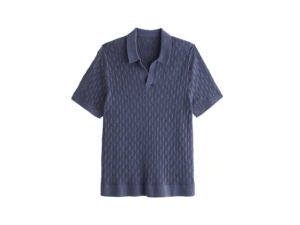
“Make it in 12GG” sounds precise, but it leaves several important decisions open. A supplier still needs to know the yarn, how it will be used, the knitted structure and the finished result the buyer wants. Two samples carrying the same machine-gauge description can feel surprisingly different.
For buyers developing custom sweaters, the useful question is not which gauge is best. It is which yarn-and-construction combination delivers the right coverage, weight, surface and movement. This guide explains how to compare those combinations without ordering a succession of nearly identical full samples.
Separate five specifications that are often mixed together
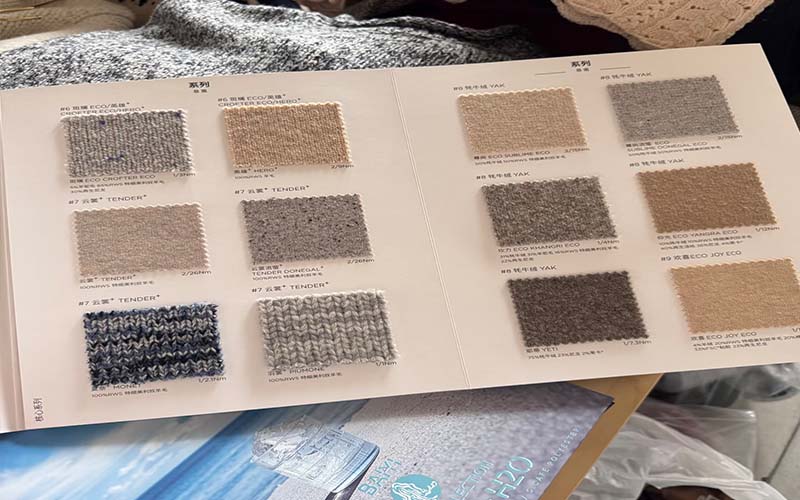
Start by giving each term its own field. The separation matters when a designer, yarn supplier and knitting technician use the word “weight” differently.
| Specification | What it describes | What it cannot establish by itself |
|---|---|---|
| Fibre composition | The stated fibre types and proportions | Softness, finished thickness or resistance to surface change |
| Yarn count and construction | Yarn fineness in a named count system, plus ply and construction details | The finished fabric when knitting and finishing are unknown |
| Machine gauge | Needle spacing expressed using the machine’s gauge convention | Finished stitch density, garment weight or a quality ranking |
| Stitch structure and settings | The way loops are formed and the proposed knitting setup | The final handle before finishing and physical review |
| Finished weight | The mass of an identified panel or garment in a stated condition | Thickness, warmth or softness on its own |
For V-bed flat knitting, Woolmark’s Introduction to Knitwear manual describes gauge in needles per inch and relates yarn-count selection to both machine gauge and fabric structure. Its tables are useful background, not a promise that one count will work for every design on that gauge.
Also distinguish machine gauge from the stitches and rows counted in a finished swatch. They are related concepts, not interchangeable numbers. A photograph of a small knitted square cannot reliably identify all of its production settings.
Translate the reference into observable priorities
Instead of asking for “luxury hand feel,” describe what should happen when someone handles or wears the fabric. Should it fall close to the body or hold a boxier outline? Should a shirt beneath remain hidden? Is a smooth surface essential for small lettering, or is visible texture the point of the design?
Choose the two or three priorities that cannot be compromised. Then identify the features that can move. A buyer might accept a little more garment weight to improve coverage, but not a firmer neckline. Another might prioritise a light packable layer over a pronounced cable.
A reference garment helps, provided the team identifies what it is being used to approve. Its colour may be irrelevant while its drape is useful. Attach those comments to the reference instead of telling the supplier to “match everything.”
For a women’s pullover project, the existing pullover development checklist covers the broader style and fit brief. Here, keep the discussion focused on selecting the fabric combination rather than reopening every garment detail.
Read the yarn specification before comparing the price
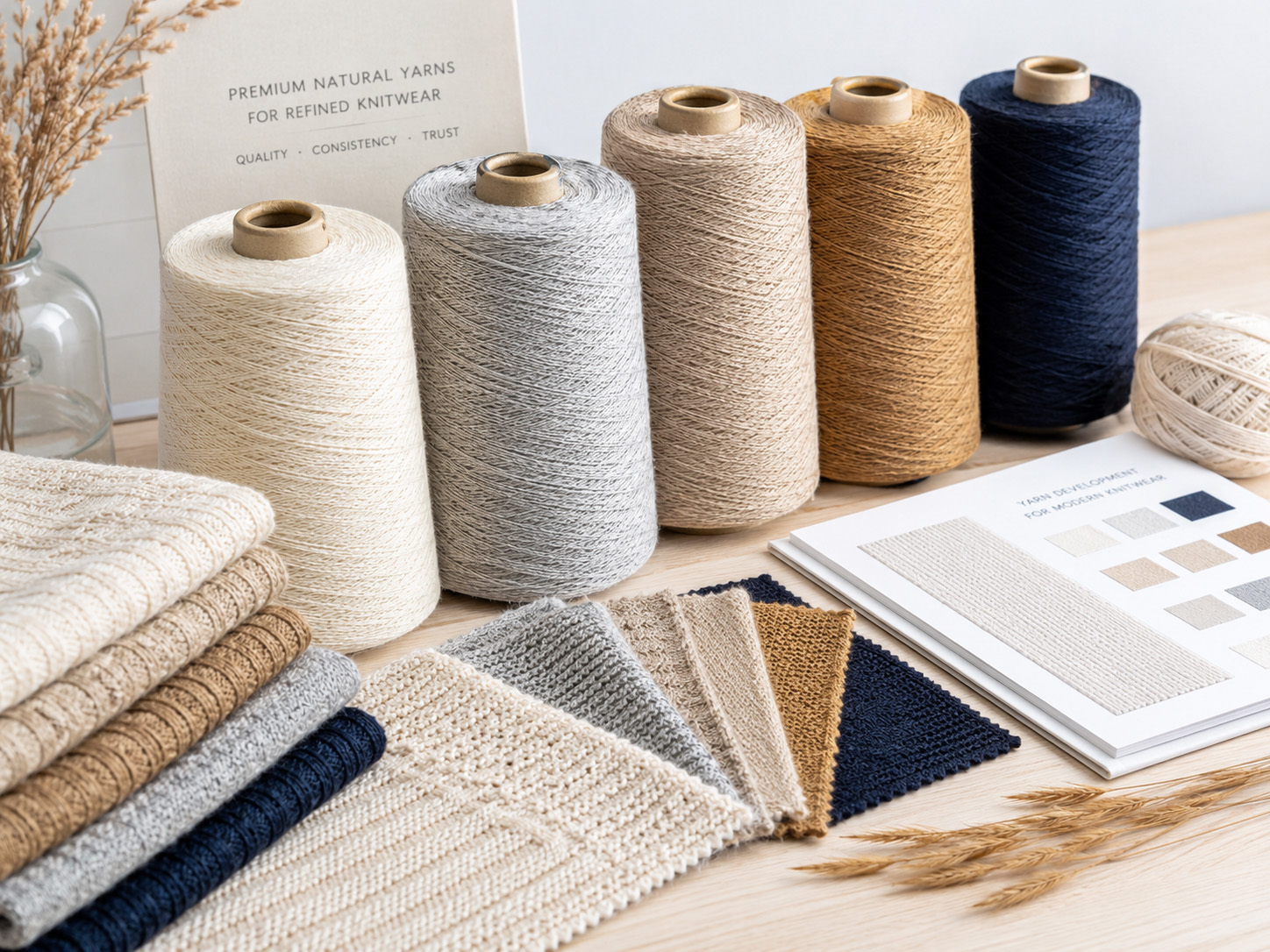
Ask the supplier to name the count system and explain how its notation records singles and plies. Do not assume two quotations use the same convention simply because both include a slash. Confirm the actual yarn article, composition, count, ply and colour reference in writing.
Record the number of yarn ends proposed in knitting separately. Using multiple ends together is not the same instruction as buying a differently constructed plied yarn. If a technician proposes a change, ask which variable has changed and why.
For a blend, the fibre percentages are only the beginning of the identification. A substitute with the same percentage statement may still differ in yarn construction, surface and knitting behaviour. “Same composition” should not be treated as permission to substitute without review.
Availability also belongs in this conversation. Ask whether the sample yarn is available for the intended order and whether a custom colour would use the same yarn article. There is little value in choosing a beautiful development swatch that cannot represent the proposed bulk material.
Use a small comparison that answers one question
Request a limited set of clearly identified swatches rather than an unexplained bag of attractive options. The following is an illustrative development plan, not a prescribed machine recipe.
| Trial | What stays fixed | What changes | Decision to make |
|---|---|---|---|
| A: baseline | Agreed reference yarn, structure and finish | Nothing; this is the comparison reference | Is the starting result close enough to develop? |
| B: coverage trial | Yarn identity and structure | A technician-proposed knitting adjustment, recorded | Is coverage improved without an unacceptable change in handle? |
| C: yarn alternative | Intended product purpose and agreed comparison method | A named alternative yarn with its proposed setup | Is the different surface or drape worth developing further? |
Do not insist that every setting stays identical when the alternative yarn needs a different setup. Instead, document the differences so the team knows whether it is comparing one variable or a complete alternative construction.
Give each swatch a code and record its yarn, gauge, structure, setup reference and finishing condition. Compare representative areas away from distorted edges. If colour or finishing differs between trials, note that limitation; do not attribute every visible difference to gauge.
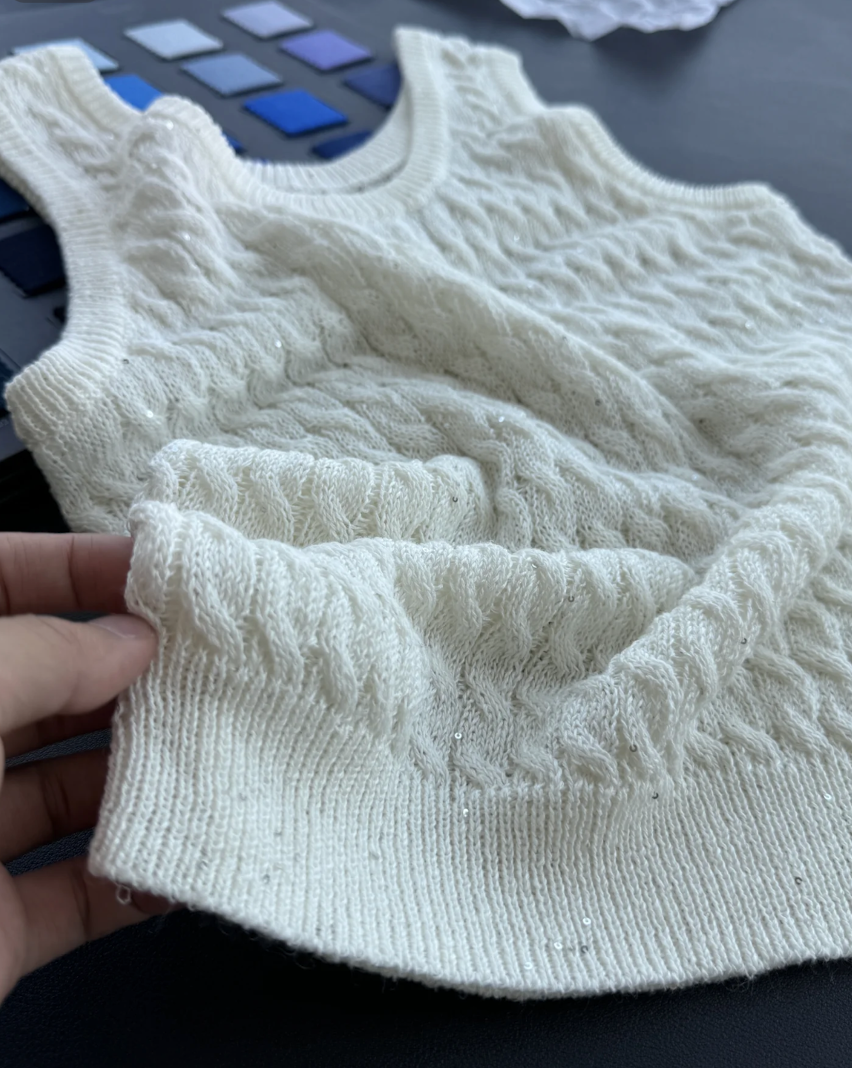
Compare weight without creating a misleading result
A larger swatch will usually weigh more than a smaller one. A heavier garment may simply be a larger size. Record dimensions, size and condition before making weight comparisons.
For development panels, use an agreed representative area and a consistent method. When discussing a finished-garment weight target, identify the sample size and whether trims are included. Keep these figures separate from fabric mass per unit area.
Treat weight as a useful check alongside the physical fabric, not as a shortcut to quality. A panel can reach a mass target while remaining too open, too stiff or unsuitable for the intended silhouette. Likewise, an appealingly light swatch may not support a heavy button placket or maintain the shape of a long cardigan.
The first garment should answer the questions the flat panel cannot: shoulder support, sleeve movement, neckline behaviour and the effect of seams and trims. Keep the panel reference so the team can tell whether a disappointing garment comes from the chosen fabric or from another construction decision.

Diagnose the mismatch before changing the gauge
If the sample is wrong, write down the symptom before specifying the correction. “Go up a gauge” can change more than the buyer intended.
- Too transparent: compare the actual coverage, yarn choice and knitted structure; do not assume a gauge-number change alone will solve it.
- Too heavy: first check the garment dimensions and structure against the brief, then ask for a documented lighter construction proposal.
- Too stiff: review the yarn, knitting setup and finish together. Keep the acceptable appearance reference visible while the handle is adjusted.
- Texture disappears: check whether yarn surface, structure and finishing are obscuring the intended detail before making the motif larger.
For surface wear, avoid a “no pilling” promise based on a new swatch. Woolmark’s pilling guidance describes a complex interaction involving abrasion and textile construction. Set the required performance assessment separately from the new-fabric handle review.
Freeze the fabric choice without freezing the wrong details
Once an option is selected, retain its physical reference and record which properties are approved. Transfer the yarn identity, construction, finishing reference and open performance checks into the custom sweater Tech Pack. A photograph should supplement that record, not replace the fabric.
Ask for review before changing yarn article, number of ends, knitting construction or finish. The manufacturing team also needs the accepted route for planning; a last-minute substitution is not just an administrative change.
QITE Garments has its production foundation in sweaters and knitwear. To start a useful yarn-and-gauge discussion, send QITE a reference and the properties that matter most: intended use, coverage, surface, drape, approximate weight direction and care expectations. If a gauge is already nominated, explain whether it is mandatory or simply a starting suggestion. That gives the technical review room to solve the product brief rather than chase a number.