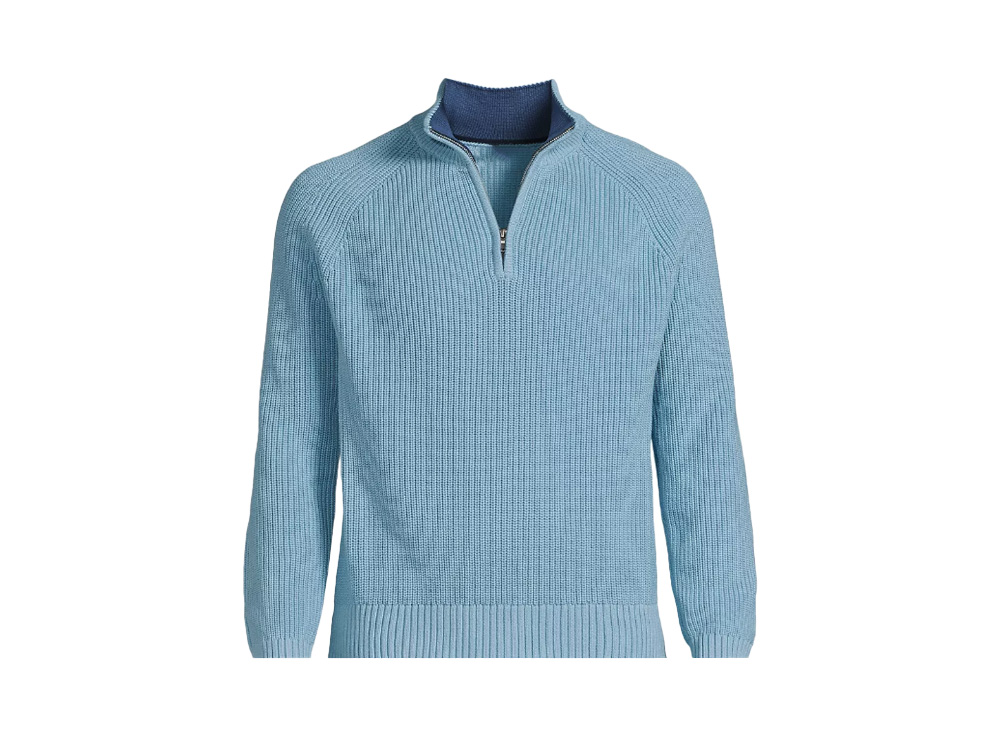
Custom quarter zip sweaters combine knitted construction with a functional zipper and structured collar. That combination makes them versatile for menswear, golf collections, uniforms, corporate apparel and premium casualwear, but it also creates development details that do not exist in a standard crewneck sweater.
The zipper length, collar height, placket stability, yarn, gauge and fit must work together. If these specifications are unclear, the sample may develop zipper rippling, an uneven neckline, a collar that does not sit correctly or inconsistent bulk measurements.
This guide explains what brands should confirm before sampling and producing custom quarter zip sweaters.
1. Define the Quarter-Zip Style
Before requesting a quotation, define how the sweater should look when the zipper is both open and closed.
Confirm:
- Regular, slim, relaxed or oversized fit
- Quarter-zip or longer half-zip opening
- Stand collar height
- Zipper length and width
- Raglan, set-in or dropped shoulder
- Plain knit, rib, cable, jacquard or textured structure
- Lightweight layering piece or heavier winter sweater
- Rib specifications for the collar, cuffs and hem
- Target customer, season and retail price
The terms quarter zip and half zip are sometimes used interchangeably. If developing a custom half zip sweater, specify the actual zipper length in centimetres and show its endpoint on the technical drawing.
2. Specify the Zipper Clearly
The zipper is usually the most technical component of custom quarter zip sweaters. It affects appearance, wearer comfort, production cost and sewing or linking requirements.
| Zipper Detail | What the Buyer Should Confirm |
|---|---|
| Zipper length | Exact finished length for the base size |
| Zipper type | Coil, moulded plastic or metal |
| Tape colour | Matching, tonal or contrasting |
| Teeth colour | Matching or decorative finish |
| Slider and puller | Standard, branded or custom shape |
| Opening type | Closed-end opening for a pullover style |
| Top finish | Position of top stops and comfort near the neck |
| Backing | Whether an internal facing or guard is required |
| Size grading | Whether zipper length changes across sizes |
A zipper that is too heavy for the knit structure can pull the centre front out of shape. A zipper that is sewn with uneven tension can create rippling or twisting.
The factory should review the relationship between zipper weight, yarn, gauge and placket construction before sampling.
3. Develop the Collar in Open and Closed Positions
The collar should be evaluated in two conditions:
- Fully zipped, where it functions as a stand collar
- Partially open, where it forms a folded or spread neckline
The tech pack should state:
- Finished collar height
- Collar circumference
- Rib structure and stretch
- Collar thickness
- Front overlap or edge position
- Zipper endpoint
- Inside neckline finish
- Shape when worn open
- Shape when fully closed
A collar that is too loose may collapse when zipped. A collar that is too tight may feel uncomfortable or pull the zipper into a curve.
For men’s custom sweaters, the collar must also work with the intended styling. A corporate layering piece worn over a shirt may need more neck room than a close-fitting golf or performance-inspired style.
4. Match Yarn and Gauge to the Product
Yarn selection affects warmth, hand feel, drape, durability and zipper stability.
| Yarn Direction | Product Consideration |
|---|---|
| Cotton or cotton blend | Breathable and suitable for transitional-season layering |
| Wool or wool blend | Warm, resilient and suitable for autumn/winter programs |
| Acrylic blend | Cost-conscious with broad colour availability |
| Merino wool blend | Fine handle and premium menswear positioning |
| Viscose blend | Smooth surface and softer drape |
| Recycled fibre blend | Suitable where fibre claims and documentation are confirmed |
Gauge also changes the character of the garment. Fine-gauge custom knit sweaters usually create a cleaner, more refined appearance. Mid- or heavier-gauge styles provide more texture and warmth but require careful zipper and placket reinforcement.
Before approving the yarn, review:
- Fibre composition
- Yarn count
- Gauge
- Garment weight
- Hand feel
- Colour
- Pilling expectation
- Shrinkage and shape recovery
- Care method
The approved sample should use the intended production yarn whenever possible. A substitute yarn may behave differently around the collar and zipper.
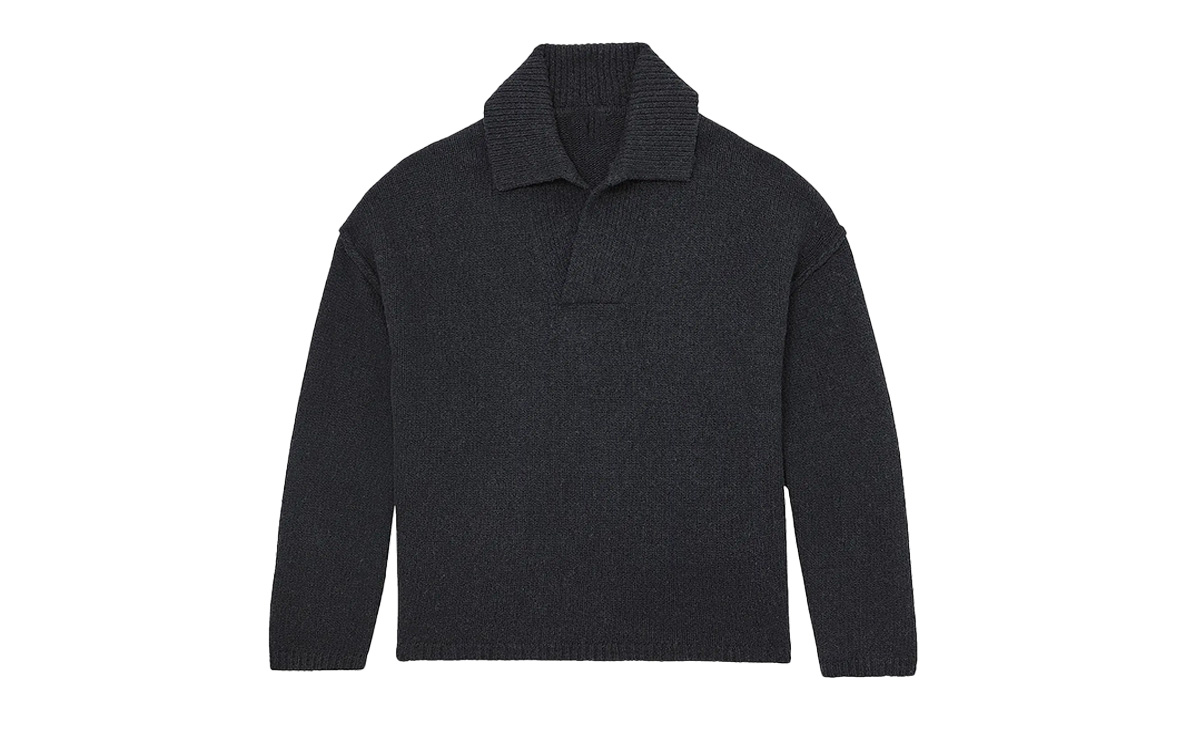
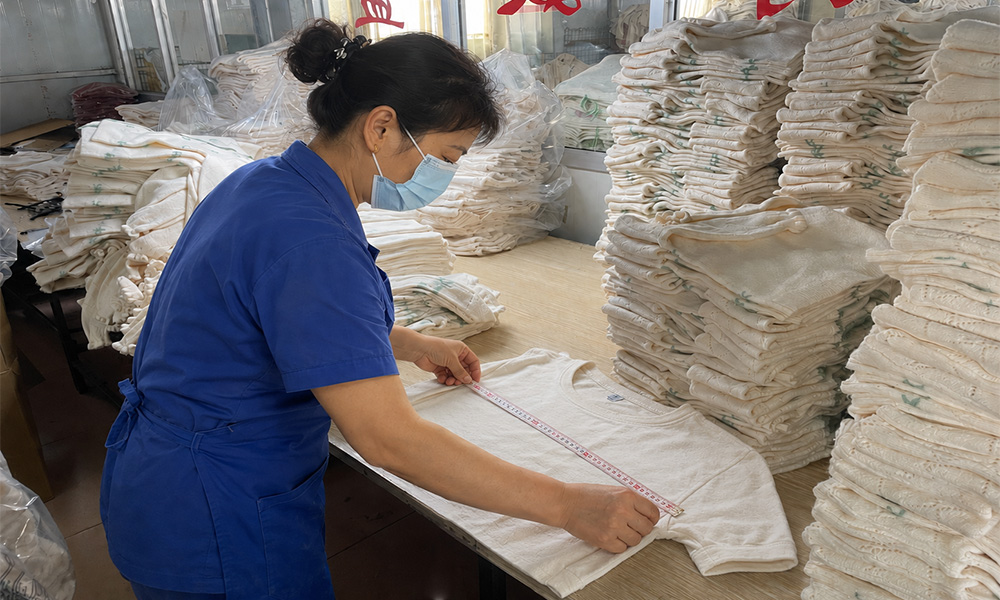
5. Confirm Fit and Measurements
A reference image can communicate style direction, but it cannot replace a measurement specification.
Include these points in the size chart:
- Chest width
- Body length
- Shoulder width
- Sleeve length
- Armhole depth
- Bicep width
- Neck width
- Collar height
- Zipper length
- Cuff opening
- Hem width
For a custom half zip sweater, define whether measurements are taken with the zipper open or closed and whether the collar is folded or standing.
If the design has a contrast chest panel, stripe or logo, record its position from fixed measurement points. This helps keep placement consistent across the size range.
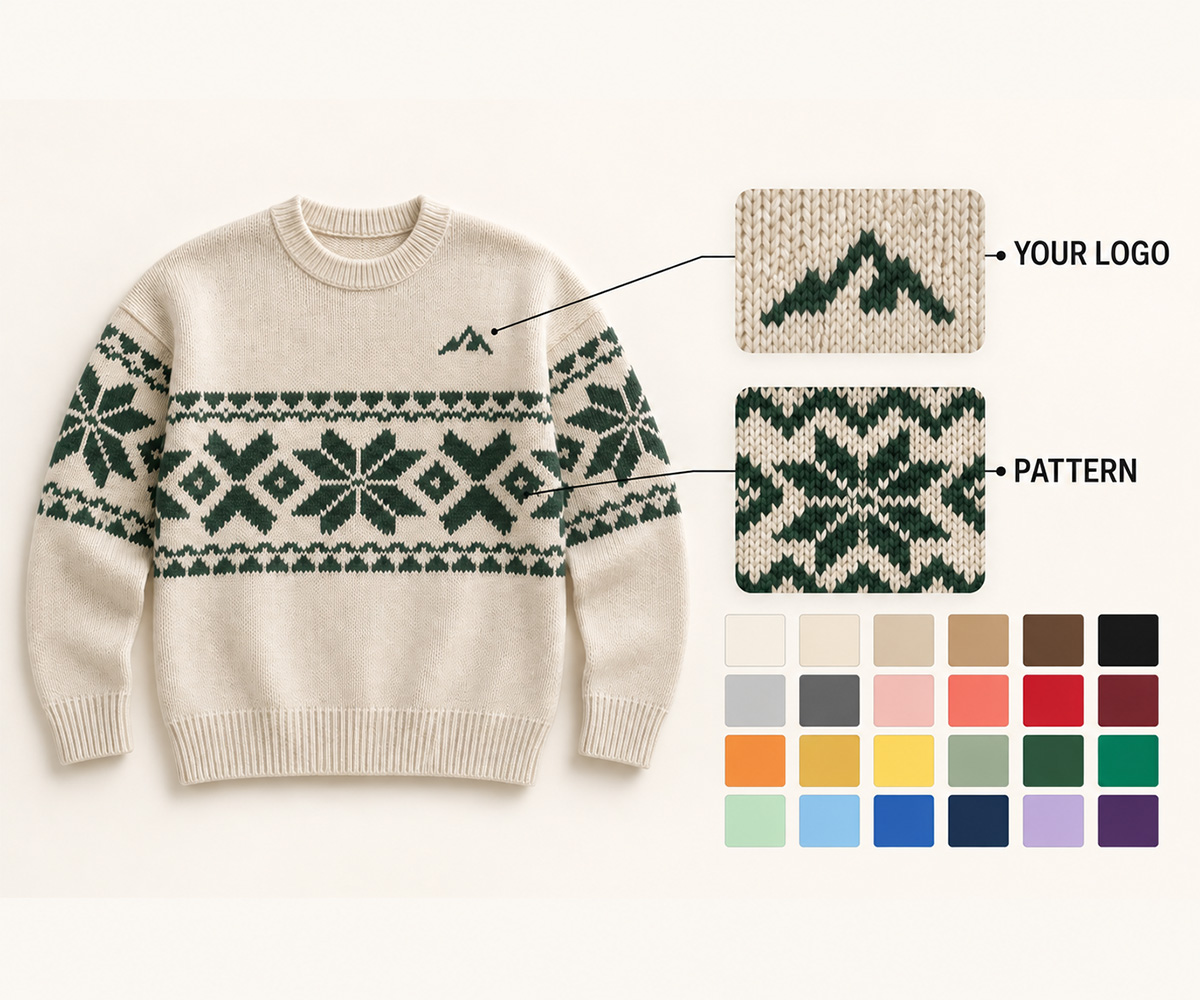
6. Add Logos Without Distorting the Knit
There are several ways to develop custom sweaters with logo branding.
| Logo Method | Suitable Use |
|---|---|
| Embroidery | Small chest, sleeve or back-neck logos |
| Jacquard | Repeating patterns and integrated knitted branding |
| Intarsia | Larger colour-block logos or front motifs |
| Woven badge | Uniform, club and heritage-style branding |
| Branded zipper pull | Subtle product-level identification |
| Woven neck label | Private-label brand identity |
Embroidery near the zipper requires careful placement. Excessive stitch density can make the surrounding knit stiff or distorted. The factory should confirm embroidery backing, logo dimensions, thread colours and the distance from the zipper seam.
For jacquard and intarsia artwork, provide editable artwork or a clear colour chart. Review the inside finish as well as the outside appearance.
7. Build a Complete Tech Pack
A production-ready tech pack for custom quarter zip sweaters should include:
- Front and back technical drawings
- Open- and closed-collar views
- Base size and full measurement chart
- Measurement tolerances
- Yarn composition and colour references
- Gauge and stitch structure
- Zipper specification
- Collar, cuff and hem details
- Logo artwork and placement
- Label files
- Packaging instructions
- Target quantity and delivery date
Record every sample change in the updated tech pack. The final approved document and approved sample should match before bulk production begins.
8. Check the Sample Before Approval
During sample review, place the sweater flat and also evaluate it on a suitable fit model or form.
Check:
- Zipper lies flat without rippling
- Centre front remains straight
- Zipper opens and closes smoothly
- Collar is balanced on both sides
- Collar shape works open and closed
- Zipper top does not create discomfort
- Shoulder and sleeve proportions match the intended fit
- Rib cuffs and hem recover correctly
- Logo size and placement are accurate
- Measurements meet the approved specification
- Garment shape remains stable after applicable washing
Photograph the sweater zipped, half open and fully open. These views make revision comments clearer for the factory.

9. Confirm Private Label and Packing Details
A private label knitwear order may include:
- Woven neck label
- Size label
- Care and fibre-content label
- Branded zipper pull
- Hangtag and barcode
- Spare yarn or trim
- Polybag
- Folding instruction
- Carton assortment
- Carton marks
Confirm label and packaging artwork before bulk production. Late changes can delay packing even when the garments are already complete.
For products intended for the United States, buyers should review applicable fibre-content, country-of-origin and care-label requirements. Brands selling into other markets should confirm local requirements with their compliance team or testing provider.
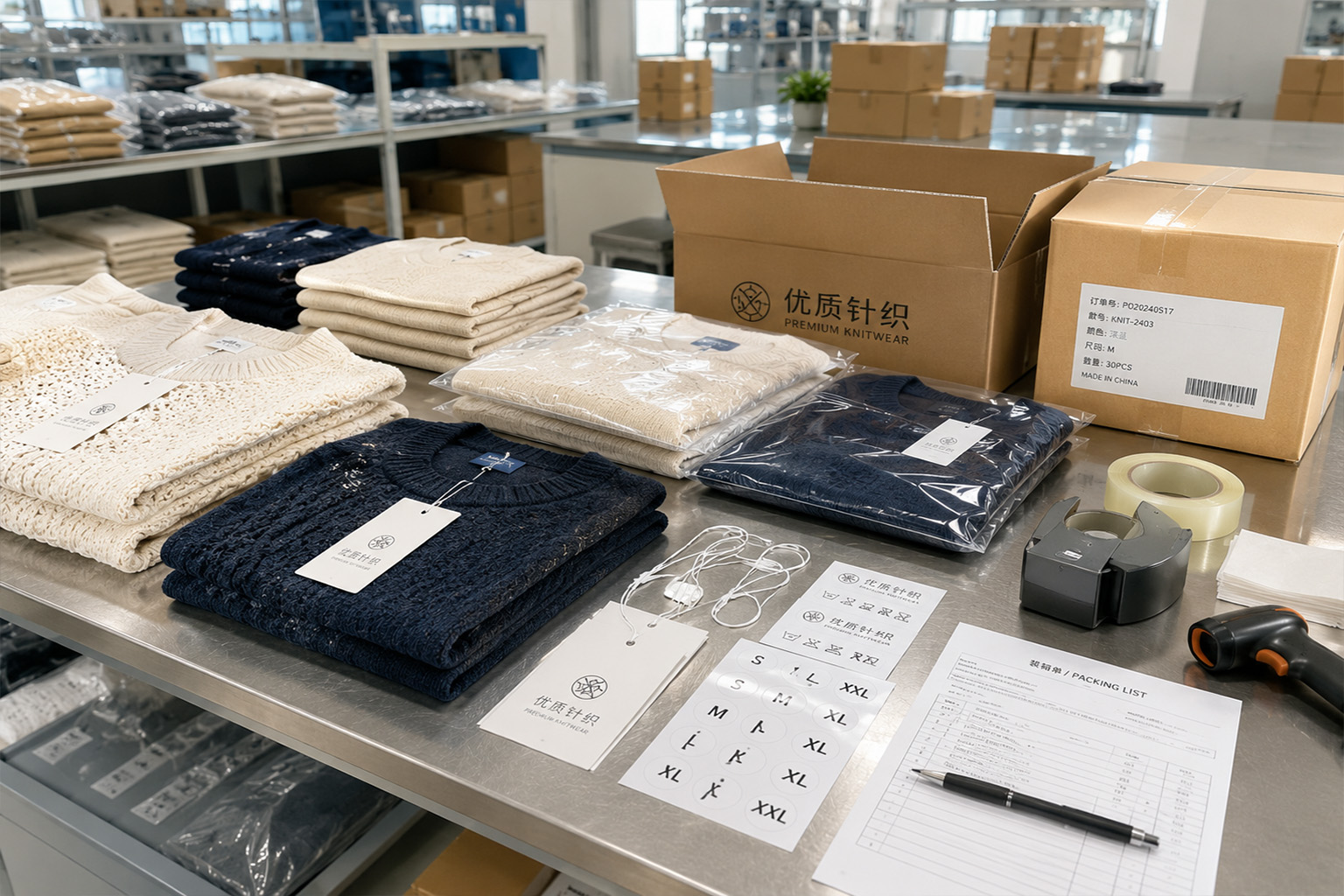
Use the approved sample, dated tech pack and zipper specification as the reference for bulk knitwear manufacturing. If the yarn, zipper or finishing process changes after approval, review the affected details again before releasing the order.
10. Use a Quarter-Zip Bulk Production Checklist
Before releasing production, confirm:
- Final yarn, colour and gauge approved
- Zipper type, length and tape colour approved
- Collar height and structure approved
- Open- and closed-collar appearance reviewed
- Size chart and tolerances confirmed
- Logo artwork and placement approved
- Labels and packaging approved
- Wash and dimensional checks completed where required
- Approved sample identified as the production standard
- In-line and final inspection requirements confirmed
- Production schedule and delivery date agreed
FAQ
What is the difference between a quarter-zip and a half-zip sweater?
The terms are often used inconsistently. A quarter zip usually ends around the upper chest, while a half zip may extend farther down the front. The tech pack should show the actual opening and state its finished length.
Which zipper is best for a knitted sweater?
It depends on the gauge, garment weight and desired appearance. Coil zippers are generally lighter and flexible, while moulded or metal zippers create a stronger visual detail. The zipper should be tested with the actual knit structure.
Can embroidery be added beside the zipper?
Yes. Confirm logo dimensions, backing, stitch density and distance from the zipper. The sample should be checked for puckering or stiffness around the embroidered area.
Can custom quarter zip sweaters include branded zipper pulls?
Yes. Custom or branded pulls can be developed, subject to tooling, trim-supplier MOQ, cost and lead time. A standard pull may be more practical for smaller orders.
What affects the MOQ?
MOQ can be affected by yarn composition, colour count, gauge, zipper specification, logo technique, size range, custom trims and packaging. It should be confirmed for the individual style.
Develop Your Quarter-Zip Sweater Program
Successful custom quarter zip sweaters depend on the relationship between the zipper, collar, yarn, gauge and fit. Confirming these elements during sampling helps prevent visible distortion and inconsistent bulk production.
QITE GARMENTS supports men’s custom sweaters, custom knit sweaters and private label knitwear development from tech packs, samples, sketches and artwork. Standard MOQ starts from 500 pieces per style, with the final requirement depending on yarn, gauge, colours, sizes, trims and packaging.
Send QITE GARMENTS your quarter-zip design with the target quantity, size range, yarn direction and delivery date for sampling and quotation review.