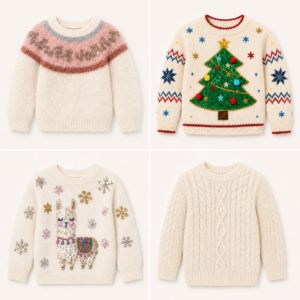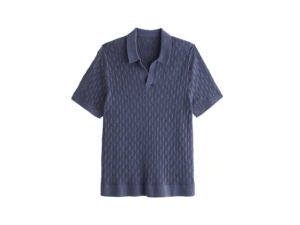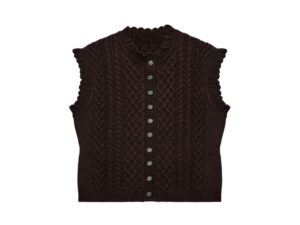
A sweater reference photograph, a measurement chart and an artwork file can all look complete on their own. The problem appears when they describe different versions of the product.
The sketch may show a wider rib than the measurement sheet. The logo file may be current while its placement diagram is not. A sample may have been approved for fit but still use temporary yarn.
This custom sweater tech pack checklist is designed for that handover: identifying what is confirmed, what is still open and which reference the factory should follow. It complements the introductory knitwear Tech Pack guide with working fields and a release check, rather than another general definition.

Download the blank sweater Tech Pack working checklist as a plain-text file. Copy the fields into your own specification system and set the targets for the actual project; the file supplies no default sizes, tolerances or approvals.
Give every file and sample one identifiable version
Put the style code, revision number, issue date, sample stage and responsible contact at the beginning of the pack. Use the same identifiers on the measurement sheet, artwork, bill of materials and sample comments.
If a file supersedes an older one, say so. A revised PDF and an earlier attachment should not both appear to be approved production instructions.
Techpacker’s documentation describes saving a version when moving between stages or sending updates to a manufacturer. The principle works with a PDF and shared folder as well: issue an identifiable revision and keep a record of the change. The software is optional. Techpacker: Creating and Saving Tech Pack Versions
For a first enquiry, the following cover sheet is a useful starting point. “To confirm” is a legitimate status; a blank cell with no explanation is harder to manage.
| Cover-sheet field | What to enter |
|---|---|
| Style and revision | Unique style code, version and issue date |
| Purpose of issue | Quotation, development sample, fit revision or production release |
| Reference sample | Identifier and where the physical sample is held |
| Intended product | Wearer, silhouette, season and use |
| Base size and size range | Fit-development size and all required sizes |
| Quantities | Breakdown by style, colour and size |
| Target cost | Currency, costing scope and any provisional assumptions |
| Delivery requirement | Required destination and delivery window |
| Open decisions | Item, responsible person and required confirmation date |
Keep cost targets separate from approved material requirements. If the target cannot be met, ask for identified alternatives rather than leaving the factory to assume which details can change.
Connect each measurement to a drawing and a method
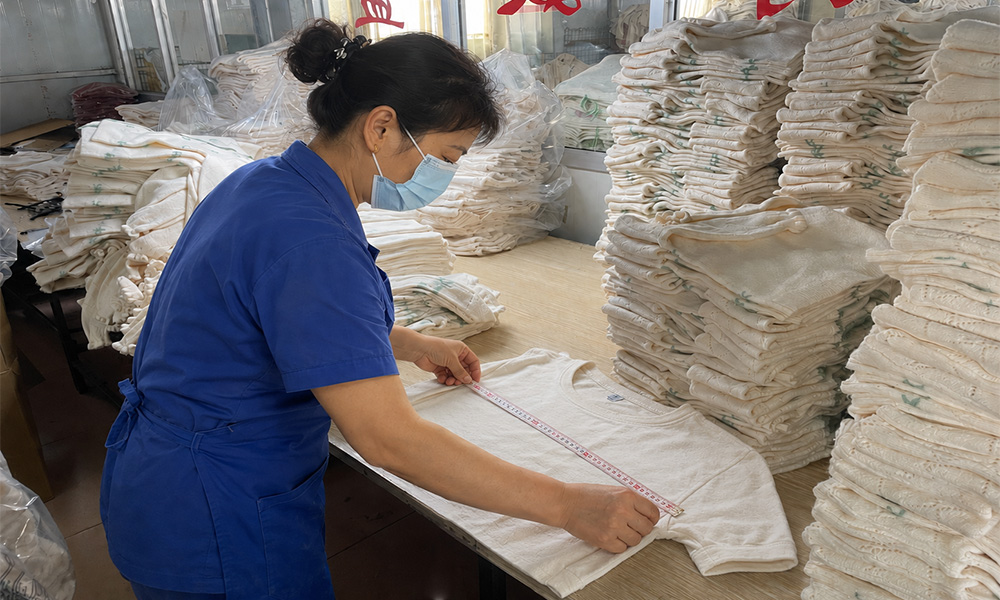
An accurate number is not useful if the buyer and factory measure different points.
Assign a point-of-measure code to every important dimension and show it on the drawing. State the unit, base-size target, tolerance and grading rule. Identify the garment condition used for measurement—for example, after the agreed finishing process, laid flat and relaxed.
The table below is a field template, not a size chart. The targets and tolerances must come from the project’s fit requirements.
| POM field | Target and tolerance | Method that needs definition |
|---|---|---|
| Chest width | Buyer to enter | Half-width position; distance below armhole |
| Body length | Buyer to enter | Starting point and whether the hem rib is included |
| Shoulder width | Buyer to enter | Seam/shoulder endpoints and construction |
| Sleeve length | Buyer to enter | Shoulder seam, neck point or another defined start |
| Neck width and depth | Buyer to enter | Finished edge or attachment line; front and back separately |
| Cuff and hem opening | Buyer to enter | Relaxed or extended condition |
| Placket or zipper | If applicable | Opening endpoints and finished dimensions |
Techpacker’s garment spec-sheet guide distinguishes measurement documentation from the wider Tech Pack. Materials, construction and revisions still need their own records.
Keep grading and tolerance separate. Grading describes the intended change between sizes; tolerance describes acceptable variation from a particular target. A generous tolerance should not conceal an unresolved size progression.
For audience-specific fit development, use the men’s Tech Pack guide or the kids’ Tech Pack guide alongside this general checklist.
Write the yarn and construction record so it can be repeated
“Soft wool blend” is a direction for discussion. It is not an approved material identity.
Record the confirmed composition, yarn reference and supplier information where available. Include the yarn count and its notation, the proposed gauge, stitch structures, colour references and finishing direction. Identify whether the yarn is approved, proposed or a sample substitute.
Describe body panels, ribs, collar and trims separately where they differ. A contrast collar can have its own yarn or construction requirement; copying the body description into every component may miss that distinction.
Woolmark’s technical knitwear material discusses yarn, knitting and finishing as connected steps. For the checklist, the practical consequence is to record the approved combination rather than assuming that a fibre name and gauge number completely describe the product. Woolmark: Introduction to Knitwear
Use a bill of materials that covers more than the main yarn:
| Component | Specification/reference | Approval record |
|---|---|---|
| Body, ribs and collar | Material, construction and colour for each relevant part | Reference, status and date |
| Buttons or zippers | Component identity, size, finish and placement | Approved trim or remaining decision |
| Artwork and decoration | File revision, method, dimensions and colours | Trial/sample approval reference |
| Brand, size and care labels | Artwork, material, position and attachment | Current file and approved copy |
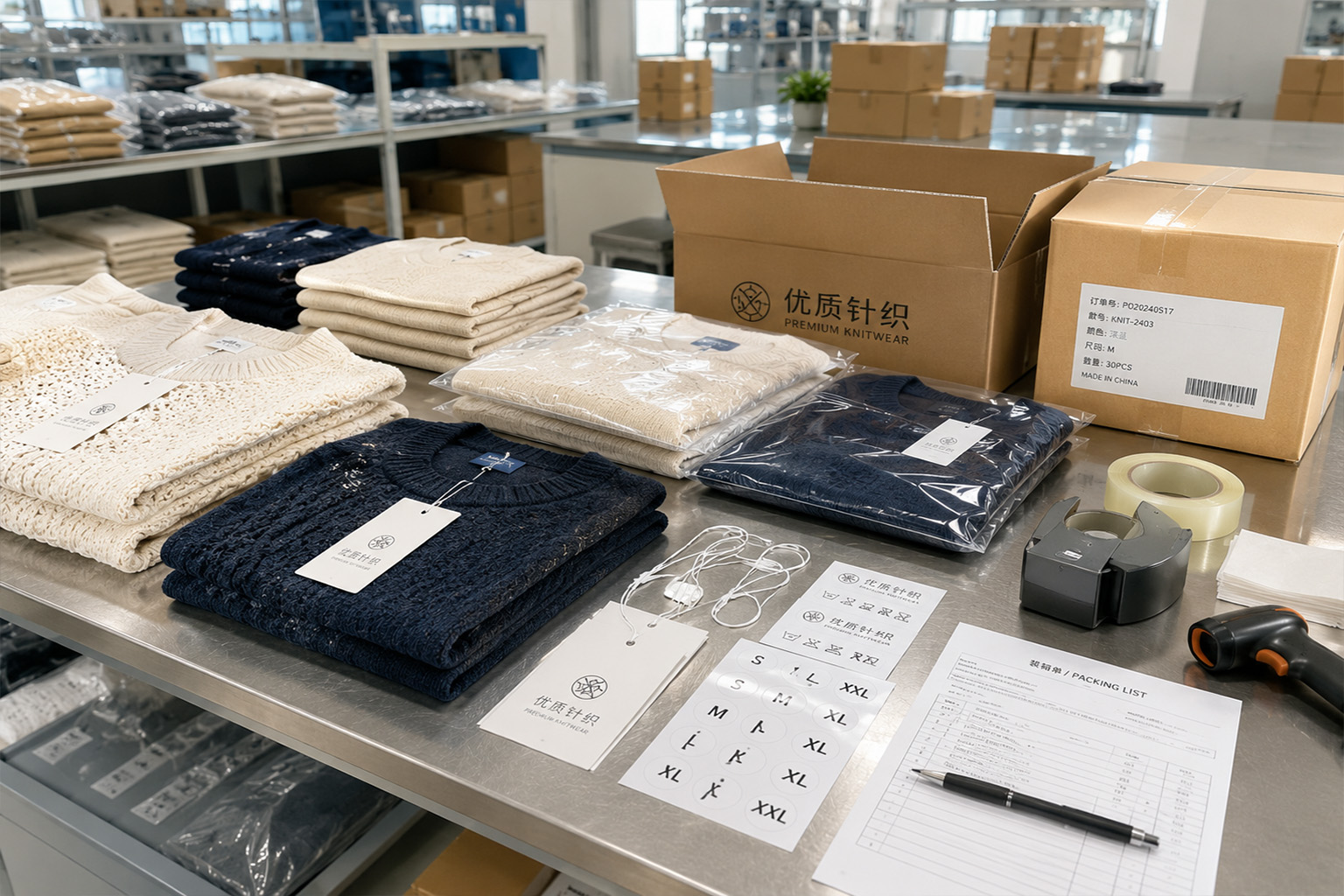
| Packing | Fold, bag, barcode, assortment and carton requirements | Approved packing instruction |
Techpacker’s bill-of-materials guidance also treats trims, labels and packaging as part of the material record. A buyer can adapt the columns to the project without adopting a particular software system.
Make artwork instructions work across the size range
Include the actual artwork file and a placement drawing. State the finished dimensions, orientation, colour references and distances from defined garment points.
For a knitted motif, ask the supplier to identify any adjustments needed for the proposed structure. Keep the original artwork and the approved production interpretation so the next reviewer can see what changed.
Decide whether a chest mark stays the same size across the range or whether selected sizes need another treatment. Check whether a motif approaches a seam, armhole or opening as the garment becomes smaller.
A useful instruction might be:
Retain the approved logo width. Review placement on the smallest size against the armhole and neck opening before confirming the size set.
This is an illustrative instruction, not a QITE test result. It assigns a specific review instead of allowing the supplier to assume that one base-size approval resolves every size.
Record care, quality and packing requirements before release
List the performance checks required for the product, who will carry them out, the relevant method and the agreed acceptance criteria. Record whether testing uses development material or a production-representative garment.
A statement such as “wash tested” needs a reference to the sample, care procedure and result. Do not convert a development observation into a certification claim.
For labels, identify the destination market and the party responsible for confirming the final copy. Keep proposed text visibly separate from approved artwork. Requirements should be reviewed for the actual product and market rather than inferred from a generic template.
Packing instructions should make the order identifiable: how garments are folded, which barcode belongs to each variant, the assortment and the carton marks. These details belong in the pack before packing begins, not in an unrelated message after production is complete.
QITE’s knitwear quality-control process explains the broader checks against approved samples and specifications. The Tech Pack makes those references specific to the order.
Replace “sample approved” with a scoped decision
A fit sample can be accepted for shape while yarn or artwork remains open. The approval record should say that explicitly.
For each sample round, record the sample identifier, actual measurements, comments, required actions and next approval stage. Keep a list of unresolved conditions and the person responsible for closing them.
Techpacker’s fit-quality guidance describes recording actual sample measurements alongside specifications and tolerances. That makes it possible to distinguish a measured difference from a general fit opinion. Techpacker: Using Tech Packs to Improve Fit Quality
Before release, check the following against the current revision:
- The sample, measurements, materials and artwork refer to the same style and version.
- Substitutions and revised components have been identified and resolved.
- Fit approval and remaining size-set decisions are documented.
- Care/test records identify what was actually evaluated.
- Label and packing files are current.
- The scope of approval and any remaining conditions are written clearly.
Send an identifiable release package into bulk knitwear manufacturing. If a subsequent change affects the specification, assess whether it needs a revised quotation, sample or approval. Retain the previous revision as history, not as another active instruction.
Use the checklist even if your first brief is incomplete
Buyers do not need to invent technical answers before contacting a supplier. Mark unknown items and explain the result you want. A factory can then distinguish a development question from a requirement it must follow.
QITE GARMENTS develops custom knitwear from Tech Packs, reference samples, sketches and artwork. This checklist can support the initial review as well as later sample approval; confirmed requirements are carried into the production plan.
Send QITE your current sweater brief with the available files, quantity, delivery window and a list of open decisions. For the wider product and customization scope, review custom sweater development. A clear list of what still needs to be decided is more useful than a document that looks finished but hides assumptions.