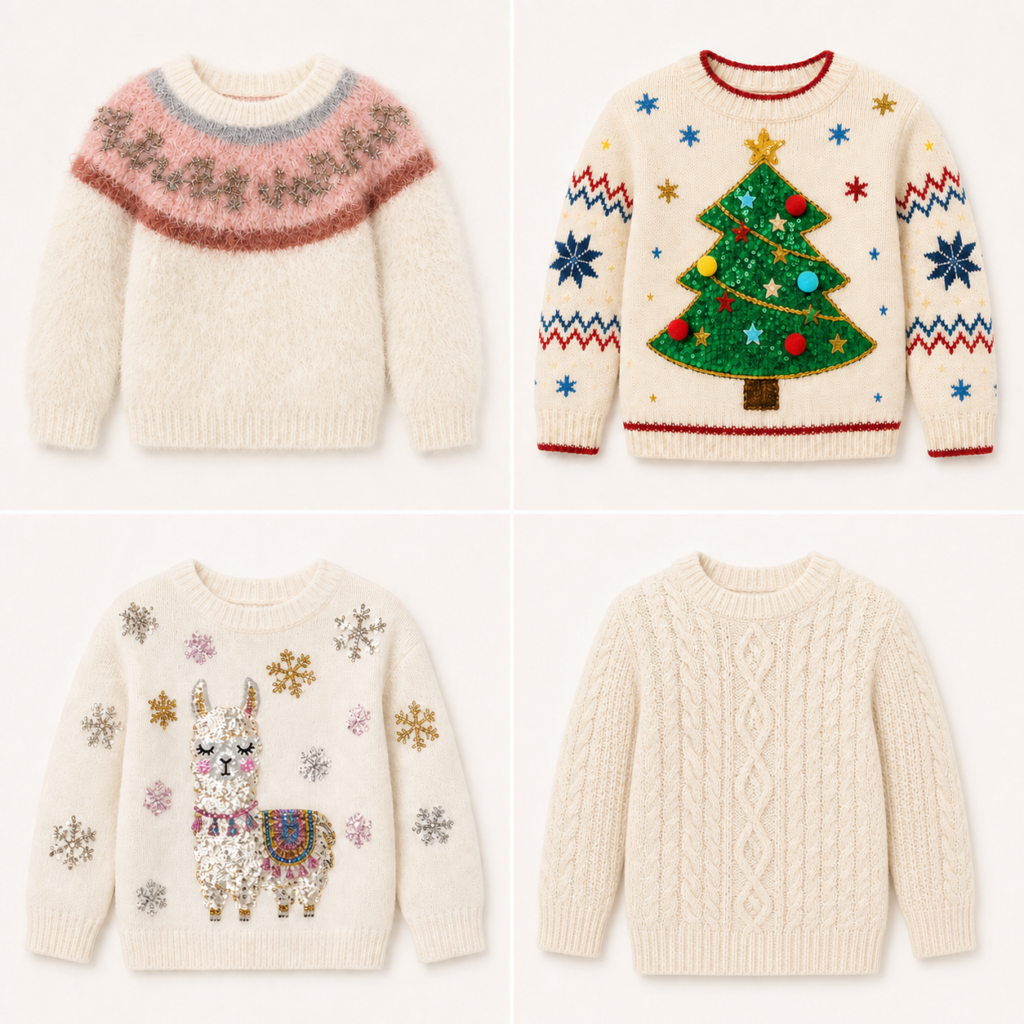
A children’s sweater can measure correctly in the sample size and still fail at the smallest or largest end of the range. The problem is often not the knitting. It is a size specification that was extended before anyone agreed how the proportions should change.
This kids’ sweater size grading guide is for buyers developing a range, not parents choosing a size at checkout. It explains how to separate body measurements from garment measurements, build usable grade rules and approve a size set before releasing bulk production. For the available product directions, start with QITE’s kids’ knit sweaters.
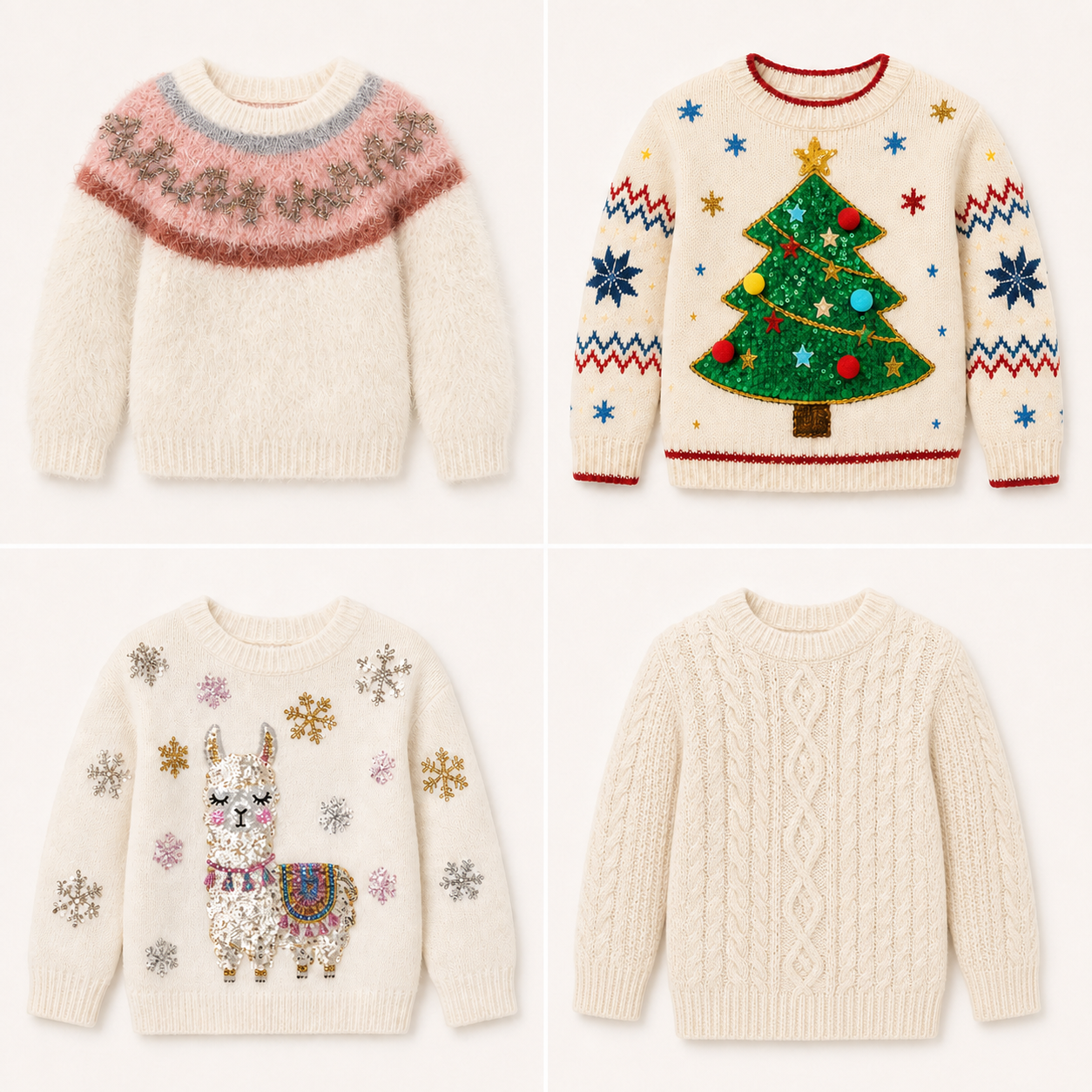
Age labels are a starting point, not a garment specification
“Size 6” does not tell a factory the finished chest width, sleeve length or neck opening. Even an age-and-height label still needs a defined fit, construction and intended layer underneath.
Keep three records separate: the target customer’s body measurements, the finished garment specification and the label shown to the shopper. A retail size guide usually helps with the first and third; it is not automatically a manufacturing specification. For example, H&M’s children’s size guide explicitly describes measurements taken on the child’s body.
Decide the target market and size system before sampling. Record whether the range covers babies, toddlers, school-age children or older children. These are development decisions, not interchangeable names for one block. Alvanon’s professional development outline on kids’ sizing treats growth patterns, size ranges and grade rules as connected topics. It does not supply a universal increment for every sweater.
For a school pullover worn over a shirt, identify that layer in the brief. For a relaxed cardigan, describe the intended shoulder position and body volume. Otherwise, different people can approve different versions of “comfortable fit.”
Approve the base size before extending the range
Choose a development size that represents the intended fit block and can be assessed against the buyer’s fit standard. Do not select it solely because a supplier already has a convenient sample.
At base-size review, look beyond the tape measure. Check where the shoulder sits, whether the sleeve allows movement, how the cuff behaves and whether the hem stays in the intended position when the arms move. Review a cardigan closed as well as open; placket overlap and button placement affect the usable fit.
A fitting form can help with repeatable comparisons, but it does not replace an appropriate wearer assessment for dressing access and movement. Arrange that assessment with suitable consent and supervision. Record the relevant body dimensions and intended base layer without collecting unnecessary personal information.
Correct the base pattern or knitting specification first. A good grading spreadsheet will not rescue a base sample with an unresolved armhole or an excessively tight opening. The kids’ sweater Tech Pack guide covers the broader product brief; keep the size-grading record as a controlled part of that pack.
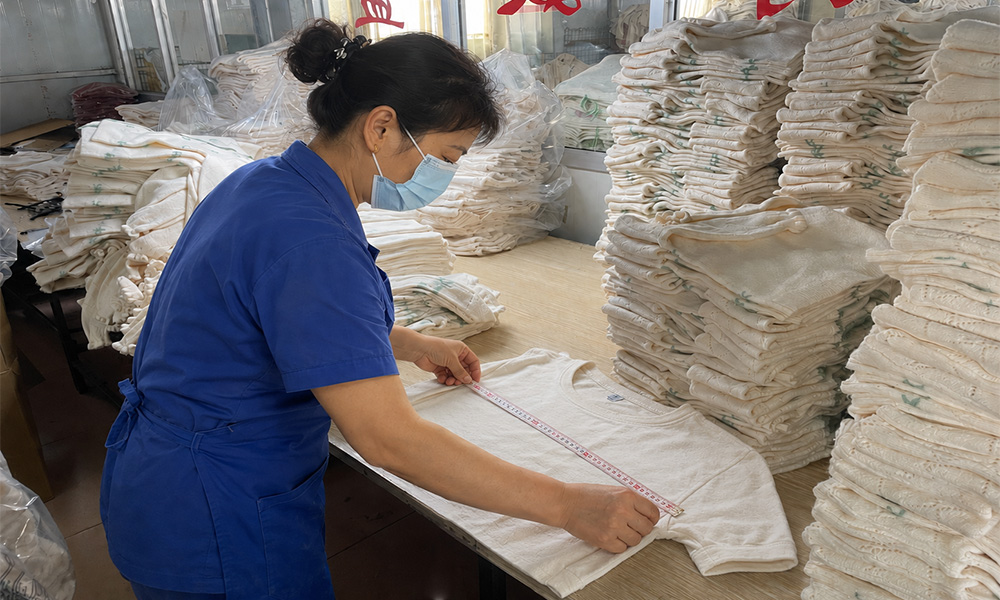
Make each point of measurement repeatable
“Chest” is too vague for a production sheet. Identify the point on a drawing, state the measuring position and say whether the value is a flat width or a full circumference. For a finished sweater, record the agreed relaxed condition and preparation before measurement; do not pull a rib band until it reaches the target.
| Point to define | Method to settle | Question for sample review |
|---|---|---|
| Chest width | Flat half-width at a stated distance below the armhole | Is the location consistent across sizes and sleeve constructions? |
| Body length | Named starting point to a named hem endpoint | Does the measurement include the neck band or bottom rib? |
| Sleeve length | Shoulder seam or centre-back reference, as specified | Has the method changed because the shoulder is dropped or the sleeve is raglan? |
| Shoulder width | Defined seam-to-seam or construction endpoints | Is the intended shoulder position preserved? |
| Neck opening | Width, depth and any separate functional assessment | Can the intended wearer put on and remove the sweater comfortably? |
| Cuff and hem | Relaxed width and finished rib depth | Is the appearance acceptable without measuring under tension? |
Use one unit consistently and name the garment condition on every measurement report. If different methods are necessary for different constructions, issue different drawings rather than keeping one ambiguous row.
Here is an illustrative calculation, not a size recommendation: a simple pullover measured flat at 38 cm across the chest has an approximate 76 cm chest circumference. Against a target body chest of 68 cm, that suggests 8 cm of circumference ease. It does not establish the right ease for that child, yarn or silhouette. Confusing a half-width with a circumference creates a much larger error than a small grading adjustment.
Grade by measurement, not by a single enlargement percentage
Build a row for each point of measurement and a column for every offered size. State whether the grade is calculated from the approved base size or added successively between adjacent sizes. Either approach must produce one unambiguous final target table.
Chest, body length, sleeve length and neck dimensions need separate decisions. Do not assume they should all increase by the same amount or percentage. Check whether the size range crosses a change in body proportions, fit block or garment construction. A range spanning toddlers and older children deserves an explicit transition review.
Also distinguish a grade rule from a tolerance. The grade defines the target difference between sizes. The tolerance defines the allowed variation around one size’s target. A tolerance must not be used to excuse an incorrect size progression.
Review the target table for reversals, accidental jumps and rounding errors before requesting samples. Then check the actual garments. A correct formula is only a proposed fit progression until the product has been assessed.
Check the ends of the range and construction transitions
Agree the size-set scope with the supplier. Include the base size, range boundaries and any size where the fit block or construction changes. Depending on the risk and buyer requirements, more sizes may need physical review; the boundary checks are not a universal replacement for a complete size set.
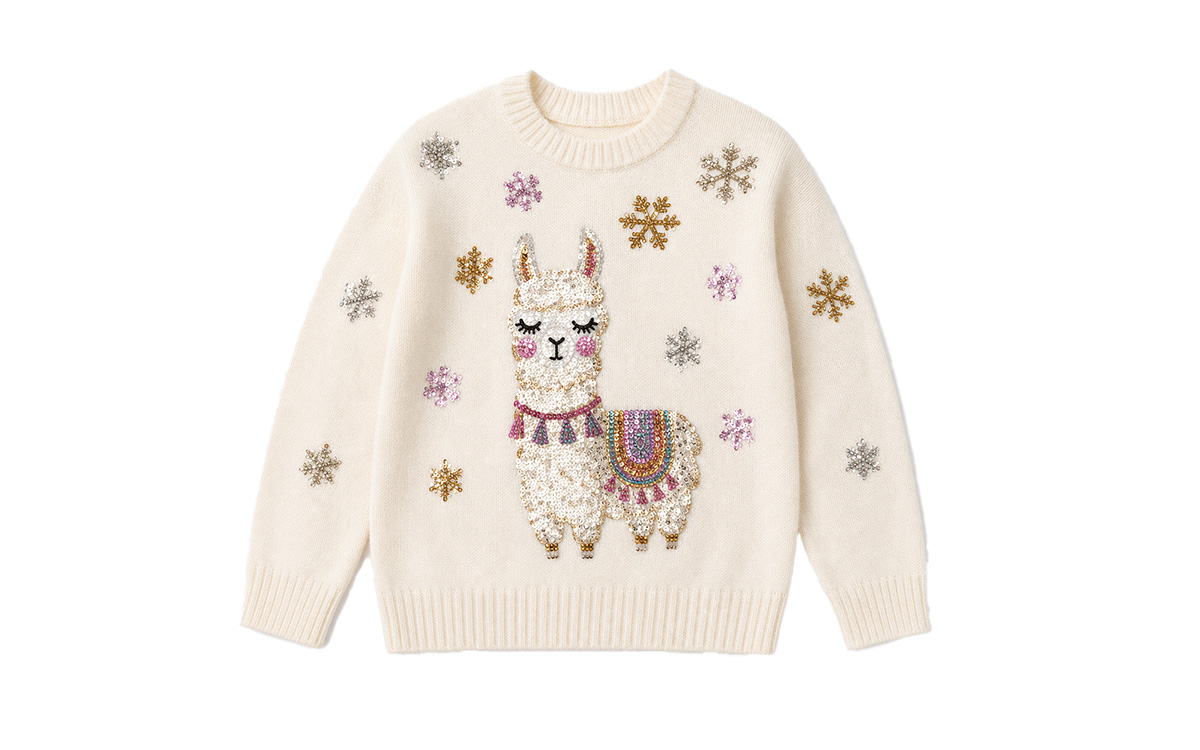
Place the samples side by side. Compare body-to-sleeve balance, rib depth, shoulder progression and artwork placement, then measure them against the same revision. A small sweater may need a different artwork size rather than the same motif squeezed between the armholes. A cardigan’s button count or spacing may need a planned change instead of a mechanically stretched placket.
Give dressing access its own review. A relaxed neck-width measurement alone does not establish how a pullover goes over the head. Rib structure, recovery, seams and any shoulder opening contribute to the result. Resolve the construction with the intended wearer group in mind; do not borrow an unexplained opening value from an adult sweater.
Keep wash review connected to the size decision
A size set approved before the agreed care process does not answer how the sweater will fit afterward. Specify which samples are checked, the care procedure, drying method and measurement condition. Keep before-care and after-care results in separate columns so the team can see what changed.
Do not automatically change the customer-facing size chart to compensate for an unresolved production or finishing issue. First establish whether the knitting, yarn, finishing or specification needs revision. The kids’ sweater wash-testing guide explains how to document shrinkage and shape retention without treating a product photograph as test evidence.
If the yarn, stitch structure, decoration or finishing process changes after fit approval, decide which size and care checks must be repeated. A previous approval belongs to the approved combination, not to every future version carrying the same style name.

Write an approval the production team can act on
“Sizes look fine” leaves too much open. Use an approval record that connects the samples, target sheet and remaining actions.
| Approval field | What to record |
|---|---|
| Product identity | Style, colourway, yarn and stitch revision |
| Size evidence | Sample sizes reviewed, measurement results and fit observations |
| Specification | Dated size table, POM drawing and tolerance revision |
| Care evidence | Procedure, sample identity and results, or a clearly marked pending check |
| Decision | Approved, rejected or conditionally approved, with the scope stated |
| Follow-up | Required correction, responsible person and whether a new sample is needed |
If only the base-size fit is approved, say so. Do not let that become an approval of the complete size range, wash performance or all trims by implication. Carry the final references into the knitwear quality-control plan so inspection uses the same targets the buyer approved.
Preparing a kids’ sweater range with QITE
QITE Garments has its production foundation in sweaters and knitwear. For a children’s range, send the intended market, age or height groups, fit reference, size table, artwork and care requirements with the development enquiry. QITE can review these inputs within its custom sweater development work rather than treating an age label as a complete instruction.
If you only have a reference garment, identify what should stay and what must change. Ask which missing measurements or grading decisions need confirmation before the next sample is made. Contact QITE with the size range and reference files to establish a clear review scope before bulk production is discussed.