A photograph can tell a sweater manufacturer what a buyer likes. It cannot, by itself, specify the yarn, knitting structure, reverse-side finish, measurements or care performance of the garment. A physical reference sample answers some of those questions, but it still does not say which details the buyer wants to keep and which may change.
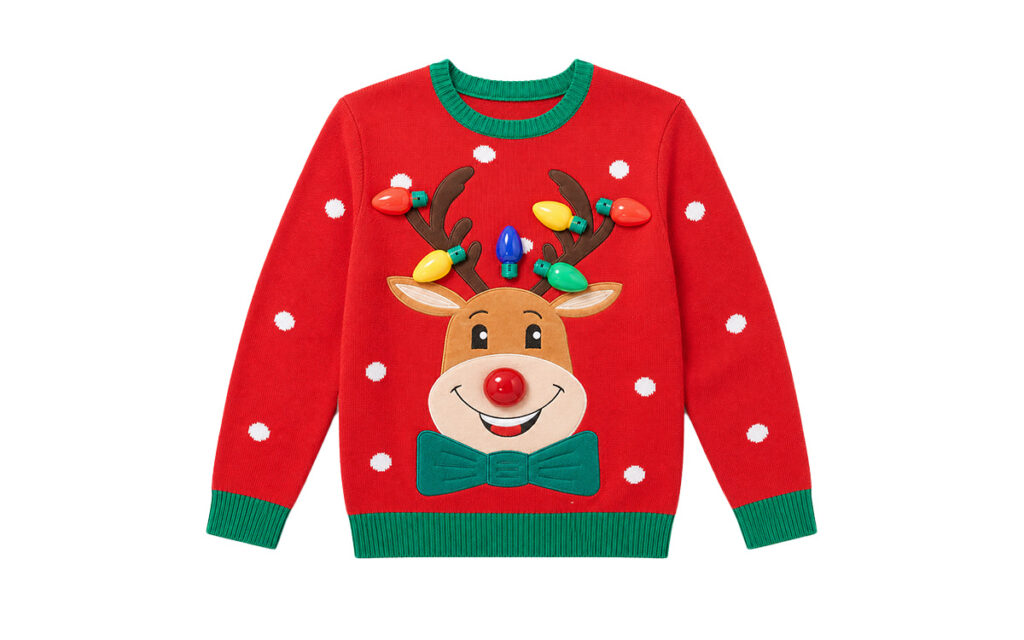
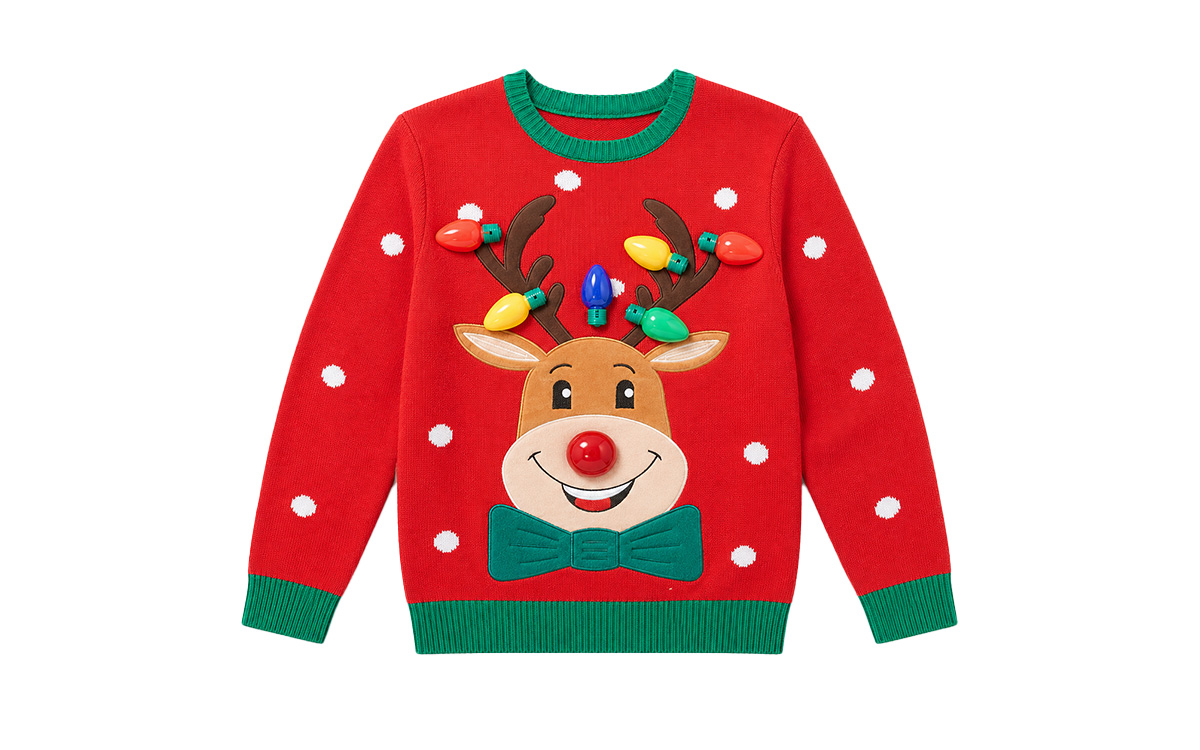
For a custom ugly sweater, that distinction matters. An oversized reindeer, a tiny company name and a decorated sleeve may require different construction methods. The useful first question is not “Can you copy this?” but “Which parts must look and feel the same, and what evidence do we have for each?” This guide shows how to turn a photo, sketch or sample into a brief a knitwear team can actually assess.
Begin with the construction decision
Before redrawing a festive motif, decide what kind of garment the reference depicts. A knitted-in pattern is different from a graphic printed on a cut-and-sewn sweatshirt. Both can be useful holiday products, but changing the base construction changes the handle, stretch, artwork edges and often the way the garment is made. Ask for a fabric close-up and a view of the inside if a photograph leaves this unclear.
Then divide the image into construction zones. A repeated snowflake border might be considered as knitted colourwork. A large central character could need another colour-placement approach. A small logo may be easier to assess as embroidery on the actual knitted base. Bells, pom-poms or fabric shapes are separate attachments, not simply “part of the print.” These are options to trial, not a promise that any particular photograph can be reproduced stitch for stitch.
| What the reference shows | What to ask before sampling | A possible trial |
|---|---|---|
| Repeated motifs across the chest and sleeves | How should the design meet at side seams and between sizes? | A knitted pattern repeat and a full-garment placement drawing |
| One large character or slogan | Which outlines and letters must remain readable at finished size? | A simplified knitted motif, or a combination of knit and localized decoration |
| Small company name | How large can it be without overwhelming the knit or becoming illegible? | A same-fabric logo trial with the front and reverse photographed |
| Raised trim or accessories | How is each piece attached, and how will it behave during wear and care? | A physical attachment sample on the intended base |
Machine maker STOLL documents jacquard used with intarsia; the method name alone therefore does not tell a buyer what the back of a particular sweater will look like. Ask the developer to describe the proposed structure and show its reverse. For a fuller comparison of jacquard, intarsia, embroidery and appliqué, use our Christmas sweater decoration guide rather than treating a photo as a technical drawing.

If you have only a picture, mark what is known and unknown
Send the highest-resolution image you are permitted to use, ideally with front, back, side and close-up views. Add a sketch over the image showing which motif is essential, where it begins and ends, and where the logo should sit relative to a stable reference point such as the center front or neckline. A logo described only as “left chest” can move visually as the garment size changes.
Do not estimate fibre composition or gauge from screen colour. Lighting, editing and display settings change the appearance of yarn, while a flat photograph hides weight and stretch. State the *desired result* instead: for example, a soft winter-weight body, a defined rib hem, or a motif that remains readable without enlarging the front panel. The developer can then propose a yarn and structure for a physical review.
If the image comes from a competitor, treat it as inspiration rather than automatic permission to reproduce protected graphics. The U.S. Copyright Office explains that visual artwork can be protected and permission may be needed to adapt another party’s work. Supply artwork you own or are authorised to use, and identify any logos, characters or photographs that still need a rights check.
If you have a physical sample, record what you actually want to match
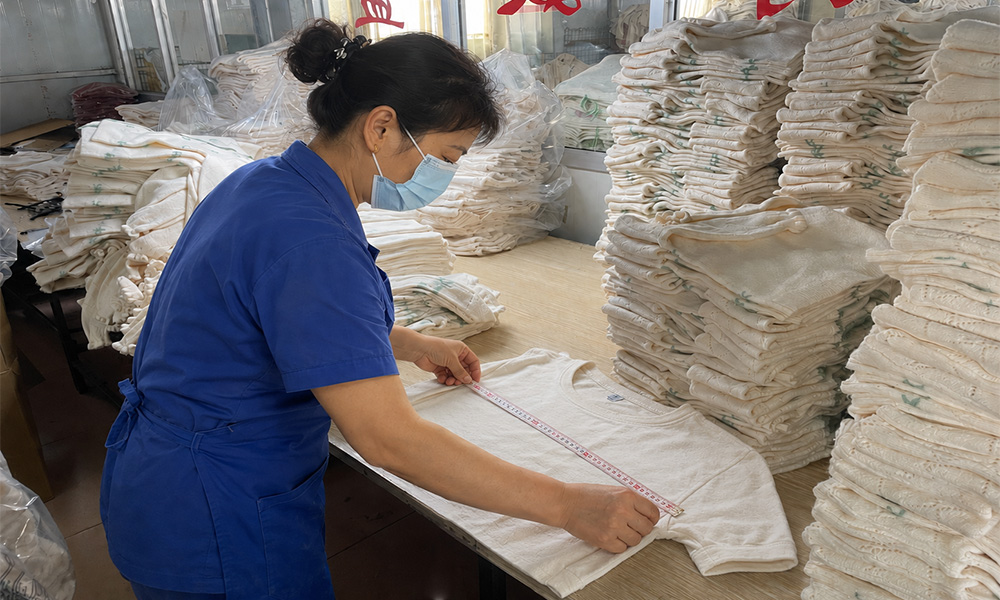
A sample makes the work more precise only if it is accompanied by decisions. Photograph it flat and on a form if possible. Record its labeled size, relaxed chest width, body length, sleeve length, shoulder width, neck opening and rib dimensions, with the measuring method written down. Note whether it has been worn or washed; a used sample may no longer represent its original dimensions.
Turn the sample inside out. Look at motif joins, yarn ends, embroidery backing, seam finish and the attachment of decorations. Check the care and composition label, but do not assume that the new garment can carry the same fibre claim or care instruction without confirming its own materials and testing. For U.S. sales, the FTC’s textile and wool labeling guidance explains the required identity, fibre and origin information for covered products.
Separate the brief into three columns: must match, may change, and unknown—confirm by sample. A buyer might insist on the reindeer’s position and overall silhouette, allow the neckline rib to change, and leave the yarn blend open until the first swatch. This is much clearer than “same as sample,” especially when the reference garment was made by someone else.

Give the developer a versioned artwork package
An editable vector or layered artwork file helps, but a clear raster image can still start a feasibility conversation. Include the finished motif width and height, colour references, original file, any permitted simplification, and a marked placement drawing. Give each revision a version number and date. Do not let “final artwork” refer to three different files in a message thread.
For an embroidered logo on a stretchy base, ask for a trial on the intended knit. Madeira’s embroidery guidance identifies stitch density, tension, stabilisation and hooping as interacting causes of puckering. That supports a same-fabric test, not a universal stitch setting. Review the logo while the garment hangs naturally and inspect the inside for backing and discomfort.
The first physical trial should answer the biggest uncertainty. If the question is whether tiny lettering can be knitted legibly, a representative panel can help. If the question is how a full-width character lands on a small and large body size, a panel alone is insufficient: request garment-level placement evidence. Our sample approval checklist covers the broader release record; here the goal is to decide which reference details can be translated before that approval.
An illustrative brief: turning one photo into decisions
Imagine a buyer supplies a front-view photo of a navy sweater with a large snowman, a four-word company slogan and red sleeve bands. No back or inside view is available. This is an illustrative example, not a QITE order or production result.
The buyer can mark the snowman silhouette and sleeve-band position as essential. They can ask for two slogan treatments—knitted lettering and embroidered lettering—at the same finished width, with readability and hand feel assessed on the intended base. The unknown reverse construction and yarn composition remain open questions. A supplier’s proposal should state what it assumes, what it will trial and what cannot yet be matched. That is a useful quotation comparison; two prices for vaguely “the same sweater” are not.
Only after the artwork and construction are understood should the buyer consolidate colourways, sizes, labels and quantities for a production quote. For the commercial side, see the existing custom Christmas sweater cost guide instead of relying on a price inferred from a photograph.
What to send QITE for a reference-led project
QITE Garments builds its custom programme on sweater and knitwear development. Send the reference image or physical sample, permitted original artwork, the details that must be retained, size range, intended market, approximate order breakdown and target date. QITE can review which knit structures and decoration trials are suitable for the actual brief; a photo alone is not an approved production specification.
Use the custom Christmas sweaters page to see the seasonal development scope, or send the reference to QITE with three explicit questions: What can be assessed now? What needs a swatch or sample? Which requested details are likely to change when translated into knitwear?