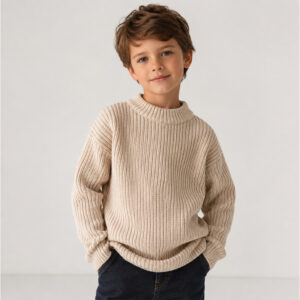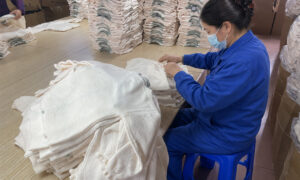

A company ugly-sweater event can be simple to announce and surprisingly hard to order well. Marketing approves a festive graphic, HR collects sizes, regional offices want different delivery points, and the buyer discovers too late that these decisions were never tied to the same garment specification. The problem is usually not the idea; it is the handover between artwork, size data and the physical order.
This guide is for teams considering custom ugly sweaters for employees, clients or a branded event. It focuses on the choices an organiser can control before requesting bulk production. If you need to develop a sweater from a picture or sample, read our separate photo-and-sample guide.

Decide whether every wearer receives the same design
There are two very different programmes. In the first, one approved sweater design is produced in a planned size assortment. In the second, names, departments or local event details change from garment to garment. The second should not be described merely as “the same design with personalisation”: it creates a different artwork, identification and checking problem. Ask the supplier which types of variation are feasible for the proposed construction before collecting names.
A sensible middle ground may be one knitted festive design with a stable company mark and only a small number of approved variants, such as two colourways or a separate leadership-team version. Even then, each variant needs an explicit version, size range and order quantity. Do not assume that a buyer-supplied spreadsheet can be converted directly into individually knitted names at bulk-manufacturing economics.

Give the logo a role, not just a location
An event sweater can carry a logo as a small knitted element, a localized embroidery or part of a larger motif. The right treatment depends on its shape, size, the intended base knit and how formal or deliberately playful the result should feel. A tiny, detailed logo cannot be judged from a presentation slide alone. Ask to see it at garment scale, not zoomed in on a monitor.
Decide whether the logo is the main visual feature or a supporting identifier. If the logo dominates the front, the sweater may work as a uniform but lose the exaggerated holiday character the event wanted. If the logo is almost invisible, the project may miss its branding purpose. Mark the intended logo width, distance from the neckline or center line, and the minimum readable detail on the artwork sheet.
When the supplier proposes embroidery, review it on the actual knit. Madeira’s technical advice on embroidery puckering explains why fabric, stabilisation and stitch density have to be considered together. For a comparison with knitted-in colourwork and appliqué, use our decoration guide rather than treating all logo methods as interchangeable.
Build the size request before you ask colleagues to choose
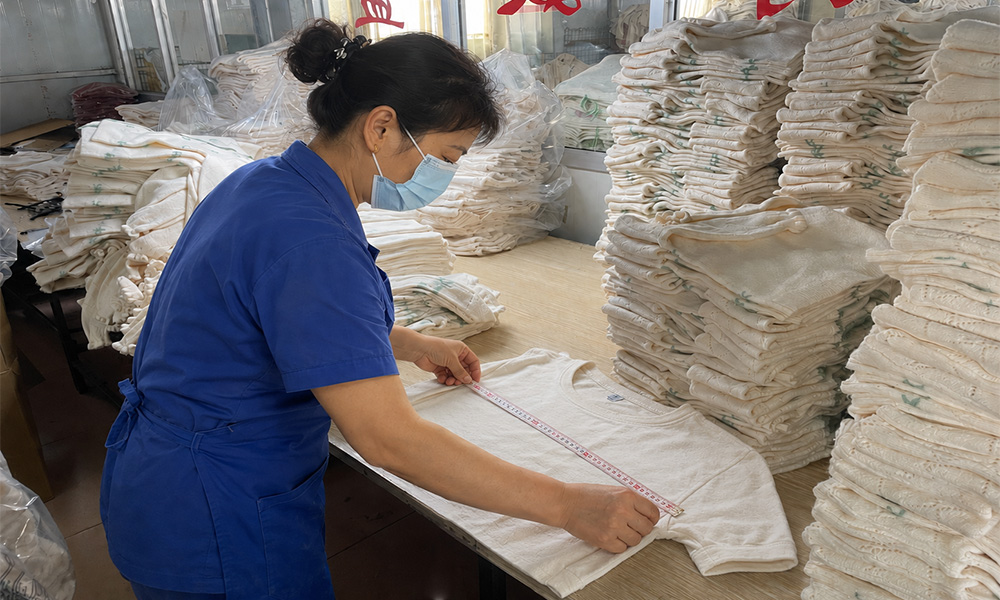
“Send us your usual size” is not a reliable size specification. First agree on the garment’s intended fit—relaxed over a shirt, close to the body, or oversized for an event photograph. Then use a size chart for *that proposed sweater*, including the key finished-garment measurements and how to measure them. An employee’s normal T-shirt size may not transfer to a heavy knit with a different silhouette.
Collect size selections using one controlled list. Remove duplicate names, assign a location or shipment group, and set a clear cut-off for changes. Share only the data the supplier actually needs; if names are not being applied to garments, a final count by size and delivery location is usually more useful than a personal-data-heavy employee list.
| Decision | Information to lock | What goes wrong if it stays vague |
|---|---|---|
| Fit | Agreed silhouette and garment size chart | People order by an unrelated clothing size |
| Artwork | One approved master per design variant | Old logo or slogan appears in the bulk file |
| Assortment | Quantity by design, colour, size and destination | The total order is correct but the delivered mix is wrong |
| Change control | Cut-off date and named approver | Late swaps silently alter production or packing lists |
For example, an illustrative 300-piece event order with two colourways and six sizes is not one line reading “300 sweaters.” It is a 12-cell assortment matrix, with any office-specific allocation recorded separately. The 300 pieces are an example, not a QITE MOQ or a claim that every such matrix is commercially viable. Our MOQ planning guide explains why quantities for the whole garment and for each variant must be discussed separately.
Review the event date as a receiving deadline
For a fixed event, the important date is when the organisers can actually count and distribute wearable garments, not just when production ends. Record the event date, receiving location, any office redistribution and the latest acceptable arrival date. Then ask the supplier to work backward through artwork approval, physical sample decision, order confirmation, production, inspection and freight.
Do not infer a delivery promise from a generic website lead-time range. A new motif, multiple locations, late size changes and unapproved labels all affect the project. If the event is close, ask what scope is realistically feasible now. A reduced number of approved variants may be more useful than an ambitious design that misses the gathering. For a broader lead-time framework, see the Christmas sweater production schedule guide.
Match packing to how the sweaters will be handed out
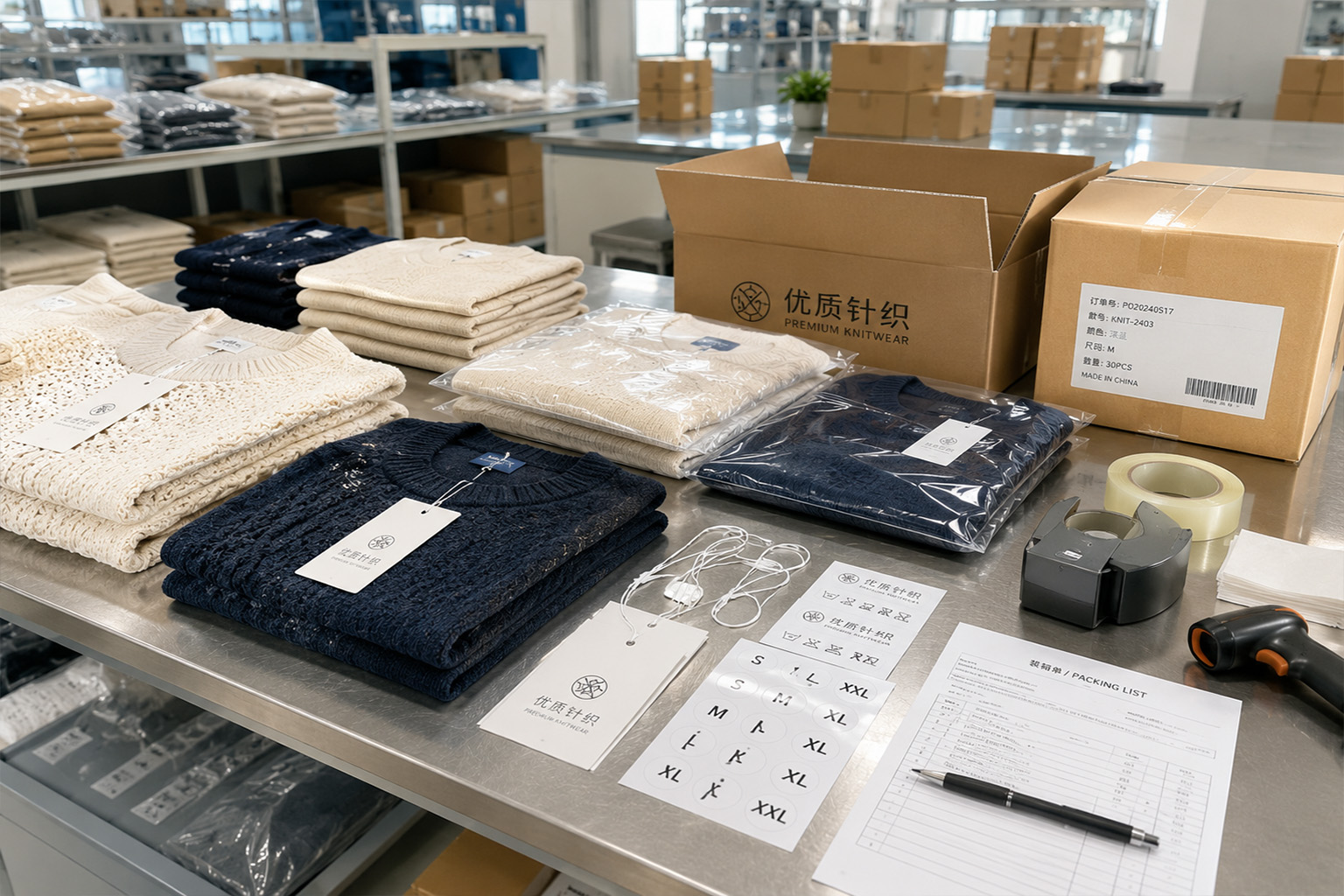
An office handing sweaters to named employees needs a different identification plan from a retailer selling anonymous units. Decide whether cartons will be packed by size, destination, department or another approved group. Verify a small example of the carton label and the pick list before bulk packing. If the garment has a raised decoration, check its folded position and protection on an actual packed sample; a flat artwork approval cannot answer that question.
If the sweaters will be sold rather than given away, the identifier requirements can change. GS1 US advises that separately sold apparel variations generally need distinct GTINs, including size and colour variants. An internal employee handout does not automatically need retail barcodes, but the organiser still needs a reliable way to reconcile the delivered assortment. Our Christmas sweater packaging guide goes deeper on labels, gift boxes and carton checks.
Make one person responsible for the approved version
The organiser should be able to answer three questions without searching old email chains: Which artwork is approved? Which size-and-destination matrix is final? Which physical sample represents the order? Place their version identifiers on a single sign-off sheet. If a department changes its logo after approval, record whether that requires a new sample or a separate production variant; do not silently overwrite the old file.
Before release, compare the approved sample with the final purchase order and packing matrix. Inspect the logo size and readability, garment measurements, attachment security where decorations are used, labels and the order’s quantity breakdown. The QITE quality-control page describes the wider inspection context, but event-specific acceptance criteria must come from the actual buyer brief.
A useful first enquiry for QITE
QITE Garments develops custom knitwear for brands and bulk buyers. Its custom Christmas sweater page is the relevant starting point for a knitted company-event garment. Send your original logo artwork, design references you have rights to use, intended fit, approximate size breakdown, number of destinations and event receiving deadline. QITE can review feasible knit and decoration options, sampling needs and the commercial scope for the particular project.
When you contact QITE, ask for a proposal that names the assumed design variants and what must be approved before a bulk order. That answer is more useful than a price for an unspecified “custom ugly sweater.”