Sweater OEM factory capacity planning is more than asking a factory how many pieces it can make each month. In knitwear manufacturing, usable capacity depends on the required gauge, yarn, stitch structure, garment weight, available machine time, sample approval, finishing, inspection and shipment requirements.
A factory can have strong total output but still be unable to start a particular style on the desired date. For example, the required gauge machines may already be scheduled, bulk yarn may not be ready, or the approved sample may still be under revision. A style-level capacity review helps brands, wholesalers and private-label buyers identify those risks before bulk production begins.
Why sweater capacity must be planned by style
Unlike cut-and-sew apparel, a knitted garment is created from yarn through knitting, linking, washing and finishing. A lightweight fine-gauge top, a chunky cardigan and a multi-color jacquard pullover may all be “sweaters,” but they do not use the same machine time or follow the same production path.
Before confirming a schedule, ask the factory to review the following details for the specific style:
- Product category, yarn composition and target garment weight
- Gauge, stitch structure, colors and sizing plan
- Estimated quantity and required production window
- Bulk-yarn readiness and sample approval status
- Linking, washing, finishing, inspection and packing requirements
- Target shipment date, testing needs and approval dependencies
This creates a realistic conversation about capacity: Can this style be made on the right machines, with the right materials and downstream processes, in the time available?
1. Gauge is the first capacity filter
Gauge determines which knitting machines can be used and strongly influences garment thickness, texture, knitting time and yarn consumption. The exact route depends on the yarn and construction, but broad gauge groupings help a buyer begin the discussion:
- Chunkier gauges: often used for heavier winter sweaters, textured cardigans and visible cable structures.
- Mid gauges: common for many commercial pullovers, ribs, cables and jacquard programs.
- Fine gauges: often used for lighter knit tops, smooth cardigans and transitional knitwear.
Do not treat a factory’s total machine count as the capacity available to your order. Ask whether the appropriate gauge machines are free during the required window, whether the selected yarn runs well on those machines, and whether the style needs special setup or technician time.
QITE GARMENTS supports development across 1GG–16GG. For a broader view of the manufacturing route, visit our knitwear manufacturing in China page.
2. Machine allocation depends on construction, not only gauge
Two styles can use the same gauge but require very different machine time. A simple jersey pullover generally has a different production profile from a multi-color jacquard, cable, intarsia or openwork style.
- Cable, waffle, wide-rib and highly textured structures
- Jacquard, intarsia and multiple-color designs
- Pointelle, openwork and complex shaping
- Heavy yarns, large garment dimensions or special panel construction
- Zippers, complex plackets, pockets and additional trims
These details may increase knitting time, setup work, yarn usage or subsequent assembly work. Share close-up reference images and repeat artwork early so the factory can assess the construction rather than estimating capacity from a front-view image alone.
3. Confirm yarn readiness before reserving the schedule
Available machines do not help if bulk yarn is not ready. Yarn planning is a common source of lead-time risk, especially where custom dyeing, special blends, recycled-content requirements or imported materials are involved.
- Is the proposal based on stock yarn, custom-dyed yarn or a specially sourced yarn?
- What approvals are needed for color, hand feel or yarn quality before bulk purchase?
- Has the bulk quantity been calculated from the approved garment construction?
- How will color-lot consistency be controlled?
- What happens if the original yarn is unavailable or delayed?
Agree the substitute-yarn approval rule before production begins. A replacement yarn can change gauge, hand feel, weight, cost and final measurements, so it should not be introduced without buyer approval.
4. Treat sample approval as a capacity milestone
The approved sample is the technical reference for bulk yarn, gauge, measurements, workmanship, labels and finishing. It is also a scheduling milestone: if a sample requires yarn, gauge, fit or color changes, the capacity plan may need to move.
Common causes of sample-to-bulk delay include unclear fit comments, unresolved color approval, changes to construction, incomplete labels or packing requirements, and a sample approved without a final measurement standard. Accurate approval is more valuable than rushing a generic sampling date.
See how a sample supports a more reliable factory decision in our guide to knitwear sample development. If your team needs to organize the specification first, review how to prepare a knitwear tech pack.
5. Plan colors, sizes and packing before allocation is locked
One color with a simple size range is easier to schedule than a program with many colors, sizes and carton assortments. Each color may require yarn preparation and production tracking, while a wide size range can affect machine setup, grading, inspection and packing.
- Quantity per color and per size
- Color-size ratio and any testing or replacement allowance
- Final size grading and measurement tolerance
- Private-label trims, barcode or hangtag needs
- Polybag, carton assortment and carton-mark requirements
Confirm these details before the factory finalizes material orders and machine planning. Late changes can introduce rework, material shortfalls or a need to re-sequence the production schedule.
6. Include linking, finishing and QC in the production calendar
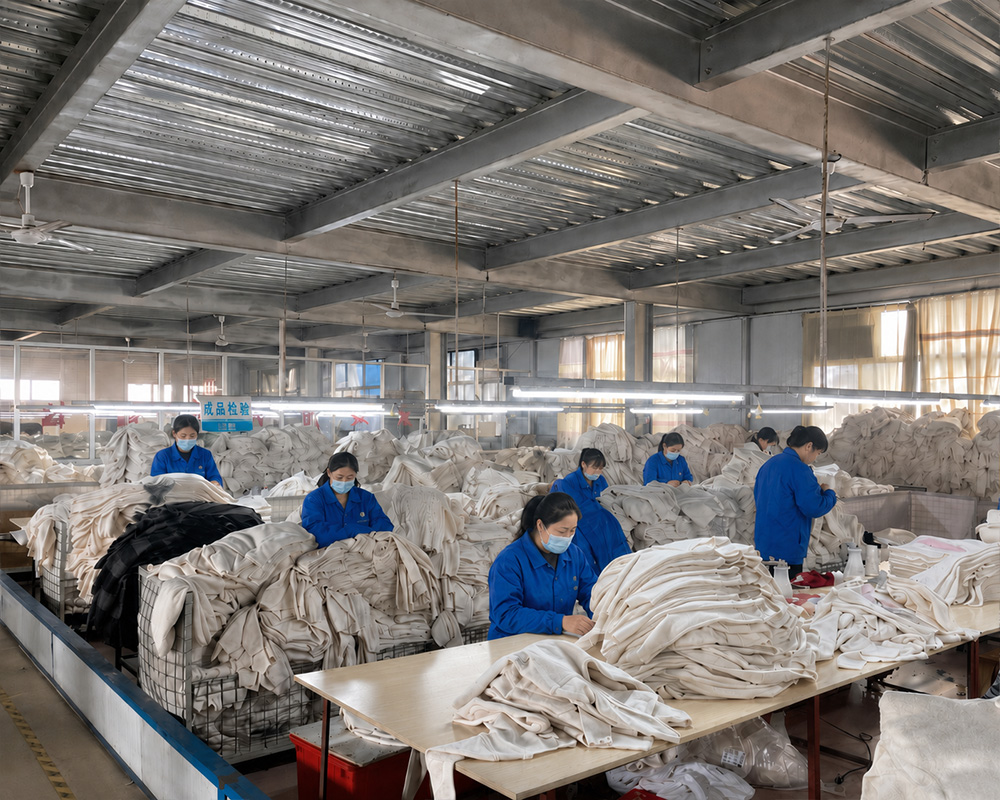
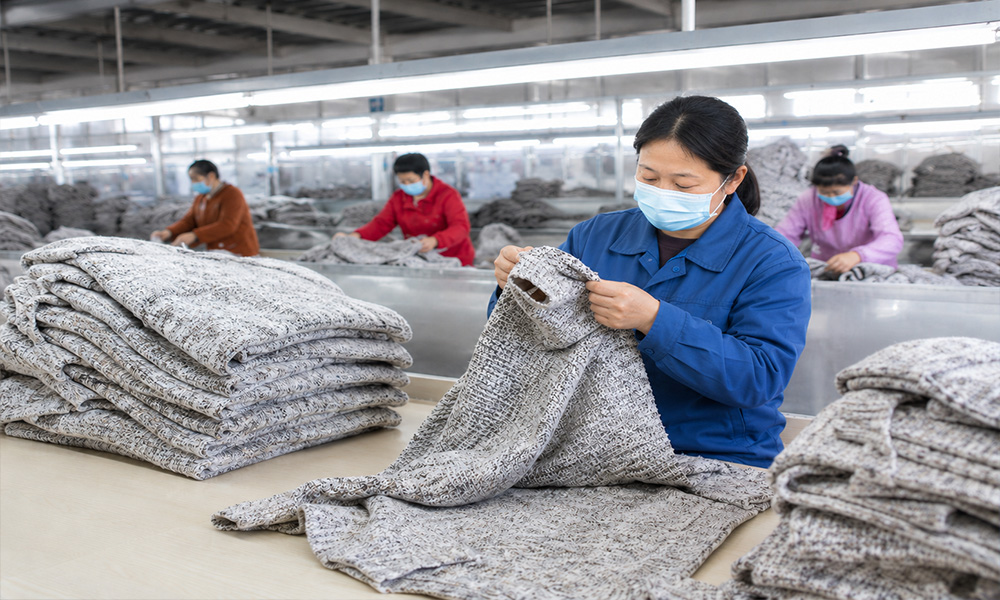
Knitting is only one stage of sweater manufacturing. After panels or garments are knitted, the program may still require linking, washing, shaping, pressing, trimming, repair, inspection, label attachment and packing. A plan that only reserves knitting capacity can still miss the shipment date if a downstream process becomes overloaded.
- Linking and assembly capacity
- Washing, shaping, brushing or other finishing capacity
- Measurement checks after the agreed finishing condition
- In-line and final inspection time
- Label application, packing and carton marking
Heavier garments, brushed surfaces, shaped styles and complex trims can need more time after knitting. Build the full route into the calendar rather than assuming the knitting completion date is the shipping date.
7. Build quality checkpoints into the lead-time plan
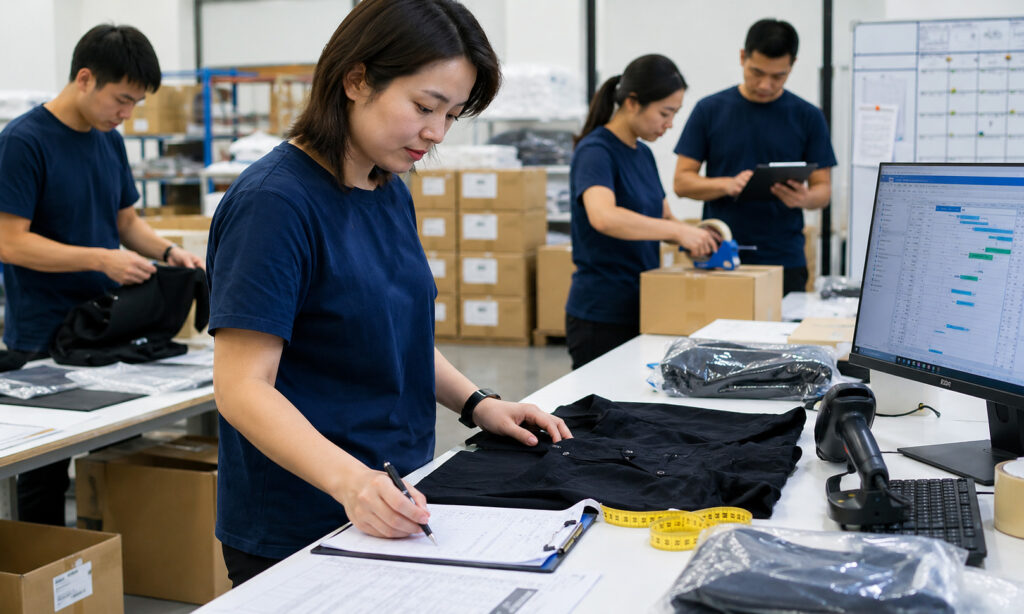
Quality control is part of the schedule, not a separate activity after manufacturing. Plan the first bulk-piece review, in-line measurement checks, workmanship review, label verification, packing inspection and final shipment review before the delivery deadline.
If performance testing is required, agree the test method, sample condition, acceptance criteria and timing before bulk production. A testing request must be planned into the calendar; naming a test does not itself confirm that a garment has passed it. Our knitwear quality-control process explains the checks that support production control.
8. Lead-time risks to identify before confirming an order
- Delivery dates proposed before gauge, construction and yarn are reviewed
- Unconfirmed yarn availability, color approval or bulk quantity calculation
- Sample revisions still open when bulk scheduling is discussed
- Late additions of colors, sizes, trims, labels or packing instructions
- Production planning that omits finishing, inspection or testing time
- Capacity described only as a monthly total rather than by style and gauge
A capable OEM partner should surface these risks early and explain which decisions must be locked before a date can be confirmed. This is more useful than a generic promise that ignores the actual production route.
Capacity-review checklist for buyers
Send the following information when asking a sweater factory for a capacity and lead-time review:
- Reference images, tech pack or approved sample
- Product category, yarn/fiber direction, gauge and stitch construction
- Target garment weight, size chart and fit requirements
- Quantity by color and size, plus target shipment window
- Sample approval status and remaining decisions
- Labels, trims, packing, inspection and testing requirements
The more complete the project information, the more accurately a factory can assess available capacity and propose a practical production route. For an overview of OEM and ODM collaboration, visit our custom knitwear OEM/ODM service.
Sweater OEM capacity planning FAQ
Can a factory’s monthly output confirm whether my order can ship on time?
No. Monthly output is only a general indicator. A useful review considers the specific gauge, yarn, construction, machine availability, approval status, finishing route and quantity of your style.
Why does gauge affect sweater lead time?
Gauge determines the suitable machine group and affects knitting speed, garment thickness and yarn usage. The required machines may have different available windows from the factory’s total machine base.
What causes most sweater production delays?
Typical causes include late yarn readiness, sample revisions, unconfirmed colors, late size or packing changes, machine conflicts, complex construction and insufficient finishing or inspection time.
Planning a custom sweater program? Contact QITE GARMENTS with your style information, estimated quantity and target schedule for a style-level capacity discussion.
Planning a custom knitwear collection? Explore Qite’s custom sweaters capabilities for style development, yarn and gauge options, logo applications, sampling, private labels and bulk production.