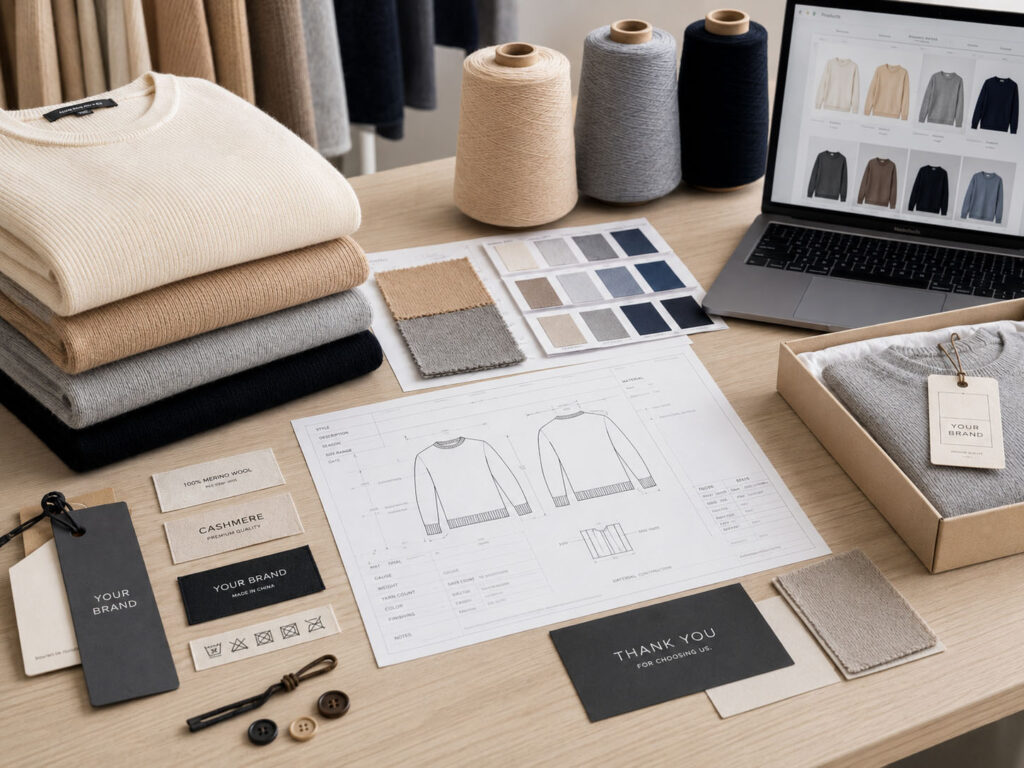
For fashion brands working with a knitwear manufacturer in China to develop custom sweaters, cardigans, vests, and lightweight knitwear, “sustainable” should mean more than choosing a recycled or natural yarn. A product claim is only as credible as the evidence behind its fiber content, material traceability, manufacturing controls, and final labeling.
China remains an important sourcing base for knitwear manufacture in China because brands can access a broad range of yarn options, computerized knitting capabilities, sampling resources, and export support. However, buyers need a clear process for checking whether a supplier can support the specific environmental or material claim they plan to make.
This guide explains how to source sustainable custom knitwear in China while asking practical questions about fibers, certification documents, testing, production controls, and labeling.
Start With a Precise Product Claim
Before contacting a knitwear manufacturer, decide what you want to claim about the finished garment.
For example:
- Made with recycled polyester
- Contains organic cotton
- Made with responsibly sourced wool
- Uses recycled cotton blend yarn
- Contains certified responsible mohair
- Made with lower-impact cellulosic fibers
These claims are not interchangeable. A sweater made with 30% recycled polyester and 70% conventional acrylic should not be marketed as a fully recycled sweater. Likewise, using a yarn with an environmental story does not automatically prove that the complete garment meets a particular certification standard.
A stronger sourcing brief states the fiber composition clearly. For example: “Women’s crewneck sweater, 50% recycled polyester, 30% RWS wool, 20% nylon, subject to available certified yarn and supporting documentation.”
That gives the supplier a workable basis for yarn sourcing, costing, sampling, and document review.
Understand the Difference Between Fiber Choice and Certification
A fiber can have sustainability-related attributes without the finished sweater being certified. This distinction matters when writing product pages, hangtags, wholesale information, and retailer submissions.
For example, recycled polyester may be available from a certified source, but buyers should ask whether the specific yarn lot and the finished-garment supply chain can support the intended claim. Organic cotton, responsible wool, recycled wool, recycled nylon, and responsible mohair may each follow different standards, scope requirements, or transaction-document processes.
A practical rule is simple: do not make a claim broader than the documents can support.
If the product is made with a certified fiber blend, brands should confirm:
- The exact fiber percentage in the final composition
- The certification or standard relevant to that fiber
- Whether the manufacturer or supply-chain partner holds a valid scope certificate where required
- Whether transaction certificates or equivalent material documents are available for the order
- Whether the planned claim applies to the yarn, the garment, or both
- How the claim will appear on labels, packaging, and online product pages
Ask for Yarn Information Before Sampling
In knitwear development, yarn is not a minor sourcing detail. It affects hand feel, weight, stretch recovery, pilling, shape retention, wash performance, lead time, and price.
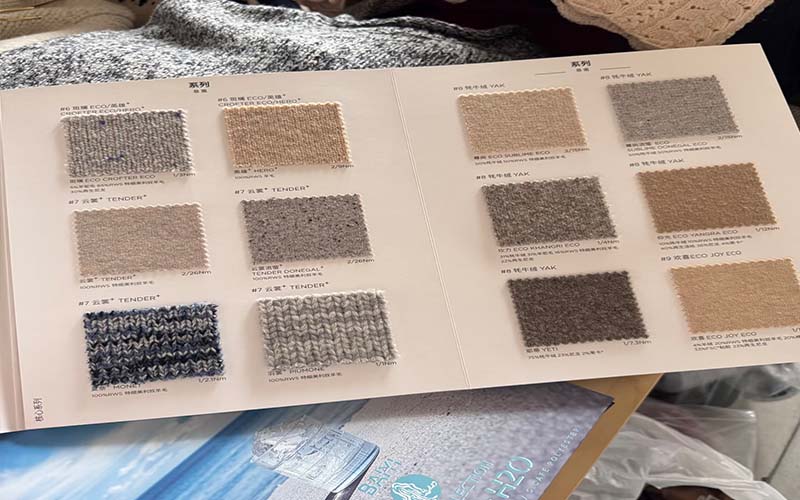
Before sampling, ask the supplier for a yarn specification sheet covering:
- Fiber composition and blend percentages
- Yarn count or yarn weight
- Spun, filament, fancy yarn, brushed yarn, boucle, or other construction
- Available colors and dyeing method
- Proposed gauge and stitch structure
- Country or mill information, where available
- Relevant certification details
- Minimum order requirement for the yarn
- Expected lead time for yarn booking or dyeing
This is particularly important for sustainable knitwear because certified or specialty yarns may have more limited color options, higher minimums, or longer booking times than standard stock yarn.
For a custom sweater program, it is usually better to confirm the yarn before approving the first development sample. Otherwise, the approved look and hand feel may not match the material used for bulk production.
Questions to Ask a Sustainable Knitwear Supplier
Buyers do not need to ask a factory to make vague promises about being “eco-friendly.” Better results come from specific, document-based questions.
Fiber and Traceability Questions
- What yarn options match the requested composition and hand feel?
- Can you provide the fiber composition for each proposed yarn?
- Which sustainability-related certifications or documents are available for this material?
- Does the yarn mill provide transaction certificates, declarations, or traceability records where applicable?
- Will the bulk yarn come from the same approved source as the sample yarn?
- If a substitute is needed, can production be paused until the buyer approves the revised yarn?
Certification Questions
- Which company in the supply chain holds the relevant certification?
- Is the certificate current and does its scope cover the material or process involved?
- Can the supplier provide a certificate number, scope document, or supporting record for buyer verification?
- Can the factory support required order documentation for a certified product program?
- Has the supplier produced certified knitwear for export markets before?
A certificate alone should not end the review. Buyers should check that the certificate applies to the correct company, product category, process, and validity period.
Production and Quality Questions
- How will yarn lots be controlled during bulk knitting?
- What process is used to manage shade variation between panels or color lots?
- How are pilling, shrinkage, spirality, and shape retention reviewed?
- What inspections are completed before packing?
- Can the supplier arrange third-party testing if the brand or retailer requires it?
- How will labels, hangtags, polybags, and cartons be checked against the approved packing instructions?
For knitwear, poor quality can undermine both the product and the sustainability story. A sweater that pills excessively, loses shape after washing, or has inconsistent measurements is less likely to stay in use.
Build Sustainability Into the Tech Pack
A well-prepared tech pack helps the supplier quote accurately and reduces late changes. In addition to the usual design, measurement, color, and trim details, include a material-claim section.
This section can state:
| Item | What to Confirm |
|---|---|
| Fiber composition | Exact percentage required in the finished garment |
| Material claim | The approved wording for recycled, organic, responsible, or other claims |
| Yarn source | Approved mill or supplier, if nominated |
| Documentation | Certification, transaction records, test reports, or declarations needed |
| Testing | Pilling, dimensional stability, colorfastness, restricted substances, or retailer-specific tests |
| Labels | Fiber-content label, care label, country of origin, hangtag wording, and logo details |
| Packaging | Recycled-content requirement, plastic reduction target, FSC paper request, or carton specification |
The finished product must still meet the labeling requirements of its destination market. In the United States, for example, textile and wool labels generally require accurate fiber content, country of origin, and responsible business identification. Care-label requirements should also be considered early because knitwear care instructions must reflect the garment’s real performance.
Review Claims Carefully for Blended Sweaters
Many commercial sweaters are blended for performance. Wool may be blended with nylon for strength, cotton with acrylic for cost and softness, or recycled polyester with elastane for recovery.
Blends are normal, but they require accurate communication. A “recycled sweater” may mean the product contains recycled fibers, not that every component is recycled. Buyers should avoid language that could lead customers to assume an entire garment has one attribute when only part of its composition does.
It is better to state the composition directly:
“Made with 55% recycled polyester.”
This is clearer than a broad statement such as “100% sustainable sweater,” especially when other fibers, trims, sewing threads, labels, or packaging are conventional materials.
Check the Supplier’s Development Process
A reliable manufacturer should be able to turn a sustainability brief into a workable development plan. During the sampling stage, ask how the supplier will confirm:
- Yarn availability and color-card selection
- Gauge and stitch structure
- Sample hand feel and garment weight
- Measurement tolerances
- Wash-test results where required
- Trims and labeling specifications
- Bulk yarn booking schedule
- Production lead time after sample approval
Fast sampling can be useful, but speed should not replace material confirmation. When sustainable yarns require booking, dyeing, certification documents, or special minimums, a realistic timeline is more valuable than an optimistic one.
QITE GARMENTS supports OEM and ODM knitwear development for international buyers, including yarn and gauge selection, custom sampling, private-label details, production follow-up, quality control, and export coordination. Brands developing sustainable knitwear can share their target fiber composition, reference designs, certification requirements, expected order quantity, and destination market at the quotation stage. Learn more about OEM/ODM sweater manufacturing and knitwear quality control.
Do Not Treat Sustainability as a Last-Minute Label Decision
The most credible sustainable knitwear programs are planned from the beginning. Fiber selection, yarn sourcing, garment construction, testing, certification documents, labels, and packaging should be reviewed as connected decisions.
When buyers wait until bulk production to ask for recycled-content proof or organic-fiber documents, they may face delays, material substitutions, extra costs, or claims they cannot support.
A better approach is to create a short approval file before bulk production. It should include the approved yarn specification, bulk composition, supplier documents, sample comments, test requirements, label artwork, packaging details, and claim wording.
That file gives the brand, manufacturer, and quality team one reference point throughout production.
Final Checklist Before Bulk Production
Before releasing a sustainable custom knitwear order, confirm:
- Bulk yarn composition matches the approved sample and purchase order
- Required certifications or material documents have been reviewed
- Claim wording matches the actual fiber content and available evidence
- Size specifications, gauge, stitch structure, and colors are approved
- Test requirements are confirmed with the supplier
- Care labels and fiber-content labels are accurate for the destination market
- Packaging materials and carton marks are approved
- Bulk lead time includes yarn booking, knitting, finishing, inspection, and shipment preparation
Conclusion
Sourcing sustainable custom knitwear in China is not only about finding a yarn with a good story. It requires buyers to connect the fiber claim with real product specifications, supplier capability, production documents, quality testing, and accurate consumer communication.
The best supplier conversations are specific. Ask what fiber is being used, what percentage is in the finished sweater, what documents support the claim, and how the factory will keep bulk production aligned with the approved sample.
For a custom women’s, men’s, or children’s knitwear project, you can send your knitwear requirements to QITE GARMENTS for quotation and sampling support.
FAQ
Can a sweater be called sustainable if it contains recycled polyester?
It may be possible to make a qualified recycled-content claim, but the wording should reflect the actual percentage and available documentation. A sweater containing recycled polyester is not necessarily made entirely from recycled materials.
What documents should a knitwear buyer request for certified fibers?
Depending on the material and standard, request a valid scope certificate, transaction certificates or material records where applicable, yarn specification details, fiber composition, and supporting test or traceability documents required by your market or retailer.
Do sustainable yarns always cost more?
Not always, but certified, specialty, low-volume, custom-dyed, or imported yarns can increase cost or lead time. The final price also depends on gauge, stitch complexity, garment weight, order quantity, colors, trims, and packaging.
Should sustainability claims be confirmed before sampling?
Yes. Confirming the target composition and required evidence before sampling helps prevent a mismatch between the development sample, bulk yarn, product label, and marketing claim.