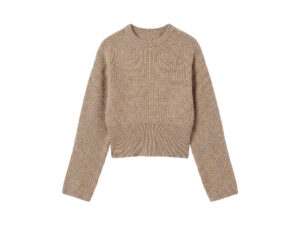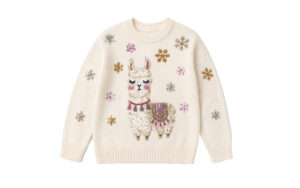
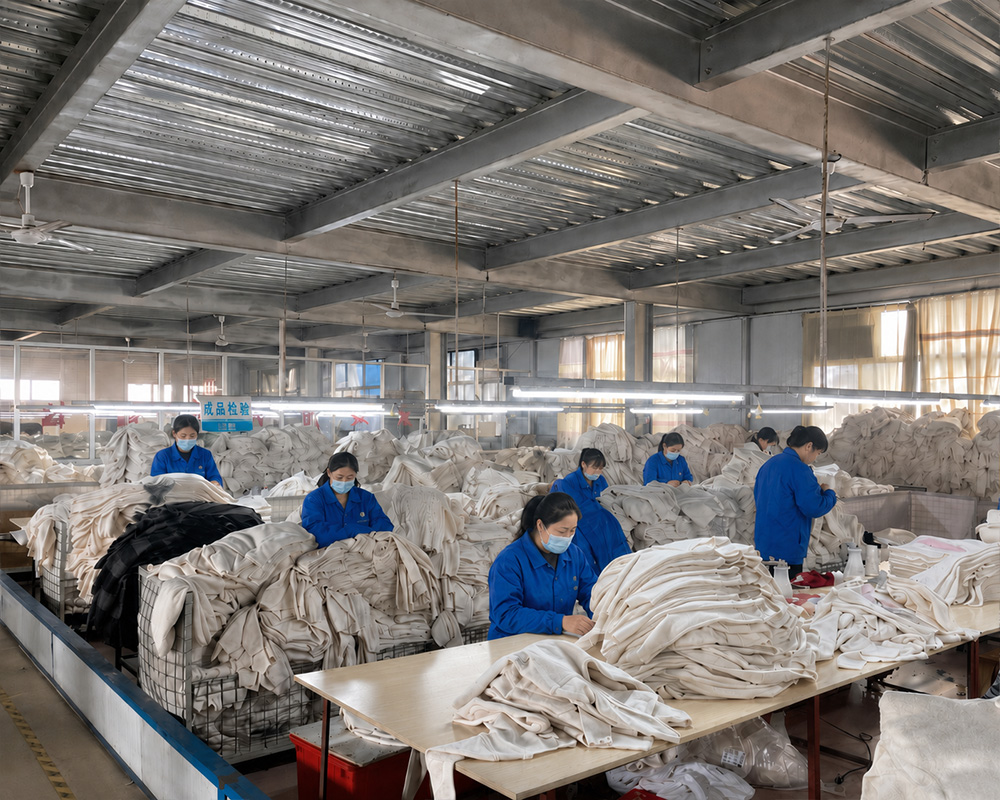
An OEM kids’ sweater cost cannot be calculated from a photo alone. Two children’s pullovers may look similar online, yet have very different production costs because of yarn quality, garment weight, gauge, size range, safety requirements, trims, testing and packaging. Work with a knitwear manufacturer in China that can clarify each cost driver before sampling.
For private-label brands, the most useful quotation is not simply the lowest FOB price. It is a clear cost structure that shows what is included, which details drive the price, and which changes could reduce cost without weakening product safety or quality.
This guide explains the main cost factors in OEM kids’ sweater production and what buyers should confirm before approving a sample or bulk order. Explore our kids’ knitwear manufacturer page for product directions, and review the knitwear manufacturing process for sampling, production and quality stages.
This article provides general sourcing guidance, not legal advice. Testing and compliance requirements depend on the intended age group, destination market, product design, materials, trims, and retailer requirements.
What Is Usually Included in a Kids’ Sweater FOB Cost?
An OEM FOB quotation commonly includes the production work needed to make the finished, packed garment ready for export handover. The exact scope should always be confirmed with the supplier as part of an OEM/ODM sweater service.
| Cost Area | Typical Inclusions |
|---|---|
| Yarn and materials | Main yarn, contrast yarn, sewing yarn, elastic yarn, labels, buttons, zippers, and trims |
| Knitting and assembly | Machine time, knitting, linking, sewing, embroidery, and attached details |
| Finishing | Washing, drying, shaping, pressing, de-pilling, and surface preparation |
| Quality control | In-line checks, measurement review, workmanship inspection, metal detection, and packing verification |
| Testing | Required laboratory tests, where agreed and applicable |
| Packaging | Polybags, size stickers, hangtags, barcodes, tissue paper, cartons, and shipping marks |
| Production planning | Sample review, material allocation, production scheduling, and bulk follow-up |
Freight, duties, import taxes, customs clearance, destination warehousing, and local delivery are normally separate from an FOB factory quote unless they are specifically included in the agreed commercial terms.
1. Yarn and Garment Weight Are Major Cost Drivers
Yarn is usually the largest material cost in a children’s sweater. It affects softness, warmth, garment weight, pilling, color options, wash performance, and retail position.
Common yarn directions include:
- Acrylic and acrylic blends for value-focused sweaters and bright seasonal colors
- Cotton and cotton blends for lightweight and everyday knitwear
- Wool blends for warmer fall/winter products
- Recycled-fiber blends for material-specific programs
- Fine, soft yarns for baby and toddler knitwear
- Fancy, brushed, boucle, or metallic yarns for fashion-led styles
The final yarn cost is closely linked to garment weight. A chunky cable cardigan for older children usually consumes more yarn than a lightweight fine-gauge pullover for the same size range.
Before approving a quote, confirm:
- Exact fiber composition
- Yarn count or thickness
- Target garment weight by base size
- Allowed weight tolerance
- Stock yarn or custom-dyed yarn status
- Number of yarn colors
- Expected pilling, shrinkage, and wash performance
- Whether the sample yarn will be available for bulk production
A lower-cost yarn may change the hand feel, surface appearance, durability, or wash performance. Cost reduction should therefore be reviewed on a physical sample, not only on paper.
2. Gauge, Stitch Density and Knit Structure Affect Production Cost
Gauge describes the fineness of the knitting machine. It influences garment texture, stitch density, yarn use, machine time, and production efficiency.
| Gauge Range | Typical Kids’ Knitwear Use | Cost Consideration |
| 1GG / 3GG | Chunky winter sweaters, thick ribs, heavy cables | Higher yarn use and heavier garment handling |
| 5GG / 7GG | Commercial pullovers, cardigans, jacquards, cables, ribs | Structure, color count, and weight can affect machine time |
| 12GG / 16GG | Lightweight sweaters, knit tops, fine ribs | Finer construction requires close technical control |
The knit structure also matters. A plain jersey pullover is generally less complex than a sweater with cables, multi-color jacquard, intarsia, pointelle, embroidery, appliqués, or several attached trims.
Cost can increase when a style includes:
- Thick cable patterns
- Multi-color jacquard artwork
- Intarsia placement designs
- Openwork or pointelle stitches
- Textured stitches and fancy yarns
- Large embroidery areas
- Pom-poms, appliqués, or decorative patches
- Button plackets, zippers, pockets, or special collars
- Fully fashioned shaping with complex panels
The design does not need to be simplified by default. Instead, the buyer and manufacturer should identify which details are essential to the product and which are optional.
3. Size Range and Grading Affect Material Use
Kids’ sweater costs should be reviewed across the full size range, not only from a single sample.
A broader range may affect:
- Yarn consumption by size
- Garment weight
- Sleeve and body-length grading
- Artwork scale
- Size labels and barcode requirements
- Color-size packing ratios
- Inspection time
- Carton assortment
For example, a cardigan developed for ages 2-3 through 10-11 will use different yarn quantities across the size range. A large jacquard motif may also need separate scaling or placement adjustments for smaller and larger sizes.
Buyers should provide the planned quantity by size early. A factory can then estimate consumption, packing, and production requirements more accurately.
4. MOQ Influences Unit Cost and Color Planning
MOQ affects more than the minimum number of garments. It influences yarn purchasing, color allocation, machine planning, trims, labels, packaging, and the cost per piece.
At QITE GARMENTS, standard MOQ starts from 500 pieces per style. The final MOQ depends on yarn composition, gauge, color count, size range, trims, and packaging requirements.
A 500-piece order in one color may be more efficient than 500 pieces divided across five low-volume colors. The total quantity is the same, but each color can create separate yarn minimums, material handling, size sorting, inspection, and packing requirements.
Before confirming an order, ask:
- Is the MOQ per style, per color, or per total order?
- What is the minimum yarn quantity for each color?
- Does custom dyeing affect MOQ or lead time?
- Can several styles share the same yarn?
- What is the MOQ for labels, hangtags, and cartons?
- How does the price change at higher quantity breaks?
- Can the same materials be used for a repeat order?
For a first private-label order, concentrating volume on core colors can help control both inventory risk and production cost.
5. Safety Testing Should Be Planned as a Cost Item
Testing is not an optional last-stage expense for children’s products. The applicable requirements depend on the destination market, intended age group, product type, materials, trims, and claims.
Potential cost areas may include:
- Fiber-content verification
- Dimensional stability after washing
- Pilling resistance
- Colorfastness to washing and rubbing
- Button, trim, and attachment strength
- Small-parts assessment, where applicable
- Sharp-point or sharp-edge review, where applicable
- Restricted-substance testing
- Flammability testing, where applicable
- Retailer-specific test requirements
For U.S. children’s products subject to applicable children’s product safety rules, testing and certification may be required through a CPSC-accepted third-party laboratory. The importer or domestic manufacturer is legally responsible for issuing the Children’s Product Certificate based on applicable passing test results.
The CPC document itself does not have a government filing fee, but laboratory testing, sample preparation, courier handling, and any retesting after a design or material change can affect the project cost.
The practical lesson is simple: identify the required test plan before selecting final yarns, trims, and packaging.
6. Metal Detection and Quality Control Require Production Resources
Children’s knitwear needs stricter control of potential metal contamination. Broken knitting needles, sewing needles, equipment fragments, or repair tools can create risk during production.
A suitable children’s sweater QC plan should include:
- Needle and sharp-tool control
- Broken-needle response records
- In-line knitting and workmanship checks
- Measurement review
- Trim-attachment inspection
- Final garment inspection
- 100% metal detection before packing
- Metal-detector calibration and verification
- Rejected-garment isolation and reinspection
- Packing release after inspection
These steps are part of the production quality process. They should be confirmed in the quotation scope and quality plan rather than treated as an assumed detail.
QITE GARMENTS manages knitwear quality through approved-sample control, material inspection, in-line checks, needle and metal detection, final inspection, packing verification, and shipment preparation.
7. Trims Can Change Both Price and Safety Review
Buttons, zippers, badges, embroidery, appliqués, pom-poms, and decorative patches can improve the retail appeal of a kids’ sweater. They also add material, labor, inspection, and safety-review requirements.
Cost may increase because of:
- Custom-developed buttons
- Higher button counts
- Branded zipper pullers
- Embroidery or appliqué labor
- Decorative attachments
- Additional reinforcement
- Attachment-strength testing
- Special packing to prevent trim damage
For younger age groups, a knitted-in jacquard motif can sometimes achieve the desired visual effect with fewer detachable components than an appliqué-heavy design.
8. Labels and Packaging Are Part of the Final Cost
Private-label details should be included in the quote from the beginning.
Typical cost items include:
- Main brand label
- Size label
- Care label
- Fiber-content label
- Country-of-origin marking
- Tracking or batch information where required
- Hangtag and string
- Barcode sticker
- Polybag and warning label
- Tissue paper or folded insert
- Gift box or premium retail packaging
- Carton material, carton ratio, and carton marks
For U.S.-bound textile products, federal labeling requirements generally require most textile and wool products to show fiber content, country of origin, and the identity of the responsible business. Care instructions should also reflect the garment’s actual performance.
Basic export packing is normally more cost-efficient than branded retail presentation packaging. A sweater packed in a standard polybag has a different cost structure from one that requires tissue paper, a belly band, printed inserts, a gift box, and customized outer cartons.
9. How to Reduce Cost Without Reducing Product Value
The lowest price is not always the lowest-risk choice. For children’s knitwear, reducing cost should not compromise safety testing, trim security, metal detection, or basic quality controls.
Better cost-review options include:
- Using a suitable stock-supported yarn
- Adjusting the yarn blend while maintaining the required hand feel
- Reducing garment weight where the design allows
- Simplifying non-essential jacquard colors or stitch details
- Consolidating low-volume colorways
- Selecting standard buttons or zippers instead of custom hardware
- Keeping trims age-appropriate and limited
- Using practical packaging for the sales channel
- Sharing yarn colors across several styles where feasible
- Confirming all specifications early to avoid repeated sample revisions
Any proposed change should be reviewed against the approved sample, product safety requirements, and target retail position.
Buyer Cost-Review Checklist
Before approving an OEM kids’ sweater quotation, confirm:
| Cost Area | Buyer Confirmation |
| Yarn | Composition, source, hand feel, yarn minimum, colors, and bulk availability |
| Garment weight | Target weight by base size and allowed tolerance |
| Gauge and structure | Gauge, stitch density, cable, jacquard, rib, or other construction |
| Sizes | Full size range, grade rules, and quantity by size |
| Colors | Quantity by color and contrast-yarn requirements |
| Trims | Buttons, zippers, embroidery, badges, and attachment method |
| Testing | Applicable safety, performance, laboratory, and retailer requirements |
| Quality control | Inspection plan, metal detection, and broken-needle procedure |
| Labels | Brand, size, fiber content, care, origin, tracking, and barcode details |
| Packaging | Polybag, hangtag, tissue paper, carton ratio, and shipping marks |
| MOQ | MOQ per style, color, yarn, trim, and packaging component |
| Delivery | Sample timing, material booking, bulk production, testing, and shipping window |
| Quotation terms | Incoterm, currency, payment terms, validity, and exclusions |
FAQ
What is the largest cost factor in an OEM kids’ sweater?
Yarn composition and garment weight are usually the main cost drivers. Gauge, stitch complexity, number of colors, size range, trims, testing, quality control, labels, packaging, MOQ, and delivery timing also affect the final cost.
Does a higher MOQ always reduce the sweater price?
Higher quantity can improve material purchasing and production efficiency, but it does not automatically solve high yarn, trim, testing, or packaging costs. Review MOQ by style, color, yarn, and packaging requirement.
Does children’s sweater testing need to be included in the cost plan?
Yes. The required test plan depends on the product and market, but testing should be identified before bulk production. Late testing can create unexpected cost, retesting, or delivery delays.
Is metal detection an extra cost for kids’ knitwear?
Metal detection is a critical part of the QC plan for children’s knitwear. Buyers should confirm the factory’s 100% detection procedure, record control, and quotation scope before bulk production begins.
What information is needed for an accurate kids’ sweater quote?
Send a tech pack, reference image, age range, size chart, fiber composition, gauge, target weight, color-size breakdown, trims, labels, packaging, testing requirements, target quantity, delivery date, and destination market.
Request a Kids’ Sweater Cost Review From QITE GARMENTS
QITE GARMENTS supports OEM and ODM kids’ knitwear programs with yarn and gauge planning, sample development, cost review, safety-focused quality control, metal detection, private-label packing, and export coordination.
For a more accurate quotation, send your kids’ sweater tech pack, age range, target quantity, yarn direction, color-size breakdown, testing needs, packaging details, and delivery plan to QITE GARMENTS. You can also review our OEM/ODM knitwear manufacturing service and knitwear quality-control process.
Related Kids’ Knitwear Planning Guides
Use these related resources to turn a cost estimate into an approval-ready children’s knitwear program:
- Kids’ sweater safety, sizing and MOQ guide for age-group, trims and compliance planning.
- OEM kids’ sweater sampling guide for fit approval, grading and pre-production decisions.
- OEM kids’ sweater quality control checklist for pilling, shrinkage, seams and safety tests.
- OEM kids’ sweater lead time guide for testing, production slots and bulk delivery planning.
Planning a custom knitwear collection? Explore Qite’s custom-made sweaters capabilities for style development, yarn and gauge options, logo applications, sampling, private labels and bulk production.