An OEM kids’ sweater quality control checklist should begin before bulk production, not at final carton inspection. It helps private-label brands align yarn, gauge, measurements, seams, trims, wash performance, labels, packing and product-safety standards with a knitwear manufacturer in China before defects become shipment risks.
A sweater can look correct when first finished yet fail after normal use. It may pill at the underarm, shrink after washing, grow in length, develop wavy seams, lose a button, show a sharp trim edge, or contain a broken needle fragment from knitting or sewing operations.
For private-label brands, retailers, and importers, the purpose of quality control is to prevent these issues before the product reaches a child or the retail channel.
This practical OEM kids’ sweater quality control checklist covers pilling, shrinkage, seams, trims, safety tests, metal detection and final shipment release. Review our kids’ knit sweater manufacturer page for product options and the knitwear manufacturing process for the production stages that QC supports.
This article is general sourcing guidance, not legal advice. Testing and compliance requirements depend on the intended age group, product category, destination market, materials, trims, and final construction. Brands and importers should confirm applicable requirements with qualified laboratories and compliance advisers.
OEM Kids’ Sweater Quality Control Starts With the Approved Sample
The approved sample should be the reference standard for bulk production. It should define more than color and overall appearance.
Before production begins, confirm:
- Approved yarn composition and yarn source
- Yarn color, hand feel, and yarn-lot requirements
- Gauge and stitch density
- Garment weight by base size
- Size chart and measurement tolerances
- Neckline, cuff, hem, and sleeve construction
- Linking, seams, trims, labels, and workmanship requirements
- Wash-care instructions
- Pilling, shrinkage, colorfastness, and other test requirements
- Safety-control and metal-detection requirements
- Folding, polybag, barcode, carton, and shipping instructions
A factory should not treat a sample as approved for bulk production if the buyer is still changing yarn, measurements, artwork, labels, or packing details.
1. Pilling Control for Kids’ Sweaters
Pilling is one of the most frequent quality complaints in knitwear. It occurs when loose fibers on the garment surface become entangled through friction and form small balls.
Children’s sweaters can experience significant friction at:
- Underarms
- Side seams
- Sleeves
- Cuffs
- Chest areas
- Areas that contact outerwear, backpacks, or car-seat restraints
Pilling performance depends on more than fiber composition. It can also be affected by yarn twist, fiber length, yarn hairiness, knit density, brushing, garment fit, and finishing.
Pilling Checks Before Bulk Production
Review the approved sample for:
- Surface appearance before washing
- Surface appearance after laundering
- Underarm and side-seam condition
- Brushed or fuzzy yarn areas
- Cable, rib, jacquard, and textured sections
- High-friction zones
- Loose fibers and uneven surface finish
ASTM D4970/D4970M is a recognized Martindale-based method for evaluating pilling resistance and related surface changes. However, the test result should be used with a physical sample review and a product-specific appearance standard.
A very soft, brushed, or hairy sweater may naturally have a different surface character from a smooth compact knit. The buyer should define what appearance is acceptable before the factory starts bulk production.
2. Shrinkage and Dimensional Stability
A kids’ sweater must keep a reasonable fit after washing. Dimensional change can include shrinkage, growth, twisting, curling, uneven shape, neckline stretching, and cuff distortion.
Key measurements to review before and after washing include:
| Measurement Point | Why It Matters |
|---|---|
| Chest width | Comfort, layering allowance, and fit consistency |
| Body length | Prevents the sweater becoming too short or too long |
| Shoulder width | Supports balance and movement |
| Sleeve length | Important for wrist position and size grading |
| Neck opening | Must remain comfortable for dressing |
| Cuff width | Checks stretch and recovery |
| Hem width | Controls shape and fit after laundering |
| Armhole | Supports movement and construction balance |
The buyer and supplier should agree on:
- Washing method
- Water temperature and cycle
- Drying method
- Resting time before measurement
- Pre-wash and post-wash points of measure
- Allowed dimensional change
- Required appearance after laundering
AATCC TM150 is a recognized method for assessing dimensional changes of garments after home laundering. The final test method and acceptance criteria should match the intended care label, destination market, retailer requirements, and product construction.
For knitted garments, do not review only the measurement chart. Check whether the neckline, cuffs, hem, seams, and garment shape still match the intended product after washing.
3. Inspect Linking, Seams and Construction
Knitwear often uses linking or assembly operations to join panels, sleeves, necklines, and other components. Weak or uneven construction can make a sweater uncomfortable, unstable, or visibly defective.
During in-line and final inspection, check:
- Linking quality at shoulders and side seams
- Sleeve attachment and alignment
- Neckline joining and shape
- Cuff and hem attachment
- Seam consistency and tension
- Broken yarns, loose ends, or open joins
- Holes, missed stitches, dropped stitches, and laddering
- Unbalanced panels or twisting
- Seams that pull, pucker, wave, or distort after washing
- Rough or uncomfortable inside finishes
For cardigans, also inspect:
- Button-placket stability
- Buttonhole construction
- Button attachment
- Front opening alignment
- Pocket attachment, if applicable
- Zipper alignment and puller security, if applicable
A finished sweater should be checked both flat and on a form or hanger where appropriate. Some construction problems become visible only when the garment is stretched or worn.
4. Check Buttons, Trims and Decorative Details
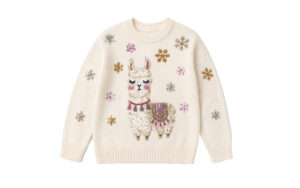
Children’s sweaters may include buttons, pom-poms, appliqués, badges, bows, embroidery, sequins, beads, zipper pullers, or decorative cords.
Every attached component should be reviewed for age suitability, attachment strength, sharp edges, and wash durability.
Check:
- Buttons are securely sewn and reinforced where required
- Pom-poms, badges, and appliqués cannot detach easily
- Embroidery is securely finished on the inside
- Sequins, beads, or decorative pieces are suitable for the intended age group
- Zippers and pullers are secure and smooth
- Trim backs do not create sharp or rough edges
- Decorative cords, loops, and free ends are reviewed
- Garment appearance remains acceptable after washing
For young children, knitted-in jacquard patterns can be a practical option because they create visual interest without adding multiple detachable components.
5. Metal Detection and Broken-Needle Control
Metal detection is especially important for kids’ knitwear. During knitting, linking, sewing, embroidery, finishing, and repair work, broken needles, machine fragments, sewing needles, or other metal contaminants can enter or remain in a garment.
A reliable quality-control plan should include:
- Needle and sharp-tool issue-and-return records
- Broken-needle incident records
- Defined response when a needle is damaged or missing
- Isolation of affected work areas and garments
- Inspection of potentially affected goods
- Metal-detector calibration and sensitivity checks
- Recorded use of detector test pieces at planned intervals
- 100% metal detection of finished children’s sweaters before final packing
- Separation of passed, rejected, and reworked garments
- Investigation and reinspection of any garment that triggers the detector
Passed garments should move directly to the approved packing area. They should not return to open production areas unless they are removed from the approved flow and metal-detected again after rework.
QITE GARMENTS includes needle and metal detection in its knitwear quality-control process alongside material checking, approved-sample control, in-line inspection, final garment inspection, packing verification, and shipment preparation.
6. Plan Safety and Compliance Testing Early
Testing should be planned before bulk production. The correct test plan depends on the intended age group, end use, market, yarn, dyes, trims, product claims, and retailer requirements.
Possible test areas include:
- Fiber-content verification
- Dimensional stability after washing
- Pilling resistance
- Colorfastness to washing and rubbing
- Colorfastness to perspiration, water, or light where relevant
- Button, trim, and attachment strength
- Small-parts assessment where applicable
- Sharp-point or sharp-edge review where applicable
- Restricted-substance or chemical requirements
- Flammability requirements
- Care-label performance
- Tracking-label and packaging requirements
For products intended primarily for children aged 12 and under in the U.S., applicable children’s product safety rules can require third-party testing by a CPSC-accepted laboratory and certification through a Children’s Product Certificate. The importer or domestic manufacturer is responsible for issuing the certificate based on applicable passing test results.
Do not assume every children’s sweater needs the same tests. A plain pullover, a button cardigan, a hooded outerwear-style sweater, and a sleepwear product may have different compliance considerations.
7. Review Drawstrings and Cords
Drawstrings require specific attention for children’s upper outerwear. For U.S.-bound styles, hood and neck drawstrings in children’s upper outerwear in certain sizes are considered a substantial product hazard.
For children’s hooded sweaters and outerwear-style cardigans, review:
- Hood and neck drawstrings
- Waist and bottom cords
- Decorative cords with free ends
- Toggles, knots, and cord locks
- Belt or tie construction
- Whether the garment is considered upper outerwear in the target market
Many brands avoid functional hood and neck drawstrings in children’s knitwear and use ribbed openings, elastic, buttons, snaps, or zippers instead.
8. Verify Labels, Packing and Traceability
Final quality control includes product identification and packing accuracy.
Before shipment, check:
- Brand label
- Size label
- Fiber-content label
- Care label
- Country-of-origin marking
- Tracking or batch information where required
- Hangtag and barcode
- Polybag and warning label
- Folding method
- Size sticker
- Assortment ratio
- Carton quantity and carton marks
For U.S. children’s products, tracking information must be provided on the product and packaging to the extent practicable. The information should allow the responsible business, production date and location, and relevant batch or run details to be identified.
Final Kids’ Sweater QC Checklist
Before shipment, confirm:
| QC Area | Final Check |
| Approved sample | Bulk goods match the approved sample and final comments |
| Yarn | Composition, color, hand feel, and yarn-lot consistency |
| Knitting | Gauge, stitch density, holes, missed stitches, loose yarns, and surface quality |
| Measurements | Within approved tolerance before and after required wash review |
| Pilling | Product-specific appearance requirement and relevant test review |
| Shrinkage | Agreed wash conditions and post-wash dimensional stability |
| Seams | Linking, neckline, sleeves, cuffs, hem, plackets, and joins are secure |
| Trims | Buttons, zippers, appliqués, badges, and decoration attachment are checked |
| Safety | Applicable testing, drawstring review, trim review, and documentation complete |
| Metal control | Broken-needle procedure, detection records, and rejected-garment control complete |
| Labels | Fiber, care, origin, size, tracking, barcode, and brand information correct |
| Packing | Folding, polybags, assortment, carton ratio, and carton marks correct |
FAQ
Why do kids’ sweaters pill easily?
Pilling can be caused by yarn hairiness, fiber blend, loose knit structure, brushing, finishing, and friction during wear. Areas such as underarms, sleeves, and side seams are especially vulnerable.
Should kids’ sweaters be measured after washing?
Yes, when wash performance is part of the product requirement. Post-wash measurement helps identify shrinkage, growth, twisting, neckline change, cuff distortion, and loss of shape before bulk approval.
Why is metal detection required for children’s knitwear?
Needle fragments or other metal contaminants can enter garments during knitting, sewing, linking, embroidery, or repair. A controlled needle-management process and 100% metal detection before packing help reduce this risk.
Do all children’s sweaters need the same safety tests?
No. The required tests depend on the intended age, destination market, garment category, materials, trims, and product claims. A qualified laboratory should confirm the correct test plan.
What should a factory inspect before packing kids’ sweaters?
The factory should inspect measurements, knitting quality, seams, surface condition, trims, labels, metal-detection results, packing accuracy, carton marks, and quantity against the approved production file.
Develop Quality-Controlled Kids’ Sweaters With QITE GARMENTS
QITE GARMENTS supports OEM and ODM kids’ knitwear programs with yarn and gauge planning, sample development, in-line inspection, final quality control, needle and metal detection, private-label packing, and export coordination.
For a custom kids’ sweater project, send your tech pack, target age range, yarn direction, quantity, safety requirements, and delivery plan to QITE GARMENTS.
Related OEM Kids’ Sweater Resources
Before bulk inspection, use our OEM kids’ sweater manufacturer guide to set the age-group, safety, yarn and MOQ direction. Then use the OEM kids’ sweater sampling guide to approve size grading, fit and wash performance before releasing bulk production.
Planning a custom knitwear collection? Explore Qite’s custom-made sweaters capabilities for style development, yarn and gauge options, logo applications, sampling, private labels and bulk production.