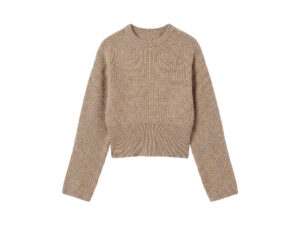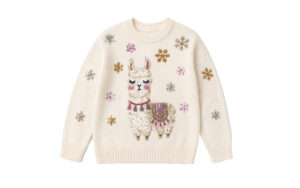
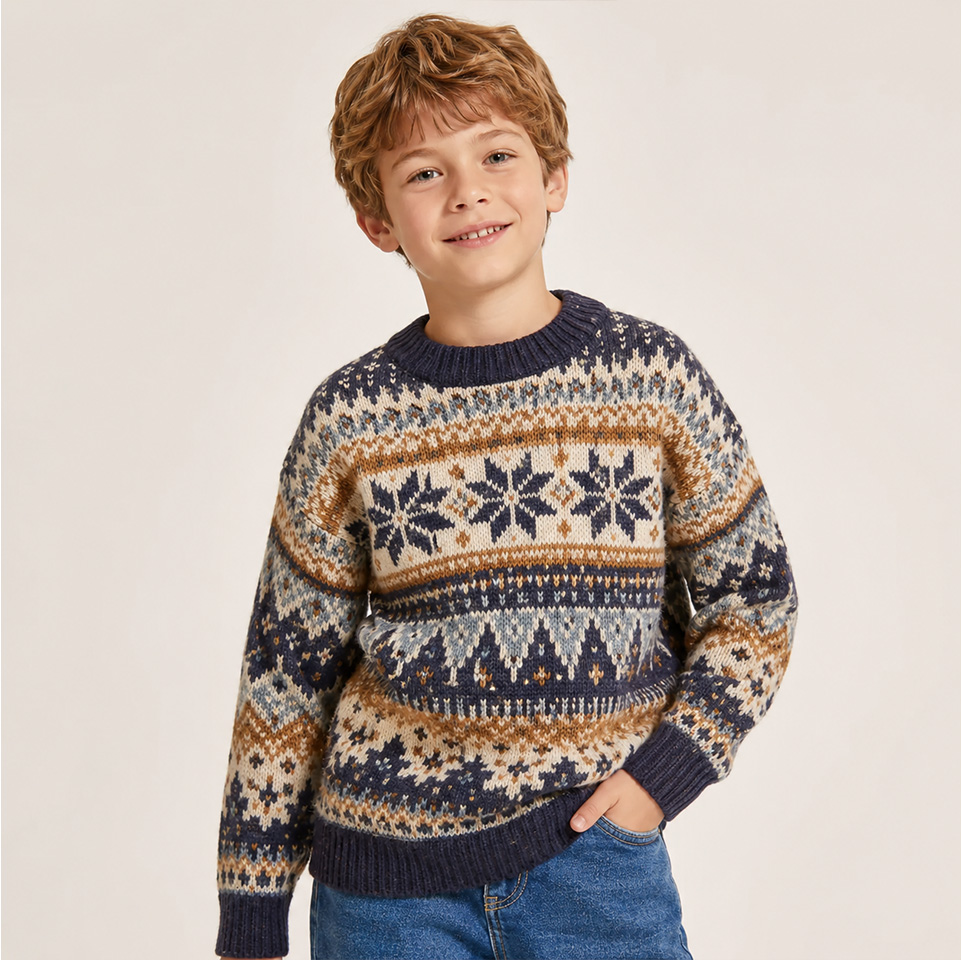
An OEM kids’ sweater sample is not just a visual prototype. It is the point where a private-label brand confirms the garment’s yarn, gauge, fit, age suitability, size grading, workmanship, care method, and production standard with a knitwear manufacturer in China.
For kids’ knitwear, a sample that looks good in one size is not enough. The same construction must work across the full size range. A neckline must be comfortable to pull over a child’s head, sleeves must be proportioned correctly, buttons and trims must remain secure, and the garment must stay within the approved size standard after washing and finishing.
This OEM kids’ sweater sampling guide explains how brands manage the first development sample, size grading, fit approval, pre-production confirmation, and bulk shipment. Review our knitwear manufacturing process for the production route after approval, and our kids’ knit sweater manufacturer page for product options.
This article provides general sourcing guidance, not legal advice. Safety, labeling, testing, and certification requirements depend on the product, intended age group, destination market, and final construction.
OEM Kids’ Sweater Sampling: Why It Needs More Control Than Adult Knitwear
Children’s sweaters often include more size changes across a smaller body scale. A small variation in neckline width, sleeve length, chest measurement, or rib recovery can noticeably affect comfort and fit.
At the same time, children’s styles may include buttons, pom-poms, appliqués, decorative cords, embroidery, hoods, or other details that need age-appropriate review.
A good sampling process should answer four questions before bulk production begins:
- Does the sweater match the intended design and yarn direction?
- Does it fit the intended age group and size range?
- Does it remain stable after washing and normal wear?
- Can the factory reproduce the approved result consistently in bulk?
Step 1: Prepare a Clear Kids’ Knitwear Development Brief
The factory needs more than an inspiration image. Before sampling, provide a development brief with the technical and commercial information needed to make the correct first sample.
Include:
- Product type: pullover, cardigan, vest, knitted dress, hoodie, or knit set
- Intended age range
- Target market and destination country
- Reference images, sketch, tech pack, or original sample
- Target fiber composition and hand feel
- Gauge or expected garment weight
- Colorways and artwork
- Size range and preliminary size chart
- Target quantity by style and color
- Required labels, hangtags, barcodes, and packaging
- Testing, safety, or retailer requirements
- Requested delivery date
A simple note such as “make a sweater for ages 3-8” is not enough for size development. The factory needs to know the intended sizing system, fit direction, and whether the garment is designed as a close-fitting base layer, regular pullover, relaxed cardigan, or oversized seasonal style.
Step 2: Develop the First Sample
The first development sample confirms whether the design can be made in the intended yarn, gauge, stitch structure, and price range.
For a kids’ sweater, the first sample should be reviewed for:
- Fiber composition and yarn hand feel
- Gauge and stitch density
- Garment weight
- Overall silhouette
- Neckline opening
- Shoulder shape
- Sleeve length and cuff construction
- Hem and rib recovery
- Artwork, jacquard, cable, pointelle, or embroidery details
- Buttons, zippers, labels, and decorative trims
- Surface quality, loose yarns, holes, or missed stitches
At this stage, the buyer does not need to approve every measurement for bulk production. The goal is to confirm whether the product direction is technically and commercially workable.
If the first sample uses a different yarn from the planned bulk yarn, make that clear. The final fit and wash approval should be completed in the yarn and construction intended for production.
Step 3: Confirm the Base Size Before Grading
A base size is the main reference size used to establish the garment’s measurements and proportions. For a children’s sweater, the base size should be selected according to the brand’s target age range and grading system.
For example, a brand may choose:
- 2-3 years as the base size for a toddler range
- 4-5 years as the base size for an early-childhood range
- 6-7 years as the base size for a broader children’s range
The base sample should be fitted before size grading is finalized.
Base-Size Fit Checks
| Area | What to Review |
|---|---|
| Neck opening | Comfortable to pull over the head; recovers after stretch |
| Chest width | Enough ease for movement and layering |
| Body length | Appropriate for the intended age and product type |
| Shoulder | Balanced fit without slipping or restricting movement |
| Armhole | Comfortable mobility without excessive looseness |
| Sleeve length | Correct position at the wrist with cuff recovery |
| Cuffs and hem | Stretch, recovery, and secure shape |
| Garment weight | Suitable for the season and intended user |
| Surface and seams | No rough areas, loose yarns, or uncomfortable finishes |
A sweater can measure correctly on a table while fitting poorly on a child. Fit review should consider movement, dressing, layering, and comfort, not only static measurements.
Step 4: Build a Logical Size-Grading Plan
Size grading is the process of increasing or decreasing garment measurements across the size range. It should reflect how children’s bodies change, rather than applying the same increment to every point.
A kids’ sweater grading plan should include:
- Chest width
- Body length
- Shoulder width
- Sleeve length
- Bicep width
- Sleeve opening
- Neck opening
- Hem width
- Cuff width
- Armhole depth
- Rib height, where relevant
Example Size-Grading Questions
Before approving the grade rule, ask:
- Does body length increase appropriately between sizes?
- Does the neck opening remain easy to pull over the head?
- Do sleeves become longer without becoming too wide?
- Does chest width increase in line with the intended fit?
- Do shoulder and armhole changes support movement?
- Does the rib maintain its recovery across every size?
- Does the artwork or jacquard remain balanced as the garment becomes larger?
A logo, animal motif, stripe placement, or jacquard graphic that looks right on a 3-4 year size may need resizing or repositioning for larger sizes. Do not assume the same artwork scale will work across the full size range.
Step 5: Review the Size Set, Not Only One Sample
A size set includes samples from selected points in the size range. It helps buyers check whether grading works in small, middle, and large sizes before bulk production.
For most kids’ sweater programs, review at least:
- The smallest size
- The base size
- The largest size
The exact size-set requirement depends on the retailer, market, complexity of the fit, and number of sizes.
Size-Set Approval Checklist
- Chest, body length, shoulders, and sleeves follow the approved grade rule
- Neck opening remains functional in every size
- Armhole and sleeve proportions are balanced
- Cuffs and hems recover correctly
- Artwork remains clear and properly placed
- Buttons, plackets, zippers, and trims are proportionate
- Garment weight remains appropriate by size
- Measurements are within tolerance
- No size looks unusually short, narrow, long, or distorted
Size-set approval is especially important for rib knits, openwork styles, jacquards, hooded sweaters, cardigans, and garments with large placement artwork.
Step 6: Wash-Test the Sample Before Bulk Approval
Children’s sweaters are often washed frequently. That makes post-wash measurement and appearance review essential.
Wash testing can reveal:
- Shrinkage in length or width
- Garment growth or sagging
- Neckline stretching
- Cuff and hem distortion
- Color bleeding or fading
- Surface pilling
- Twisting or uneven shape
- Trim damage or detachment
- Change in hand feel
The buyer and factory should agree on the wash method, drying method, resting time, and post-wash measurement standard.
AATCC TM150 is a recognized test method for dimensional changes of garments after home laundering. The final testing method and acceptance criteria should be selected with the testing laboratory and according to the destination market, retailer requirements, and approved care instructions.
After washing, review more than the measurement chart. Check whether the sweater still looks, fits, and feels like the approved product.
Step 7: Complete the Safety and Trim Review
A kids’ sweater should be reviewed for potential safety concerns before bulk production. The review depends on the product’s age group, market, and final design.
Check:
- Button, zipper, pom-pom, appliqué, and badge attachment
- Decorative pieces that could loosen during washing or wear
- Rough embroidery backs or loose yarn ends
- Sharp points or exposed trim backs
- Drawstrings, cords, loops, and free ends
- Neckline, hood, and closure design
- Labels and packaging details
- Required testing and certification documents
For U.S.-bound children’s outerwear, hood and neck drawstrings in sizes 2T to 12 or equivalent are considered a substantial product hazard. Many brands avoid functional drawstrings in children’s hooded knitwear.
Children’s products sold in the United States also require tracking information on the product and packaging to the extent practicable. The required information helps identify the responsible business, production date and location, and relevant batch or run details.
Step 8: Lock the Pre-Production Sample and Technical File
A pre-production sample, often called a PP sample, is the last approved reference before bulk manufacturing starts. It should reflect the final yarn, color, measurements, trims, labels, and packing requirements.
The PP sample should confirm:
- Final fiber composition and approved bulk yarn
- Final gauge, stitch density, and garment weight
- Approved size chart and grade rules
- Approved artwork and colorways
- Buttons, zippers, labels, and other trims
- Care instructions and fiber-content label
- Test requirements and required documents
- 100% metal-detection requirement before packing
- Folding method, polybag, size sticker, barcode, and carton details
All buyer comments should be consolidated. Bulk production should not begin while fit comments, yarn substitutions, packaging artwork, or testing requirements remain open.
Step 9: Control Bulk Production Against the Approved Sample
During bulk production, the factory should compare actual garments against the approved sample and technical file.
Key production controls include:
- Approved yarn and yarn-lot checks
- Gauge and stitch-density checks
- In-line measurement review
- Panel dimensions and color consistency
- Workmanship inspection for knitting, linking, seams, and finishing
- Trim-attachment checks
- Final measurement inspection
- Label and packaging verification
- Needle-control records and 100% metal detection before packing
- Rejected-garment isolation and reinspection procedure
- Carton-mark and assortment confirmation
At QITE GARMENTS, knitwear quality control includes approved-sample control, material inspection, in-line checks, final inspection, needle and metal detection, packing verification, and shipment preparation.
Typical Sampling and Bulk Timeline
The actual timeline varies by yarn availability, style complexity, size range, sample revisions, testing, and factory schedule. A practical planning sequence is:
| Stage | Main Action | Typical Timing |
| Product review | Review tech pack, reference, yarn direction, quantities, and market | 1-3 working days after receiving clear information |
| Development sample | Make the first sample from confirmed initial details | Around 7-10 days |
| Buyer review | Provide consolidated fit, measurement, yarn, and workmanship comments | Depends on buyer response time |
| Revised sample or size set | Confirm base size, grade rules, selected sizes, and wash performance | Depends on revisions and testing |
| PP sample approval | Lock final specifications, labels, packing, and QC requirements | Required before bulk release |
| Bulk production | Knitting, linking, finishing, inspection, metal detection, and packing | Small to medium orders may take around 20-30 days after approval |
| Final inspection and shipment | Confirm final quality, packing, quantities, and shipment details | Before dispatch |
QITE GARMENTS generally develops knitwear samples in around 7-10 days after design references, yarn, gauge, color, and measurements are confirmed. Standard MOQ starts from 500 pieces per style, with final MOQ dependent on yarn, gauge, colors, size range, trims, and packing.
Buyer Checklist Before Bulk Production
Before releasing a custom kids’ sweater for bulk production, confirm:
- Intended age group, end use, and destination market
- Approved base-size fit sample
- Full size chart, grade rules, and measurement tolerances
- Smallest, base, and largest sizes reviewed where required
- Neck opening, shoulders, sleeves, cuffs, and hem approved
- Yarn composition, gauge, hand feel, and bulk source confirmed
- Wash-test result and post-wash appearance approved
- Artwork, jacquard, embroidery, buttons, and trims approved
- Drawstrings, cords, and loose decorative parts assessed
- Required testing, tracking, labels, and documents confirmed
- 100% metal detection and broken-needle control included in the QC plan
- Packing instructions, carton ratios, and shipping marks approved
- PP sample and final technical file signed off
FAQ
What is the most important sample for a kids’ sweater?
The base-size fit sample is essential because it establishes the main proportions and construction. However, a size set is also important when the range includes several sizes or the design has ribs, jacquards, hoods, cardigans, or complex artwork.
Why should brands review a size set?
A size set helps confirm that grading works across the range. It can reveal problems such as a tight neckline in the smallest size, oversized sleeves in the largest size, or artwork that becomes poorly proportioned after grading.
Should a kids’ sweater sample be washed before approval?
Yes, where the product is intended to be washable or where the brand requires wash-performance review. Washing can reveal shrinkage, growth, color change, pilling, trim damage, and shape distortion.
What is a PP sample in knitwear production?
A PP sample is the final approved pre-production sample. It should match the bulk yarn, color, measurements, trims, labels, testing plan, quality requirements, and packing instructions.
How long does kids’ sweater sampling take?
At QITE GARMENTS, sample development typically takes around 7-10 days after the core technical details are confirmed. Revision rounds, size-set development, special yarns, complex structures, and laboratory testing can extend the total development timeline.
Develop Kids’ Knitwear With QITE GARMENTS
QITE GARMENTS supports OEM and ODM kids’ knitwear programs from yarn and gauge planning to sampling, size review, bulk production follow-up, quality inspection, metal detection, private-label packing, and export coordination.
To begin a project, send your kids’ sweater tech pack, age range, size chart, target quantity, yarn direction, destination market, and delivery plan to QITE GARMENTS.
Related OEM Kids’ Sweater Resource
Before sampling begins, use our OEM kids’ sweater manufacturer guide to confirm the intended age group, yarn direction, trims, safety points, testing needs and MOQ assumptions for the project.
Once the sample and size set are approved, move to the OEM kids’ sweater quality control checklist to define pilling, shrinkage, seams, trims, safety testing and bulk-release checks.
Planning a custom knitwear collection? Explore Qite’s custom sweater manufacturing services capabilities for style development, yarn and gauge options, logo applications, sampling, private labels and bulk production.