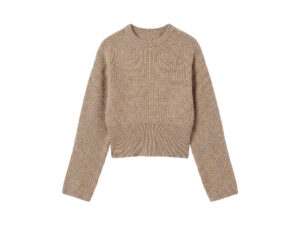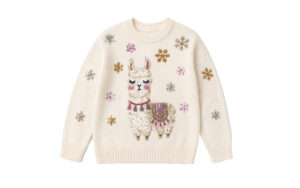
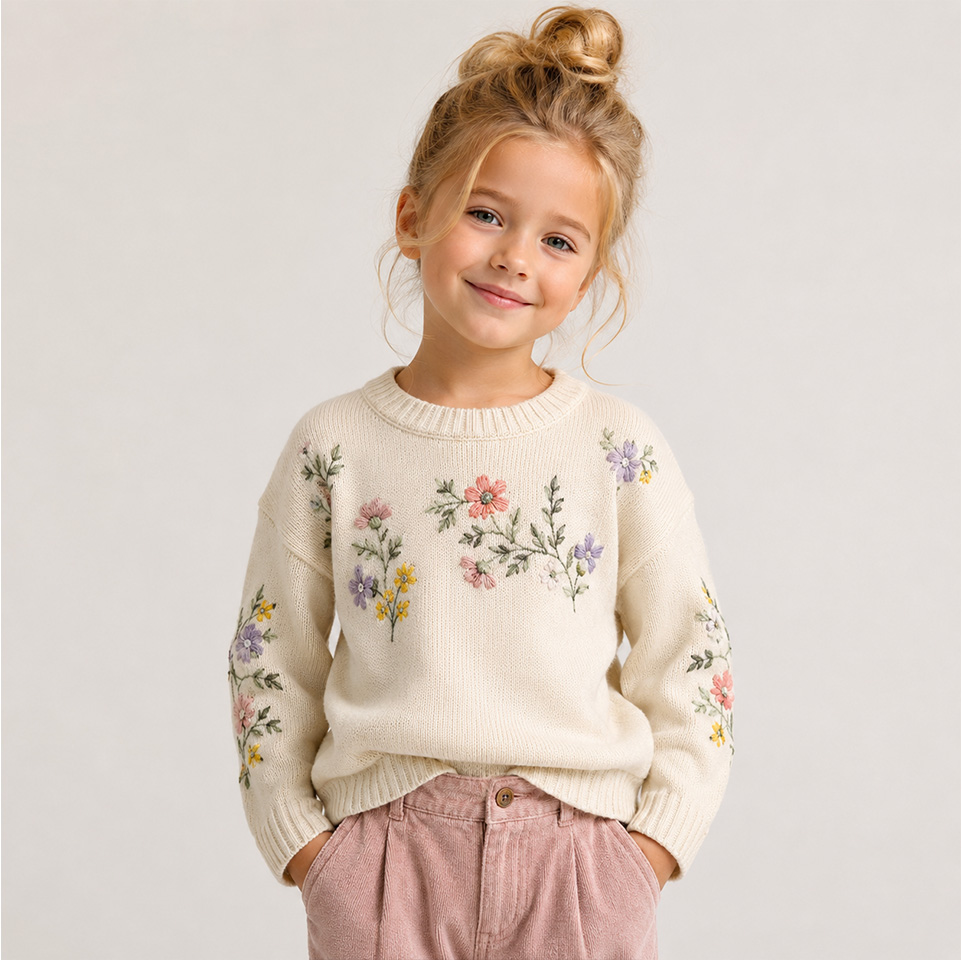
An OEM kids’ sweater lead time guide is about more than a factory production date. Before a private-label kids’ pullover, cardigan, vest or hooded knit can ship, the program may need to complete sample development, size grading, fit review, wash testing, safety review, yarn booking, production-slot allocation, bulk knitting, inspection, metal detection, packaging and export preparation with a knitwear manufacturer in China.
For brands and importers, the most reliable way to manage lead time is to treat it as a chain of approval points. A delay in yarn confirmation, sample comments, safety testing, labels, or packaging can affect the final delivery date even when the knitting itself is progressing well.
This OEM kids’ sweater lead time guide explains how to plan from the first development brief to bulk delivery. Explore our kids’ knit sweater manufacturer page for product directions, and review the knitwear manufacturing process for the production stages that follow approval.
This article provides general sourcing guidance, not legal advice. Testing, certification, labeling, and documentation requirements depend on the destination market, intended age range, end use, materials, trims, and final product design.
OEM Kids’ Sweater Lead Time: Define the Correct Delivery Date
The term “delivery date” can mean different things to different teams. Before developing a kids’ sweater, clarify the milestone that matters.
| Milestone | Meaning |
|---|---|
| Sample-ready date | The factory has completed the requested development or fit sample |
| Sample-approval date | The buyer has approved the sample, comments, and technical requirements |
| Bulk ex-factory date | Finished goods have passed the agreed checks and are ready for handover |
| Shipment departure date | Goods have been handed to the carrier and departed under the agreed shipping plan |
| Warehouse-arrival date | Goods have reached the buyer’s warehouse or named destination |
| Retail launch date | Products must be ready to sell in stores or online |
A factory’s bulk completion date is not the same as a retail launch date. Buyers should work backwards from the retail date and allow time for freight, customs clearance, warehouse receiving, product photography, store allocation, and any marketplace or retailer intake requirements.
Stage 1: Submit a Complete Kids’ Sweater Development Brief
The lead time begins when the factory has enough information to review the project properly.
Send the supplier:
- Product type: pullover, cardigan, vest, knitted dress, hoodie, or set
- Intended age group and size range
- Target market and destination country
- Tech pack, original sample, sketch, or reference images
- Fiber composition, yarn direction, and hand feel
- Gauge, stitch structure, or target garment weight
- Colors, artwork, jacquard, embroidery, and trim details
- Quantity by color and size
- Label, barcode, hangtag, and packaging requirements
- Testing and compliance requirements
- Required ex-factory date and retail launch date
A basic reference image can support an initial feasibility review, but it is not enough to lock a final delivery plan. The factory needs clear information about yarn, measurements, colors, trims, packing, and testing before it can confirm materials and production capacity.
Stage 2: Allow Time for Sampling and Fit Approval
The first sample checks whether the factory can achieve the intended yarn, gauge, stitch effect, fit, garment weight, and workmanship.
At QITE GARMENTS, knitwear sample development usually takes around 7-10 days after the design reference, yarn, gauge, color, and measurement details are confirmed.
This is the sample-making period. The full approval process may take longer because it can include:
- Buyer review
- Fit comments
- Measurement correction
- Size-set samples
- Yarn or color confirmation
- Trim review
- Wash-performance review
- Safety review
- Revised sample or pre-production sample approval
For children’s sweaters, buyers should review more than the appearance. The sample should confirm neckline comfort, sleeve length, shoulder balance, cuff recovery, hem shape, trim attachment, and overall suitability for the intended age group.
Keep Sample Comments Consolidated
A common delay occurs when design, technical, sourcing, and compliance teams send separate comments. The factory may receive conflicting instructions on fit, yarn, color, or trims.
A better process is to send one consolidated comment file with:
- Sample number
- Date
- Approved points
- Required changes
- Exact measurement changes
- Yarn or color corrections
- Trim and label decisions
- Test requirements
- Clear approval status
Stage 3: Confirm Size Grading and Wash Performance
A children’s sweater must work across the full size range, not only in the base sample size.
Before bulk release, confirm:
- Base-size fit
- Full size chart
- Grade rules
- Chest, body length, shoulder, armhole, sleeve, cuff, hem, and neck-opening measurements
- Measurement tolerances
- Artwork or jacquard scaling by size
- Post-wash dimensional change
- Neckline, cuff, and hem recovery
Wash testing is especially important because children’s knitwear is often washed frequently. A garment may shrink, grow, twist, stretch at the neckline, lose cuff recovery, or change hand feel after laundering.
AATCC TM150 is a recognized method for evaluating dimensional changes of garments after home laundering. The buyer, supplier, and testing laboratory should agree on the relevant wash method, drying method, resting time, measurement points, and acceptance criteria before testing starts.
Stage 4: Plan Testing Before Bulk Production
Testing should not be added at the last minute. The correct test plan depends on the product, intended age, destination market, yarn, dyes, trims, end use, and retailer requirements.
Potential test areas may include:
- Fiber-content verification
- Dimensional stability after washing
- Pilling resistance
- Colorfastness to washing and rubbing
- Button, trim, and attachment strength
- Small-parts assessment, where applicable
- Sharp-point or sharp-edge review, where applicable
- Restricted substances or chemical requirements
- Flammability requirements
- Care-label performance
- Packaging and warning-label requirements
For U.S. children’s products subject to applicable children’s product safety rules, third-party testing by a CPSC-accepted laboratory and a Children’s Product Certificate may be required. The importer or domestic manufacturer is responsible for issuing the CPC based on the applicable passing test results.
Why Testing Can Affect Lead Time
Testing may add time because the laboratory needs the correct representative sample, test request, product details, and supporting information. If a test fails, the project may require material adjustment, trim replacement, finishing changes, or a revised sample.
For this reason, buyers should confirm the test plan before yarn and trims are locked.
A material change after initial certification can also require retesting of the affected product or component and a new CPC for U.S.-regulated children’s products. Changes to the yarn source, trim supplier, dye, design, or manufacturing process should therefore be reviewed before they are made.
Stage 5: Book Yarn, Trims and Packaging
After key sample details are confirmed, the factory can prepare bulk materials.
Material timing may depend on:
- Stock yarn or custom-dyed yarn
- Yarn composition
- Specialty, fancy, or certified yarn
- Number of colors
- Jacquard or intarsia contrast colors
- Buttons, zippers, badges, embroidery, or appliqués
- Custom labels, hangtags, barcodes, and packaging
- Polybags, cartons, and retailer-specific packing materials
A buyer should not assume that the sample yarn is automatically available for bulk production. Confirm:
- Bulk yarn source and composition
- Yarn color-lot and shade-control method
- Yarn minimum by color
- Expected material-ready date
- Approved trim source
- Label and packaging completion date
- Procedure for any proposed substitution
Stage 6: Confirm the Bulk Production Slot
A production slot is not simply a date when machines are free. For knitwear, it includes machine allocation, linking, washing, finishing, inspection, metal detection, packing, and shipment preparation.
The actual schedule depends on:
- Gauge and machine requirement
- Style complexity
- Order quantity
- Color-size assortment
- Material readiness
- Approved sample status
- Seasonal capacity
- Testing and inspection requirements
- Packing requirements
- Required delivery date
QITE GARMENTS plans production by style, gauge, quantity, material readiness, approved sample status, finishing needs, quality requirements, packing, and shipment timing.
A factory may discuss a provisional production window during early development. However, a realistic confirmed slot usually requires approved technical details, material readiness, and a clear bulk order plan.
Stage 7: Bulk Production Includes More Than Knitting
Bulk lead time includes every stage needed to create a finished and shipment-ready sweater.
For small to medium orders, QITE GARMENTS may plan bulk production around 20-30 days after sample approval. The final timeline depends on quantity, yarn availability, style complexity, testing requirements, and factory schedule.
The bulk process normally includes:
- Material confirmation and incoming checks
- Knitting and in-line review
- Linking and assembly
- Washing, drying, shaping, pressing, or other finishing
- Measurement and workmanship inspection
- Trim, label, and packing verification
- Needle-control records and metal detection
- Carton packing and shipment preparation
A sweater is not ready to ship immediately after it leaves the knitting machine. Children’s products need time for finishing, measurement checks, trim review, safety control, metal detection, final packing, and correction of any issues found during inspection.
Stage 8: Include Metal Detection in the Delivery Plan
For children’s knitwear, 100% metal detection before final packing should be part of the quality and delivery plan.
Metal contamination can result from broken knitting needles, sewing needles, equipment fragments, or repair work. The factory should control this risk through:
- Needle issue-and-return records
- Broken-needle response procedures
- Isolation of affected goods
- Metal-detector calibration and test-piece checks
- Detection records
- Separation of passed, rejected, and reworked goods
- Reinspection after any corrective work
Metal detection should occur before final packing release. Passed goods should be transferred to the approved packing area and protected from later contamination.
Common Lead-Time Risks in Kids’ Sweater Programs
| Risk | Why It Delays Delivery | Buyer Action |
| Unconfirmed yarn | The factory cannot book bulk materials safely | Lock yarn composition, color, and source early |
| Late fit comments | Size grading and PP sample approval cannot proceed | Send one consolidated comment file |
| Safety review added late | Trims, cords, labels, or testing may need changes | Identify compliance needs before sampling |
| Material substitution | A new yarn, trim, or supplier may affect testing | Require written approval before substitution |
| Too many low-volume colors | Creates yarn and production-planning complexity | Focus volume on core colors |
| Incomplete labels or packing | Finished goods cannot be released correctly | Approve labels, barcodes, and cartons early |
| Test failure | May require redesign, retesting, or revised materials | Test representative samples early |
| Peak-season capacity | Factory machines and finishing lines may be fully allocated | Confirm a production window as early as possible |
| Freight booked too late | Ex-factory goods may wait for collection | Align forwarder and booking plan before completion |
Example Kids’ Sweater Project Timeline
This planning model is not a fixed guarantee. Actual timing depends on the style, materials, testing, approval speed, capacity, and shipping plan.
| Stage | Main Action | Typical Timing |
| Product review | Review design, age range, yarn, quantity, market, and delivery need | 1-3 working days after complete information |
| Development sample | Make first sample from confirmed initial inputs | Around 7-10 days |
| Buyer review | Confirm fit, safety, measurements, yarn, and workmanship | Depends on buyer response |
| Revised sample or size set | Confirm grading, wash result, and final construction | Depends on revisions and testing |
| Testing and certification planning | Submit correct sample and confirm documentation requirements | Should begin before bulk release |
| PP sample approval | Lock yarn, trims, labels, packing, and QC requirements | Required before bulk production |
| Bulk production | Knitting, linking, finishing, inspection, metal detection, and packing | Often around 20-30 days after approval for small to medium orders |
| Shipment preparation | Confirm packing, carton marks, inspection release, and freight handover | Before dispatch |
Buyer Checklist Before Releasing Bulk Production
Before issuing bulk approval, confirm:
- Intended age group, product end use, and destination market
- Approved sample, size chart, grade rules, and measurement tolerances
- Final yarn, colors, gauge, stitch structure, and garment weight
- Approved buttons, zippers, appliqués, labels, and packaging
- Drawstring, cord, and trim safety review completed
- Test plan, laboratory requirements, and documents confirmed
- Material-change approval procedure agreed
- Production slot and material-ready date confirmed
- 100% metal detection and broken-needle control included in QC
- Planned ex-factory date and shipment handover date confirmed
- Freight, carton, barcode, and shipping-mark requirements complete
FAQ
How long does OEM kids’ sweater sampling take?
At QITE GARMENTS, sample development usually takes around 7-10 days after the design reference, yarn, gauge, color, and measurements are confirmed. The full development cycle can be longer when fit revisions, size sets, wash testing, safety review, or laboratory testing are required.
How long does bulk production take for kids’ sweaters?
Small to medium orders may be planned around 20-30 days after sample approval. The final schedule depends on yarn availability, order quantity, gauge, style complexity, safety requirements, testing, finishing, packing, and factory capacity.
Should safety testing happen before or after bulk production?
The test plan should be identified before bulk production. Where possible, test representative samples early enough to allow material or design corrections. The final approach depends on the product, destination market, and applicable requirements.
Can a yarn or trim substitution affect the delivery schedule?
Yes. A substitution can affect sample-to-bulk consistency, testing, certification, cost, materials, and timing. For certain U.S. children’s products, a material change may require retesting of the affected product or component and a new CPC.
What is the difference between factory completion and final delivery?
Factory completion means the goods are finished, inspected, packed, and ready for handover. Final delivery may also include freight booking, departure, customs clearance, warehouse receiving, and retail distribution.
Plan Your Kids’ Sweater Program With QITE GARMENTS
QITE GARMENTS supports OEM and ODM kids’ knitwear projects from yarn and gauge planning through sample development, safety and quality control, production follow-up, metal detection, private-label packing, and export coordination.
To plan a project, send your kids’ sweater tech pack, age range, target quantity, yarn direction, testing requirements, required delivery date, and packaging details to QITE GARMENTS.
Related OEM Kids’ Sweater Resources
Use the OEM kids’ sweater sampling guide to control size grading, fit approval and wash checks before the bulk schedule begins. Review the OEM kids’ sweater cost breakdown when planning how yarn booking, testing, MOQ, packaging and delivery decisions affect the budget. Before final release, use the OEM kids’ sweater quality control checklist to align inspection, safety testing, metal detection and shipment release.
Planning a custom knitwear collection? Explore Qite’s custom sweater manufacturing services capabilities for style development, yarn and gauge options, logo applications, sampling, private labels and bulk production.